Search for credible rescuers continues until final Nov. 26 bid deadline
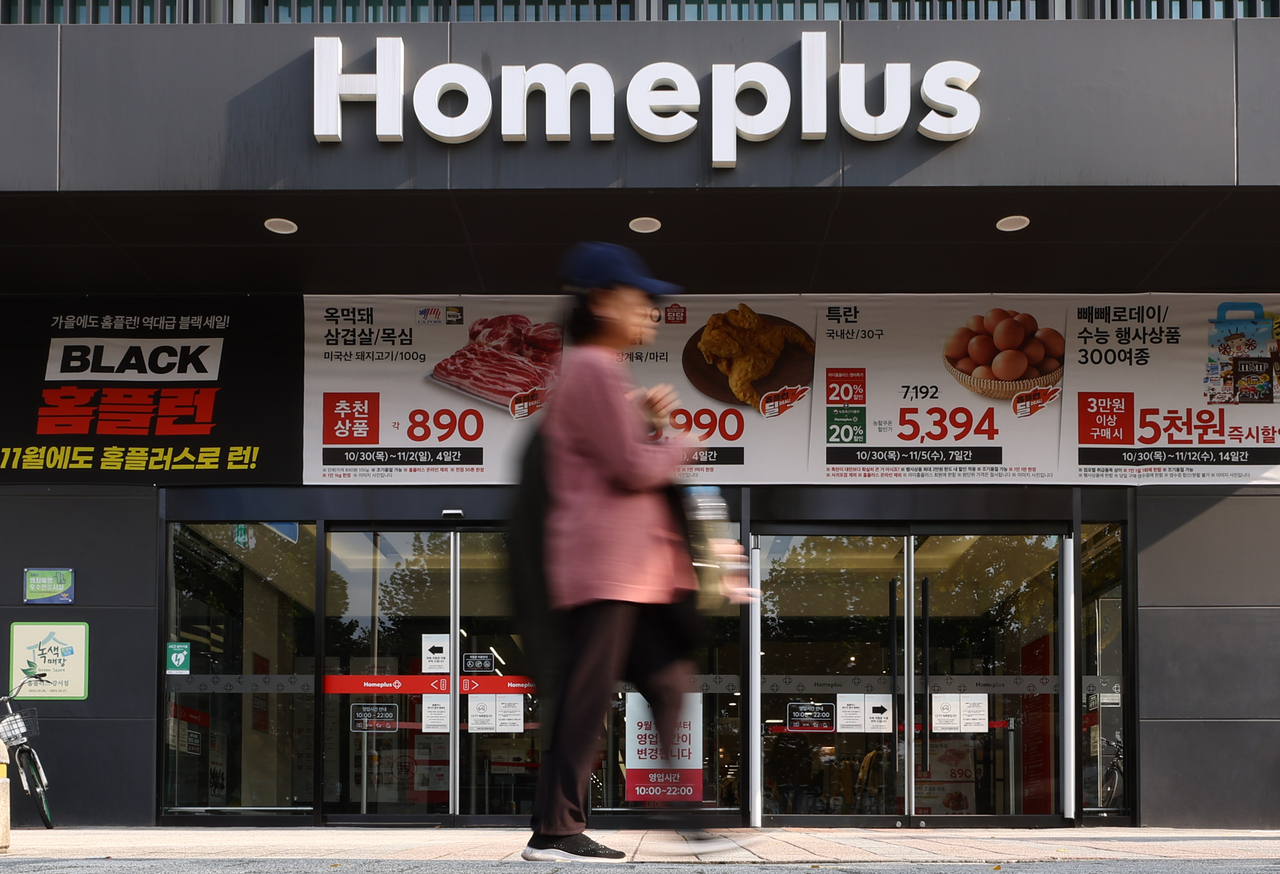
After months of courting buyers under court supervision, Homeplus finally drew two would-be suitors by the Oct. 31 preliminary bidding deadline, only to prompt immediate questions over whether either is capable of rescuing Korea’s No. 2 hypermarket chain.
The letters of intent came from two little-known firms: Harex InfoTech, a domestic AI-based retail platform provider, and Snomad, a real-estate developer. Samil PwC is managing the sale, with both bidders now conducting due diligence through Nov. 21 before deciding whether to submit final offers on Nov. 26. Homeplus says it remains open to last-minute bidders, and the deadline for submitting its rehabilitation plan has been pushed back from Nov. 10 to Dec. 29.
The interest marks the first tangible movement since a Seoul court authorized a presale process in June following Homeplus’s entry into rehabilitation in March. But both bidders are widely seen as underpowered, given thin financials and heavy reliance on foreign private-equity capital.
Harex InfoTech reported about 300 million won ($207,000) in revenue last year and an operating loss of 3.3 billion won. Snomad posted 11.6 billion won in sales and 2.5 billion won in operating profit. Homeplus, by contrast, generated roughly 7 trillion won in annual sales, with operating losses widening 57.5 percent to 314.1 billion won. Its estimated liquidation value stands at 3.7 trillion won, higher than its 2.5 trillion won going-concern value. The retailer controls 6.8 trillion won in assets and about 2.9 trillion won in liabilities.
One industry official described the mismatch as “a shrimp trying to swallow a whale.” The central question, they said, is whether either bidder can credibly show the financial muscle needed to stabilize the chain.
Labor groups and opposition lawmakers have also cast doubt on the suitors’ intentions. A Democratic Party task force warned that both companies lack industrial vision and managerial capacity, raising the risk that any buyer could prioritize asset sales over long-term operations.
“If no credible buyer emerges through the open bidding process, corporate restructuring agencies must step in to clean up distressed assets during the rehabilitation,” Rep. Lee Jung-mun said at a Nov. 5 press conference.
A recent precedent has further heightened concerns. On Nov. 10, the Seoul Bankruptcy Court declared e-commerce platform WeMakePrice bankrupt after determining its liquidation value exceeded its value as a going concern. That collapse left over 108,000 people with unprocessed payments totaling 580 billion won.
Labor unions warn a similar failure at Homeplus could jeopardize more than 100,000 jobs and disrupt operations for some 1,800 suppliers and more than 8,000 tenant merchants.
The retailer has already shifted into what industry sources describe as “emergency survival mode,” closing additional stores and offering unpaid leave. A tightening liquidity crunch has left Homeplus behind on roughly 700 billion won in taxes and more than 200 billion won in electricity bills as of early November.
The government is monitoring the situation closely. “We are tracking the Homeplus case and coordinating with relevant ministries to provide necessary support,” Deputy Prime Minister and Finance Minister Koo Yun-cheol said at a parliamentary budget hearing on Tuesday.
On Sunday, Homeplus said its financial burden would ease sharply once the rehabilitation is completed, arguing that lower financing and rental costs could restore operating profit in the near term. The company said about 700 billion won in dividend obligations tied to its redeemable convertible preferred shares, along with high-interest borrowings, would be restructured under the plan, strengthening its balance sheet. Adjusting its debt profile and renegotiating rental payments would pave the way for a turnaround, it added.
minmin@heraldcorp.com