Billionaire faces lawmakers for first time amid intensifying scrutiny
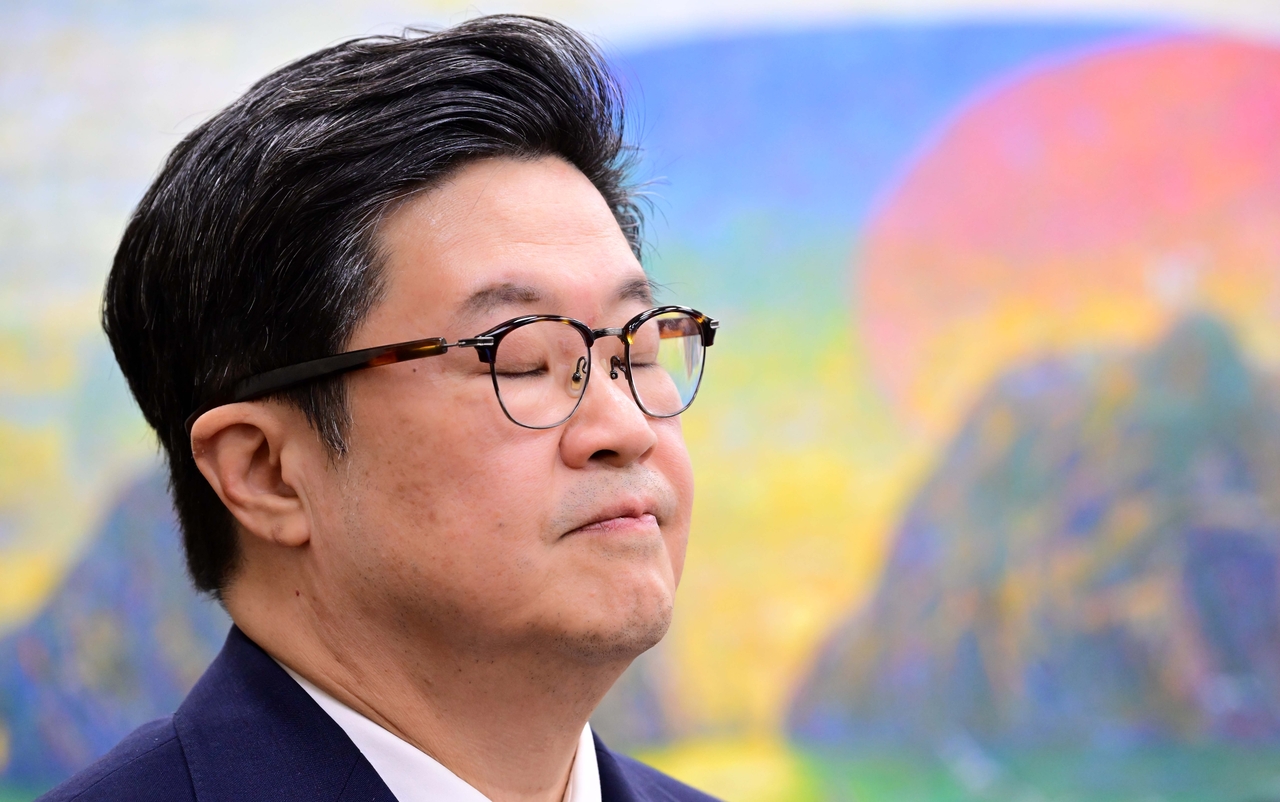
Michael Byung-ju Kim, founder and chair of private equity giant MBK Partners, faced fierce bipartisan criticism during a parliamentary audit Tuesday over his firm’s role in the troubles surrounding Homeplus and his allegedly half-hearted efforts to rescue the retailer.
Appearing before the National Assembly’s National Policy Committee audit on the Fair Trade Commission, Kim offered an apology for “causing public concern” and promised to “fulfill social responsibility” toward Homeplus employees and stakeholders.
It was his first public appearance after repeatedly refusing past summonses, citing overseas business trips, even as public outrage and legal scrutiny over MBK’s management of Homeplus have intensified.
Homeplus, Korea’s No. 2 hypermarket chain, filed for court-led restructuring in March, with mounting debt and plunging sales. Lawmakers questioned whether MBK’s leveraged buyout in 2015 — funded mostly by debt — had left the company hollowed out and unable to reinvest, contributing to its collapse.
Kim said he had “fulfilled” his pledge to contribute 500 billion won ($352 million) of his personal wealth to help stabilize the retailer. But lawmakers dismissed the claim, noting that much of the promised aid consisted of conditional guarantees, not immediate cash infusions.
"Under the ongoing circumstances, Kim needs to show greater sincerity in fulfilling his social responsibility to Korea and its people," said Rep. Yoo Dong-soo of the ruling Democratic Party of Korea.
Rep. Han Chang-min of the Social Democratic Party of Korea said that "Remarks about 'fulfilling social responsibility' are nothing but an empty pledge," in the current situation.
Kim admitted that neither he nor MBK could offer further financial aid due to “insufficient funds.”
The statement drew sharp reactions from lawmakers who pointed to his vast reported fortune.
MBK, managing over $30 billion in assets, is the largest buyout firm in Northeast Asia, while Kim’s personal net worth is estimated at $9.7 billion, making him Korea’s second-richest individual after Samsung Chair Lee Jae-yong, according to Forbes.
“The 14 trillion won valuation of my assets reflects MBK’s corporate value,” Kim said. “Since it’s an unlisted company, I cannot simply liquidate shares for cash.”
But his critics argued that pointing this out was insensitive, since MBK's value derives from a fund structure that has consistently generated large management fees and returns for investors — even as Homeplus spiraled into crisis.
Kim also appeared to distance himself from direct responsibility for the retail chain’s management, saying his role as chair was limited to fundraising and investment oversight.
“MBK is a private equity firm with 13 partners, each handling their own roles,” he said.
But lawmakers pressed that the ultimate responsibility still lies with him.
“You cannot take credit when investments succeed and disclaim responsibility when they fail,” one opposition lawmaker shot back.
Alongside Kim, MBK Vice Chair Kim Kwang-il — also co-CEO of Homeplus — admitted that the company’s restructuring and sale efforts remain uncertain.
“There’s a 50 percent chance of finding a new owner,” he said. “We’re at the final stage but haven’t cleared the last hurdle.”
If no buyer emerges by the end of the month, Homeplus could face liquidation.
Ironically, the retailer’s liquidation value — 3.7 trillion won — exceeds its going-concern value of 2.5 trillion won, according to a June accounting report, indicating that its brand and operations have deteriorated even more than its net assets under MBK’s ownership.
The Homeplus saga has reignited debate over Korea’s private equity sector, long accused of prioritizing financial engineering over operational revival. MBK’s hands-off management approach, which extracted dividends and management fees while piling on debt, has drawn parallels to other PEF-linked failures in recent years.
“MBK’s handling of Homeplus epitomizes what happens when short-term profit motives outweigh long-term stewardship,” said one Seoul-based investment banker. “This case may push lawmakers to revisit how private equity firms are regulated, especially when they control major domestic employers.”
silverstar@heraldcorp.com