Korea's automotive-to-steelmaking conglomerate Hyundai Motor Group will invest an unprecedented 125.2 trillion won ($86 billion) in Korea over the next five years, as tariff pressures have eased following a recent US-Korea agreement.
According to the group on Sunday, the investment is intended to secure long-term growth engines and support Korea’s push to become a global mobility innovation hub, while also protecting Korea’s supply chains amid rising global protectionism.
The amount will surpass the group’s domestic spending over the past five years by 36.1 trillion won, raising its annual average investment by roughly 40 percent compared with the previous five-year period.
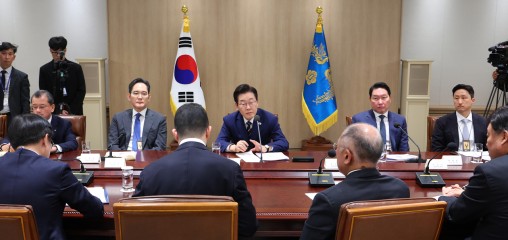
“The focus of our new investment plan at home is to accelerate Korea’s artificial intelligence and robotics industries and strengthen the green energy ecosystem,” said Hyundai Motor Group Executive Chair Chung Euisun in a meeting with Korean President Lee Jae Myung and other heads of the country’s top conglomerates on Sunday.
“These efforts will support the development of future technologies and revitalize regional economies.”
He added that the group aims to hire 10,000 workers next year, up from 7,200 this year.
By offering comprehensive support that spans from boosting domestic production to directly aiding tier-one suppliers, the investment is expected to ease concerns over Korea’s supply chains, analysts say.
Of the total, 50.5 trillion won will be allocated to core future businesses, including software-defined vehicles, mobility electrification and the development of a hydrogen ecosystem.
The group will spend 38.5 trillion won on research and development for its existing mobility businesses, while 36.2 trillion won has been set aside for maintenance and operational investment.
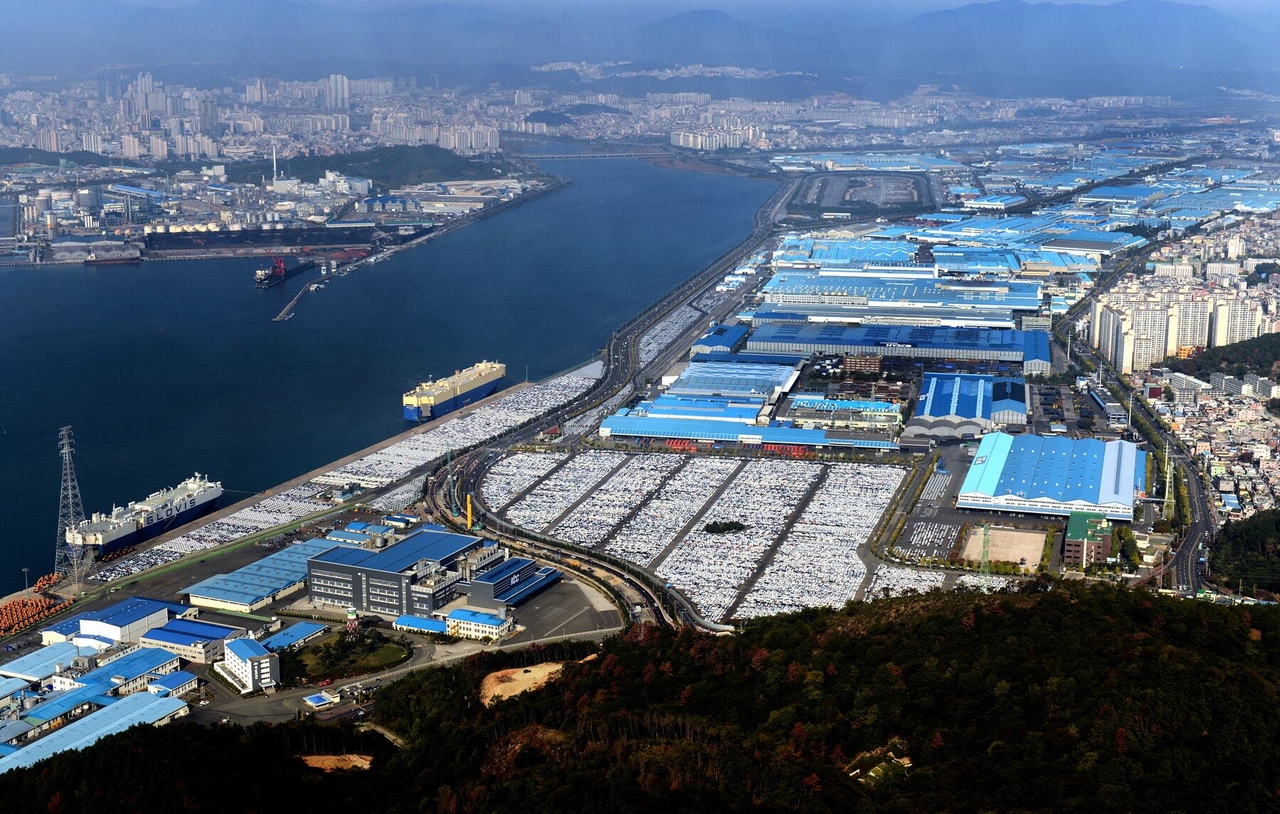
The group said the five-year plan will upgrade production facilities across Korea and add new dedicated electric vehicle plants.
It aims to raise exports of finished vehicles from 2.18 million units in 2024 to 2.47 million by 2030 while increasing shipments of eco-friendly models, including electric, plug-in hybrid, hybrid and fuel cell hybrid vehicles, from 690,000 to 1.76 million during the same period.
Hyundai Motor Group will also build a production plant for proton-exchange membrane, or PEM, electrolyzers to generate clean hydrogen that does not rely on carbon-based sources, supporting its wider hydrogen mobility initiative.
The initiative comes as the Korean presidential office held follow-up discussions on a fact sheet released Friday regarding the recent Korea-US tariff deal, which reduces the US tariff on finished cars and auto parts from 25 percent to 15 percent -- tariffs that have been in place since April and May, respectively.
“Even though the recent deal cuts the tariff, the Korean automotive industry is still facing an increase compared with zero tariffs last year,” said Kim Pil-su, an automotive engineering professor at Daelim University.
“It carries important significance as the automakers step forward to address concerns over the domestic supply chain.”
The group emphasized that a portion of the investment will be directed to partner companies that have expressed concerns about a hollowing out of domestic production amid rising global protectionism and the group’s expanding overseas output.
As an immediate support measure, Hyundai Motor Group said it will cover all US tariff costs incurred by its tier-one suppliers in 2025.
The support will apply to tariff expenses arising from exports of components used in Hyundai Motor and Kia vehicles produced in the US. It will be reflected in the company’s purchasing prices.
The final support amount will be determined after compiling export performance data from the suppliers.
For smaller tier-two and tier-three suppliers that do not trade directly with the group, Hyundai Motor Group plans to develop new support programs to strengthen their global competitiveness and stabilize the domestic automotive supply chain, with additional measures to follow.
“With our largest-ever mid- and long-term domestic investment and continuous innovation, Hyundai Motor Group will help advance Korea’s economic dynamism,” a company official said.
“Through support for tariff costs and strengthened partnership programs, we will work to enhance the global competitiveness of Korea’s auto manufacturing industry.”
forestjs@heraldcorp.com