-Talks cover sensitive economic, security matters, from Chinese sanctions on Hanwha and cultural curbs to Seoul’s nuclear submarine plans
-Both sides agree US-North Korea dialogue most important
-Denuclearization of Korean Peninsula, Chinese-built structures in West Sea also discussed
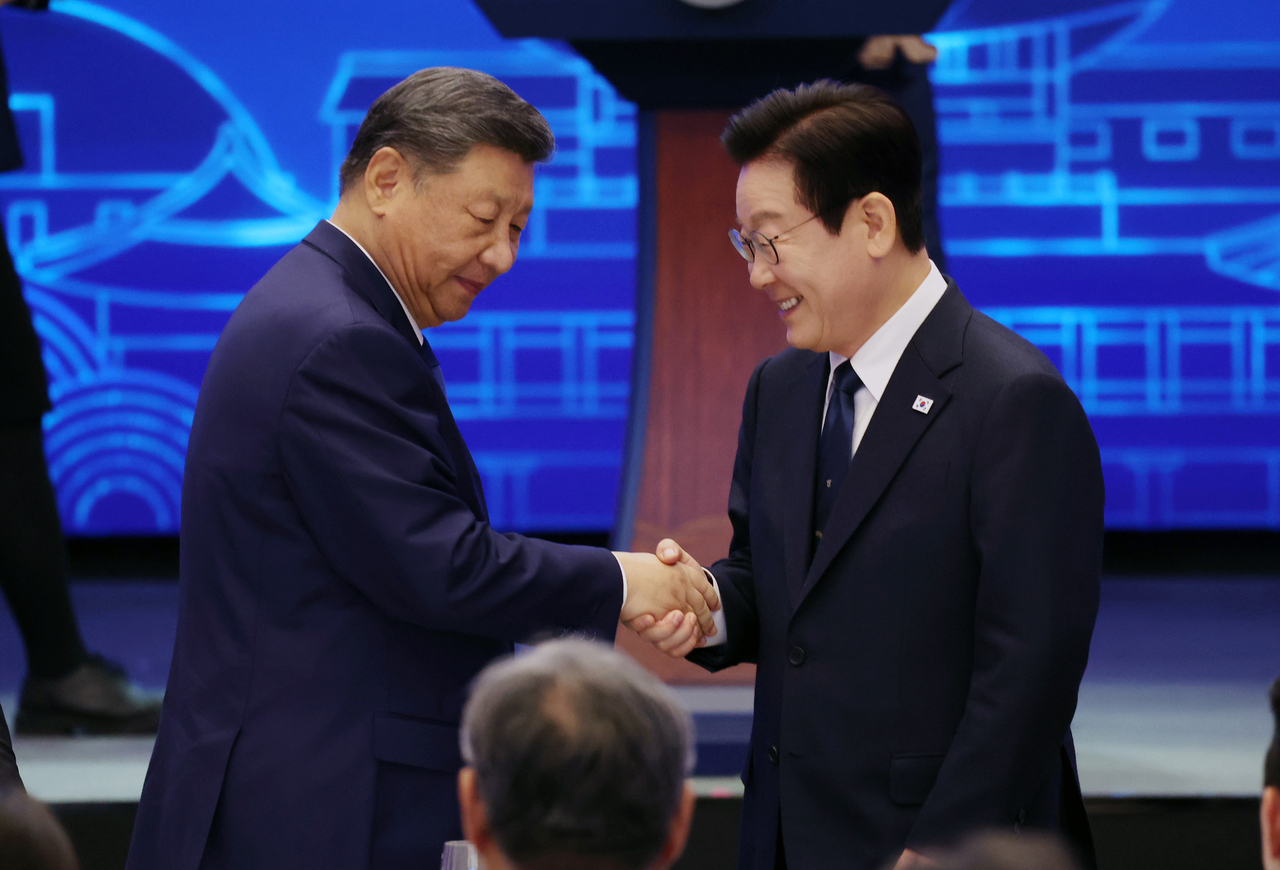
GYEONGJU, North Gyeongsang Province — The leaders of South Korea and China agreed Saturday to reboot a regular high-level dialogue to strengthen strategic coordination on regional and global issues, pledging to turn their thaw into tangible economic cooperation and work toward peace on the Korean Peninsula, Seoul’s presidential office said.
South Korean President Lee Jae Myung and Chinese President Xi Jinping held a 100-minute, in-person summit Saturday — their first since Lee took office — on the sidelines of the APEC gathering in Gyeongju, North Gyeongsang Province.
“They agreed to make efforts to ensure that the development of Korea-China relations contributes in a practical way to both livelihood issues and peace," national security adviser Wi Sung-lac said during a press briefing on the Lee-Xi summit.
“President Lee introduced our government’s vision for denuclearization and the realization of peace, and asked China to play a constructive role in resuming dialogue with North Korea," Wi said. "In response, President Xi expressed his intention to continue efforts to resolve issues on the Korean Peninsula and to maintain peace and stability there.”
Wi further explained to, “Both sides agreed that dialogue between the United States and North Korea is the most important.”
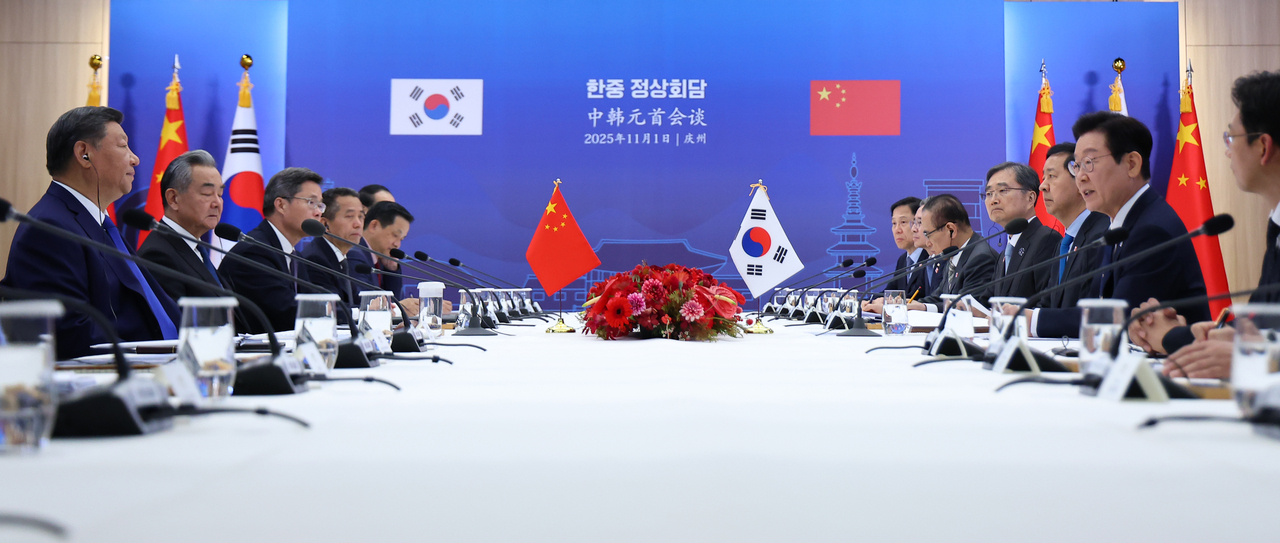
At the summit, Lee welcomed the recent active high-level exchanges between China and North Korea, describing them as "creating conditions conducive to renewed engagement with North Korea."
“We hope that (South) Korea and China will strengthen strategic communication to make use of these favorable conditions to resume dialogue with North Korea," Lee told Xi.
In September, North Korean leader Kim Jong-un met with Xi for the first time in over six years during his visit to China to attend the country’s “Victory Day” celebrations, where he observed a massive military parade while standing shoulder-to-shoulder with Xi on the Tiananmen rostrum.
In response, Xi said, “China is ready to enhance communication with South Korea, deepen cooperation, expand common interests, and tackle challenges together to ensure that the China–South Korea strategic cooperative partnership contributes more positive energy to regional peace and development.”
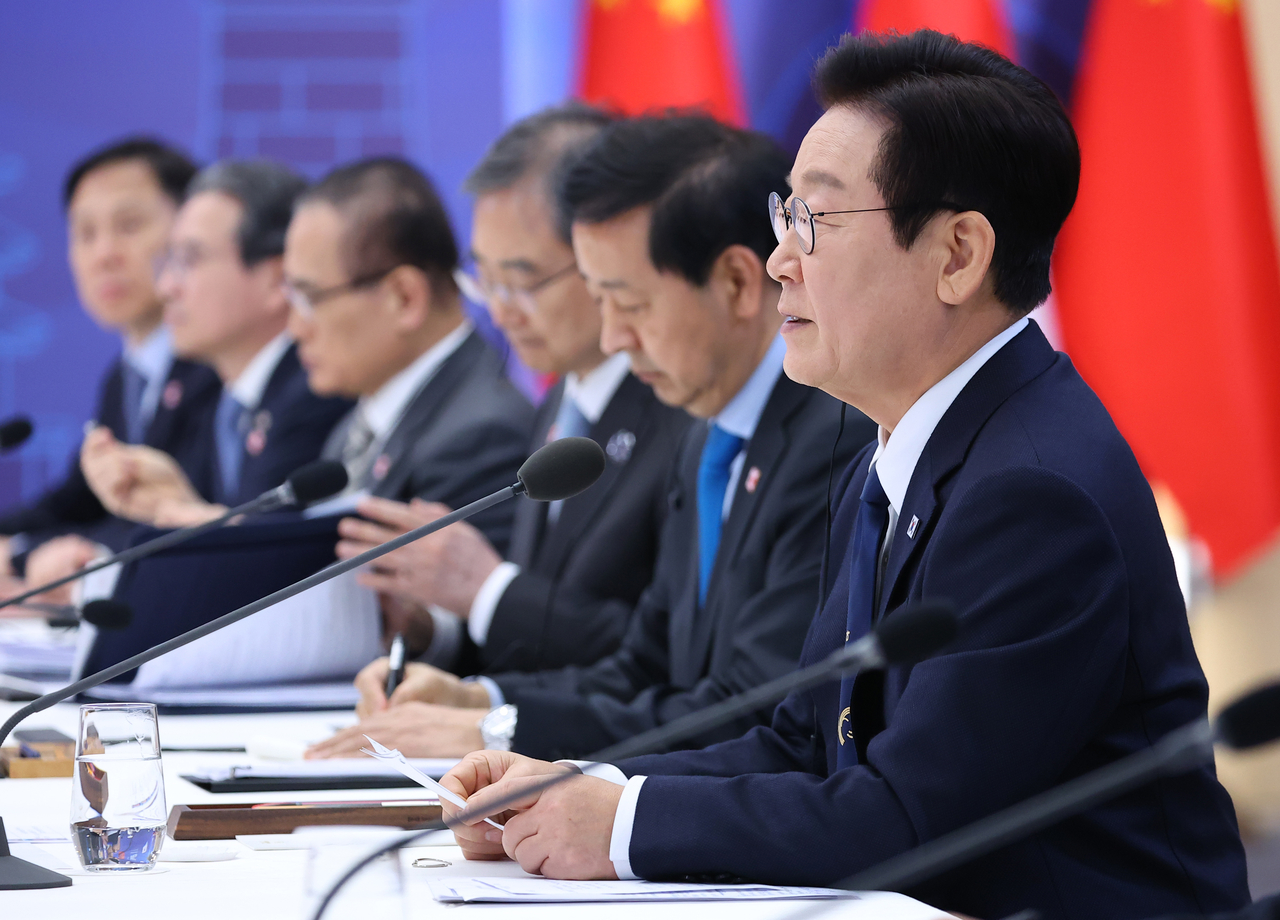
Wi underscored that the Lee-Xi summit produced the agreement to “activate a regular high-level communication channel between South Korea and China to strengthen strategic dialogue on bilateral, regional, and global issues.”
The talks covered a wide range of bilateral and global issues, including supply chains and the second stage of the two countries' free trade agreement, as part of a long checklist of pending matters.
Both sides also touched upon sensitive economic and trade issues, such as Beijing’s sanctions on US subsidiaries of South Korean shipbuilder Hanwha Ocean over its operations in the US in October, and China’s unofficial restrictions on Korean cultural content following South Korea’s 2016 decision to deploy the US THAAD missile defense system, Wi said.
“There was a productive discussion on the Hanwha Ocean issue,” Wi said. “This matter is also linked to the ongoing trade dispute between the US and China. Given the current atmosphere in which the US-China issue appears to be easing, we have come to expect that there could be constructive progress on the Hanwha Ocean matter as well.”
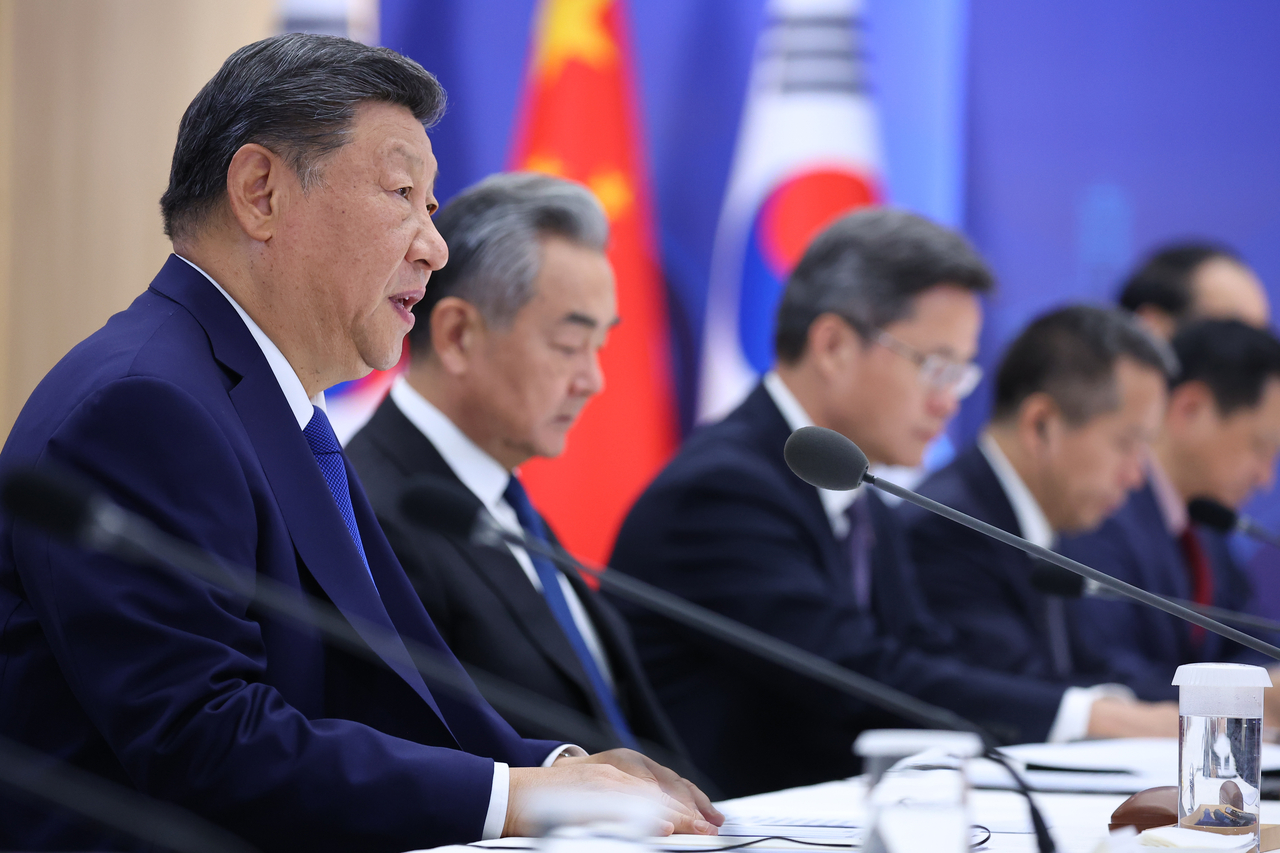
On the security front, the two leaders also discussed the denuclearization of the Korean Peninsula and structures unilaterally built by China in the West Sea, a maritime zone jointly administered with South Korea.
Wi further disclosed that Lee and Xi discussed South Korea’s plans to develop nuclear-powered submarines with the approval of the US.
“At this summit, the two leaders exchanged a wide range of views on various issues between South Korea and China. This carries great significance in strengthening political trust between the two sides,” Wi said when asked about the matter. “In that context, I would simply note that a number of security-related issues were also discussed.”
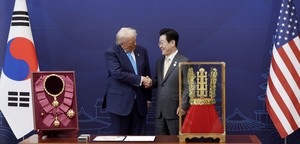
Concerns had risen over the Lee-Xi meeting because it came just after US President Donald Trump publicly gave the green light for South Korea to develop nuclear-powered submarines. The approval followed President Lee’s official request for the US to supply nuclear fuel for propulsion during their summit on Oct. 29 — a move that subsequently irked China.
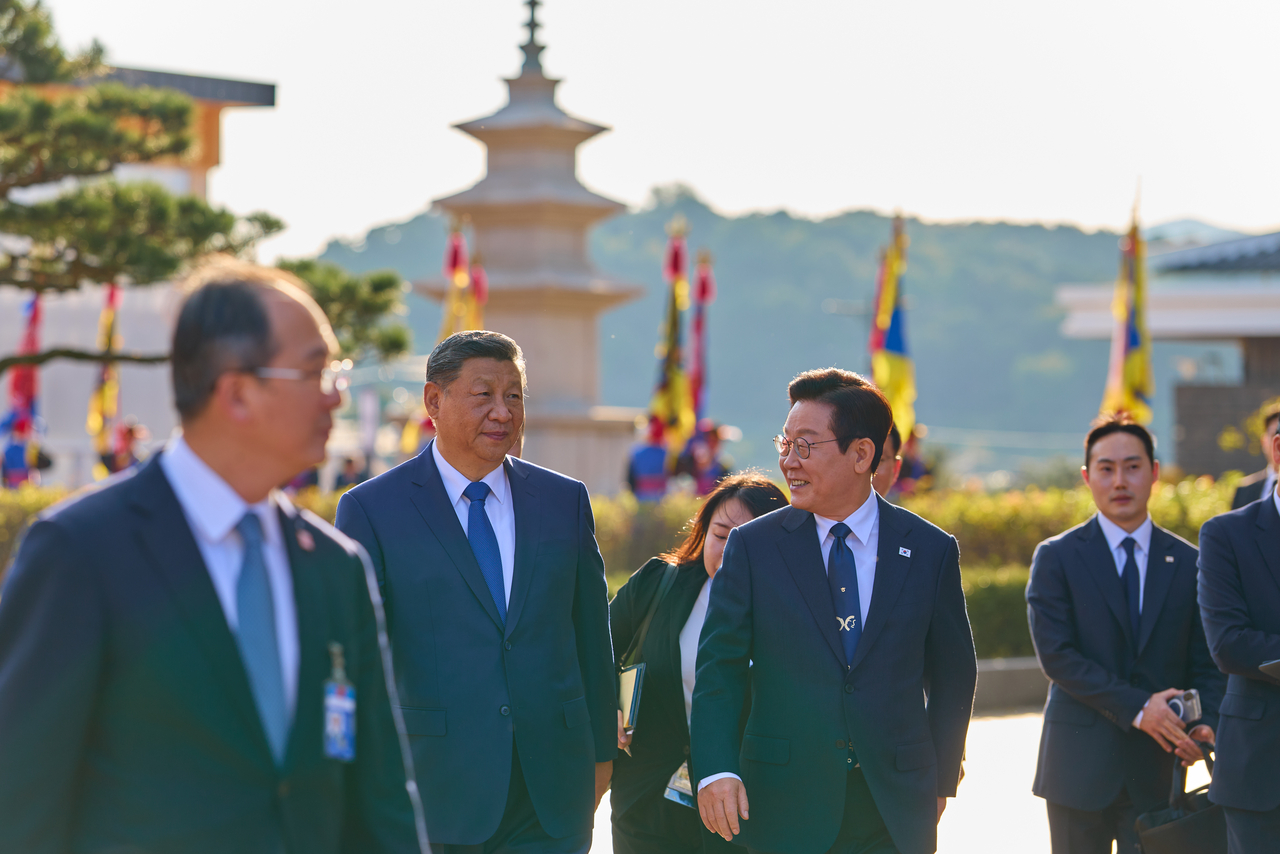
The Lee-Xi summit was followed by a friendship event and a state banquet attended by around 100 participants from both sides, which began at 6:15 p.m. and lasted roughly 70 minutes.
Seoul and Beijing also signed and exchanged seven agreements, including MOUs on economic cooperation, trade in services, innovation and startup partnerships, and measures against voice phishing and online fraud, as well as a renewed won–yuan currency swap deal.
Xi completed his three-day state visit to South Korea, his first since 2014, on Saturday. During the trip, he attended APEC summit sessions and held one-on-one meetings with US President Donald Trump and Japanese Prime Minister Sanae Takaichi.
dagyumji@heraldcorp.com
consnow@heraldcorp.com