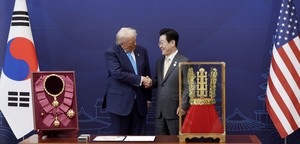
Dazzling gold crowns on show at Gyeongju National Museum to mark APEC 2025
The ancient Silla Kingdom is often called the “Golden Kingdom,” known for its gold artifacts that surpass those of Goguryeo and Baekje, the two other kingdoms of Korea's Three Kingdoms period (late 1st century BC to 7th century).
Even the 9th-century Persian geographer Ibn Khordadbeh referred to Silla as a “land notably rich in gold,” and highlighted its trade routes and the goods exchanged, according to UNESCO. Silla unified the Three Kingdoms in 668, continuing its rule as the Unified Silla Kingdom until 935.
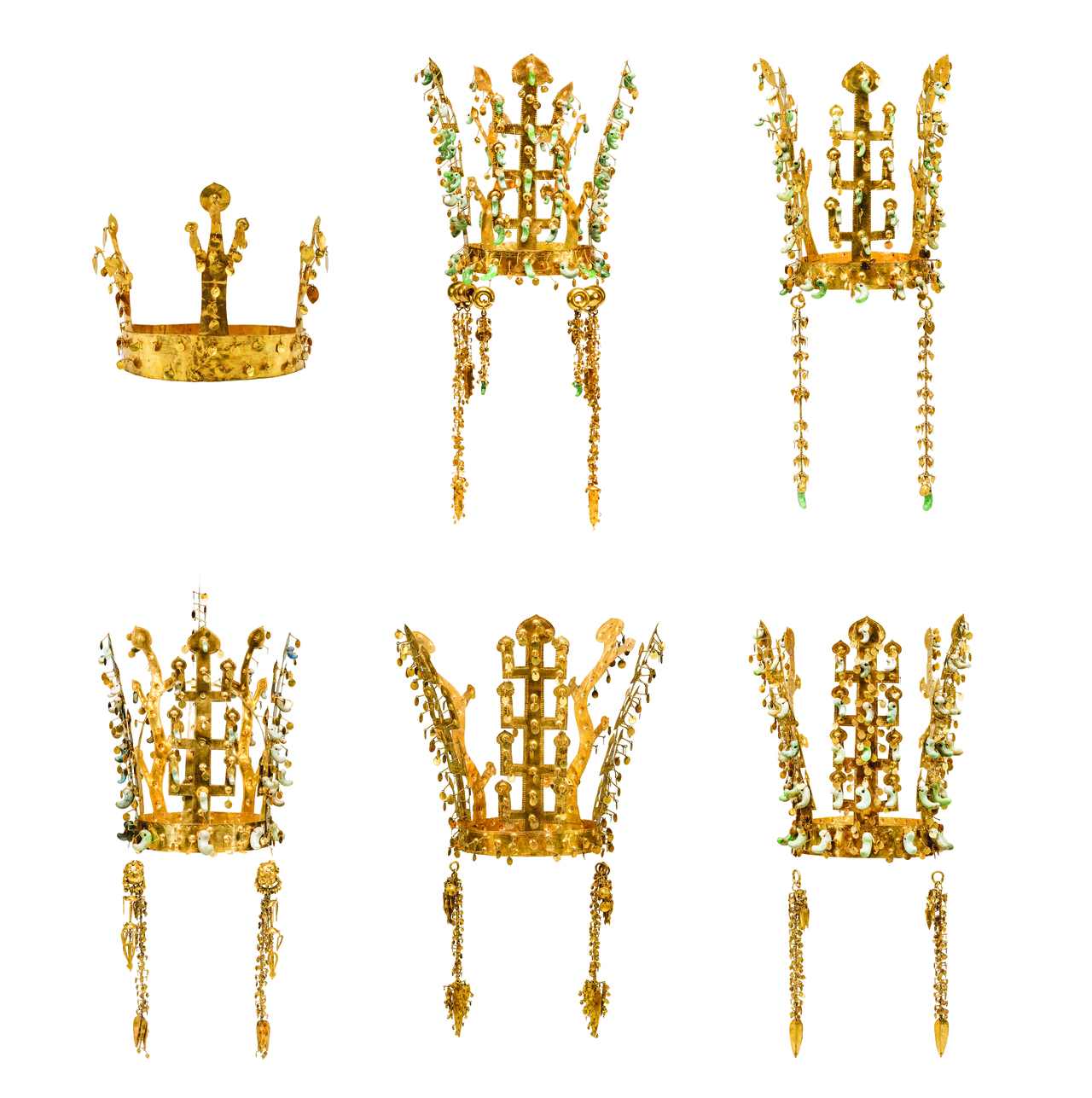
Some of the best examples of Silla's golden artifacts are on show at “Silla Gold Crowns: Power and Prestige” at the Gyeongju National Museum in Gyeongju, North Gyeongsang Province. Unprecedented in its scope, the exhibition brings together six gold crowns discovered in the ancient tombs of Silla in Gyeongju, the capital of the ancient kingdom.
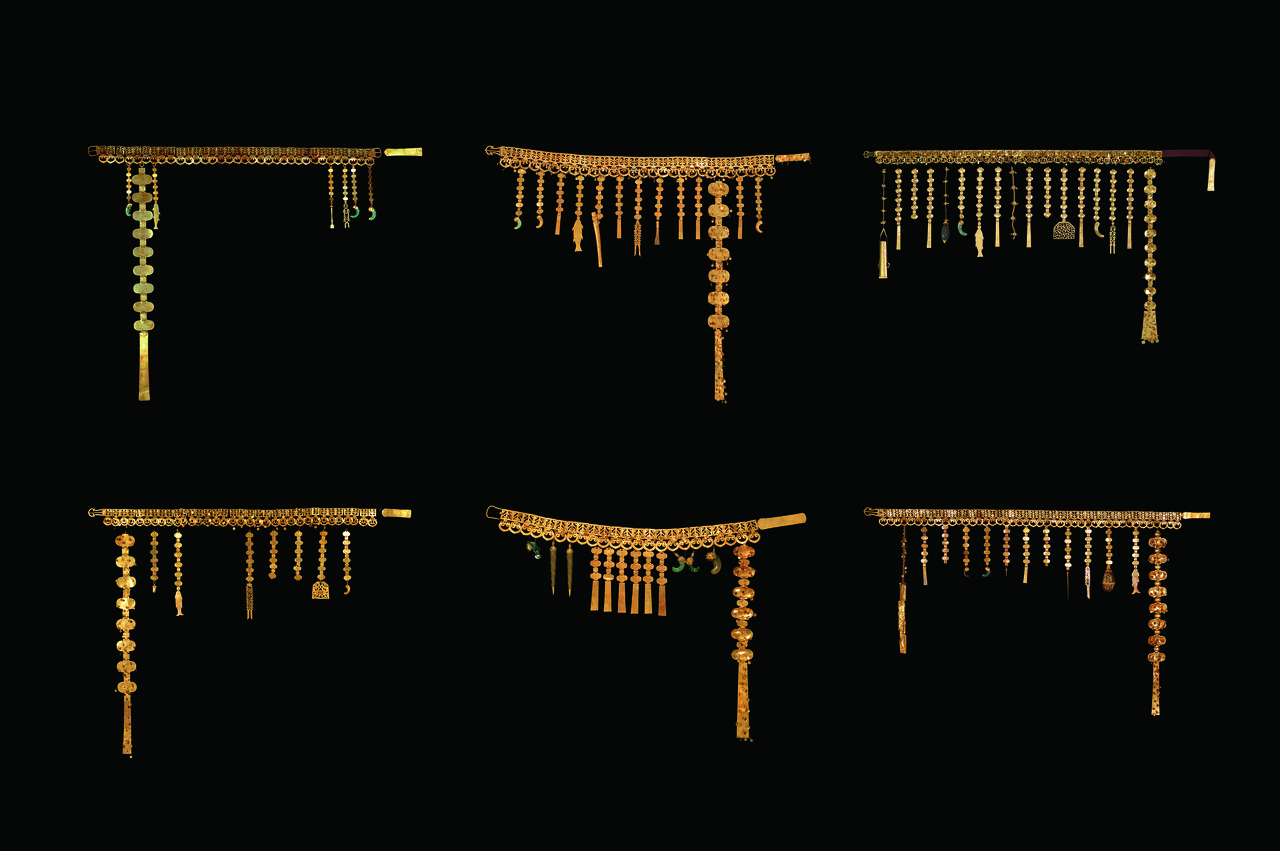
The gold crowns on show hail from different museums across Korea, brought together in one place for the first time, according to the state museum. The exhibition also includes six gold belts found along with the crowns.
“The significance of the exhibition is that visitors can observe the differences and evolution in the form, style and ornamentation of Silla’s gold crowns. Some crowns follow traditional designs with branch- and antler-shaped projections, while others showcase more original and experimental variations,” Kim Hyun-hee, head curator of the museum, said in a statement.
The first gold crown was discovered in 1921 at Geumgwanchong, a tomb in Noseo-dong, during a construction project. Estimated to have been made in the fifth century, the gold crown, designated as a National Treasure, is regarded as the most representative example of Silla's gold crowns.
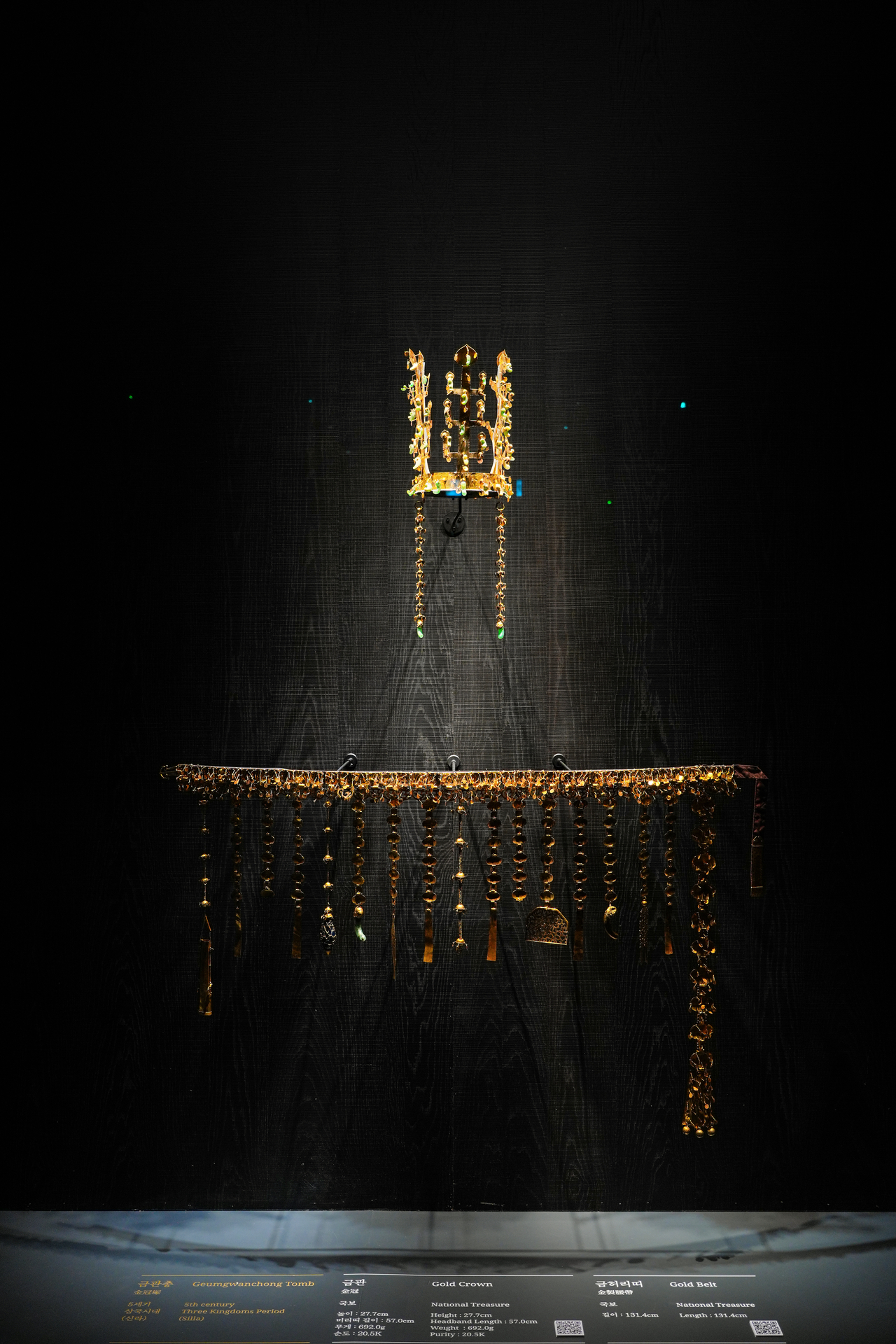
The crown features three tree branch-shaped ornaments, representing the sacred status of the wearer, connecting heaven and earth. The two antler-shaped projections attached to the headband symbolize transcendent power. The gold crown also has comma-shaped ornaments made of jade, a feature typically found in Silla's gold artifacts.
“Silla buried an extraordinary amount of pure gold artifacts in its tombs — the total weight of gold unearthed from Geumgwanchong alone amounts to 7.5 kilograms,” writes You Hong-jun, director of the National Museum of Korea, in his recent book, “Story of Korean Art,” published in September.
The Silla Kingdom possessed highly advanced metalworking skills, even employing the sophisticated granulation technique known as filigree, which involves attaching tiny gold granules and wires to create intricate decorative patterns, according to You.
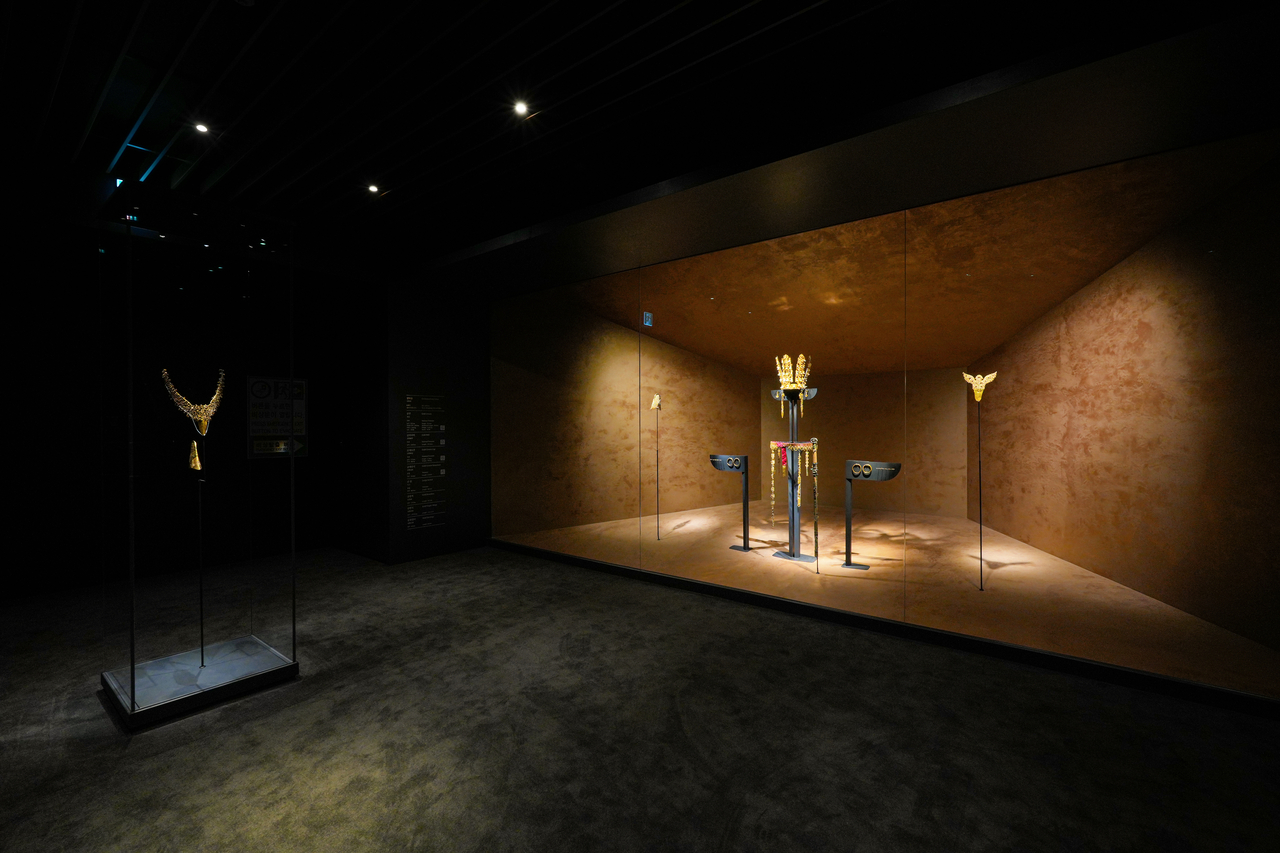
Another gold crown designated as a National Treasure is one excavated in 1973 at Cheonmachong, literally meaning "tomb of heavenly horse." The name derives from a mural of a horse discovered inside the tomb.
The tallest and widest of the six crowns, estimated to have been created in the early sixth century, is also the most impressive, with more ornaments added to enhance its splendor, according to the Gyeongju National Museum.
One crown in the exhibition stands out for its uniqueness. Looted from a tomb in Gyo-dong, the crown was later confiscated and became part of the Gyeongju National Museum collection. Because it was a looted artifact and differed from typical Silla gold crowns, its authenticity was once debated. It was even thought that the back part of the headband had been added later.
However, the discovery of similarly shaped gilt-bronze crowns in Bokcheon-dong in Busan has led scholars to view it as an early form of a Silla crown. Still, the museum noted it has not been designated as national cultural property because it was illegally excavated.
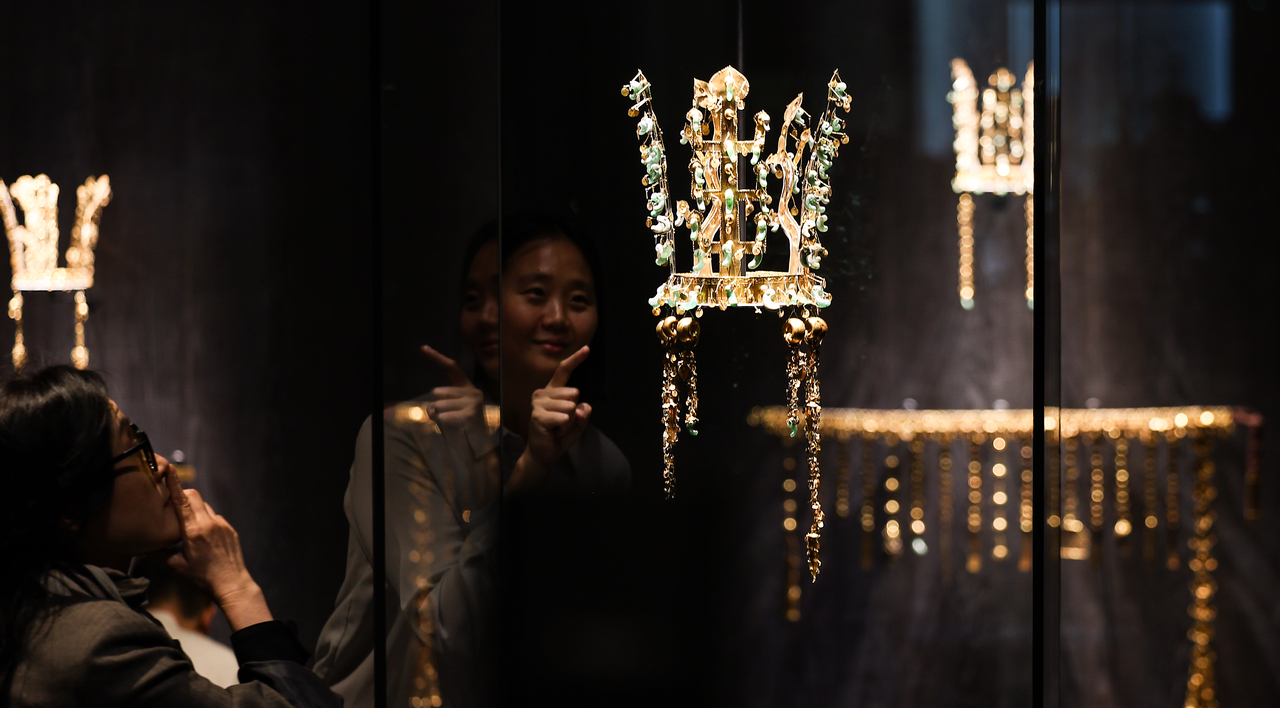
Also on display at the special exhibition are a gold crown discovered in the South Mound of Hwangnamdaechong in 1974, designated as a National Treasure; the gold crown discovered in Seobongchong in 1926, designated as a Treasure; and another gold crown discovered in Geumnnyeongchong in 1924, designated as a Treasure.
A total of 20 gold artifacts are on view through Dec. 15, including gold earrings, bracelets and rings excavated from Cheonmachong. Adorned in gold from head to toe, the Silla people believed that the tomb’s owner would carry their wealth and power in the afterlife.
“Through this exhibition, we aim to promote the global significance of Korea’s cultural heritage and expand it into a platform for cultural diplomacy that connects the past and present, Gyeongju and the world,” said Yoon Sang-deok, director of the state museum.
yunapark@heraldcorp.com