The South Korean government is reportedly reviewing the guidelines for banners hung by political parties after some stirred controversy for making baseless claims and defaming major figures in and out of the country.
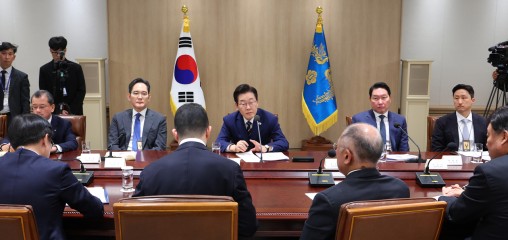
According to the Ministry of the Interior and Safety, 18,016 petitions related to such political banners were made in the first half of this year. Of these, 26.5 percent were filed in Seoul and 26.3 percent in Gyeonggi Province. President Lee Jae Myung's administration is reportedly working on a guideline to regulate the banners, which the president called "vulgar and disgraceful" in last week's Cabinet meeting.
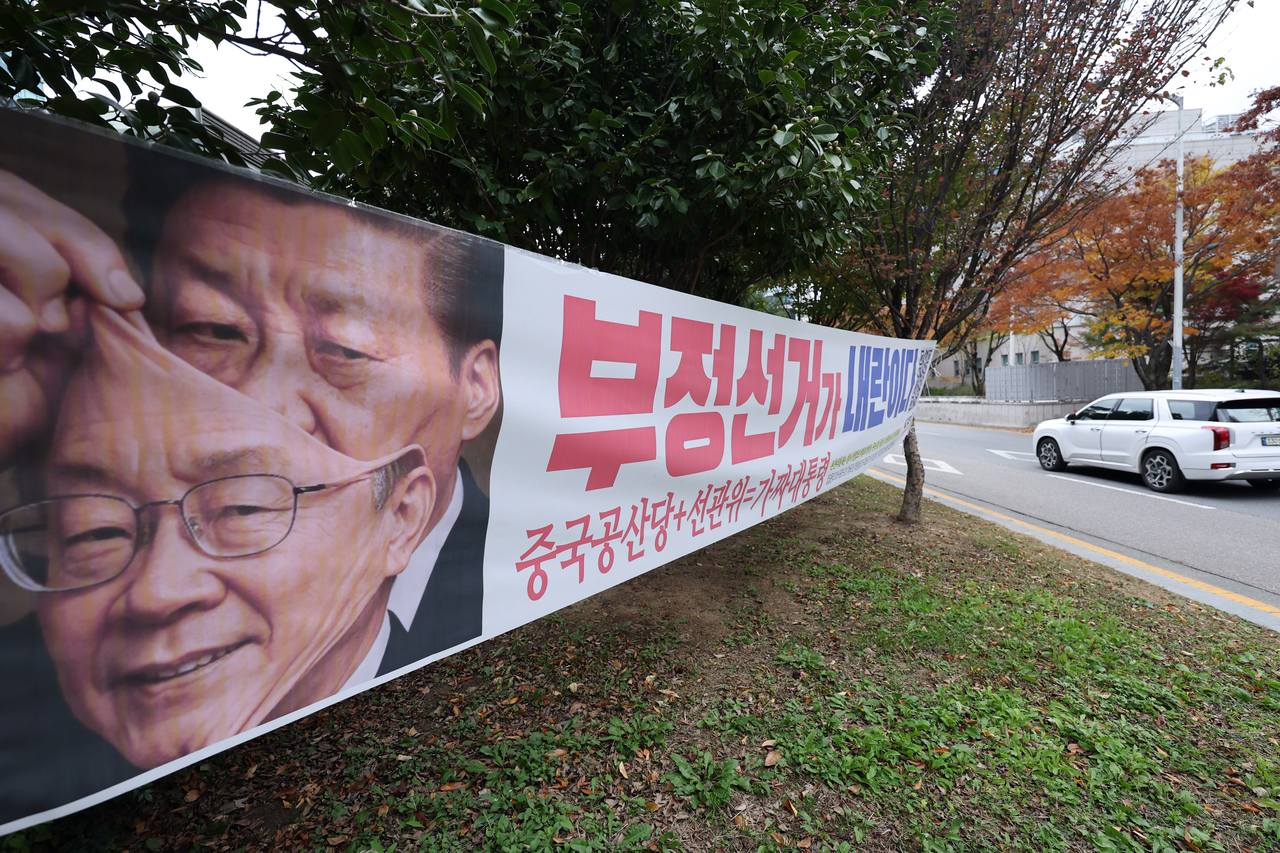
A series of banners placed by Lee's political rivals featured baseless claims, such as a now-defunct allegation that the Chinese government helped Lee to rig the recent presidential election. This includes a banner found in Gwangju that depicts Chinese President Xi Jinping as the figure behind a mask of Lee's face. Another one in Suwon, Gyeonggi Province, claims that Xi will live to be 150 years old thanks to organs supposedly taken from missing people.
President Lee said that the discriminatory and insulting messages included in such banners incite conflict within society, and urged the eradication of hatred and false information stemming from political circles.
The Interior Ministry will reportedly create and distribute guidelines for political banners to regional governments. These will be based on an existing legal clause that states outdoor advertisements should not feature racially or sexually discriminatory content.
While some claims made in political banners are far-fetched and even outrageous, hanging such banners is considered legitimate political promotion via printed media, advertisement or facility, based on Article 37 of the Political Parties' Act on freedom of political activities.
Ironically, Lee's own party led the passage of the law that permits limitless political banners. A 2022 law revision proposed by Lee's ruling Democratic Party of Korea had lifted most limits on political banners, including that which mandated reporting the banner to and receiving permission for it from the authorities.
"This is a law that was made while I was heading the Democratic Party, but it should be revised or abolished if it is abused to such an extent," Lee said in the Cabinet meeting. "Please discuss with the parties measures to make things as they were."
Democratic Party members have proposed a law revision that would ban discrimination or hate against specific groups, based on race, nationality, religion or gender.
minsikyoon@heraldcorp.com