South Korea and the US set the tariff rate at 15 percent on a range of Korean goods after finalizing a joint fact sheet on their trade deal Friday, ending months of uncertainty for Korean exporters, with reduced auto duties potentially taking affect retroactively from Nov 1.
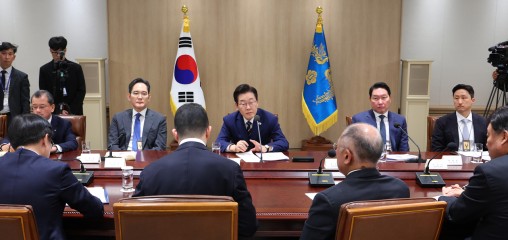
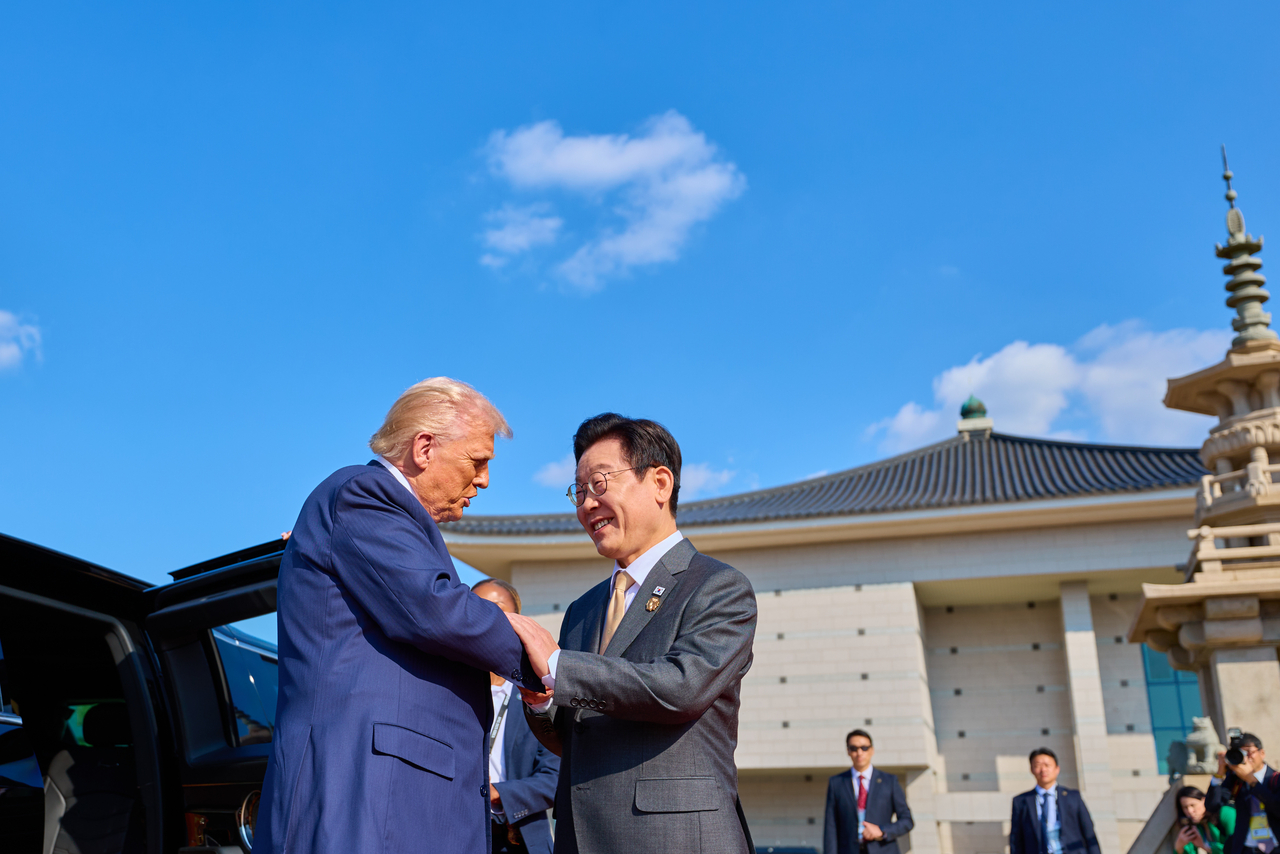
The two countries released full details of the deal two weeks after an October summit between South Korean President Lee Jae Myung and US President Donald Trump.
Seoul agreed to a $350 billion investment pledge during their talks, while the US said it would reduce tariffs on key Korean goods, including automobiles, auto parts, timber, lumber and pharmaceuticals, from 25 percent to 15 percent.
However, the 50 percent tariffs on steel and aluminum remain in place, leaving a key issue unresolved.
The two sides formalized the agreement through an MOU Friday, electrically signed by South Korean Industry Minister Kim Jung-kwan and US Commerce Secretary Howard Lutnick.
Washington didn’t specify a figure for semiconductor tariffs, but said it would be “no less favorable” than those extended to any future trade partner with a comparable or greater volume of chip trade with the US.
Of South Korea's investment commitment, $150 billion will be invested in the shipbuilding sector, and $200 billion will go toward “strategic investments” committed under a new memorandum of understanding that was signed Friday.
Earlier, South Korea said the $200 billion cash payment would be distributed over time, with an annual cap of $20 billion, though the destinations will be decided before Trump leaves office in January 2029. The fact sheet said the two countries have “mutual understanding” that South Korea’s payment should not “give rise to market instability,” though it made no mention of a currency swap, which South Korea had asked for.
If fulfilling these commitments could destabilize markets or cause won instability, South Korea may request an “adjustment in the amount and timing of the funding,” and the US will “in good faith, give due consideration to such request,” it stated.
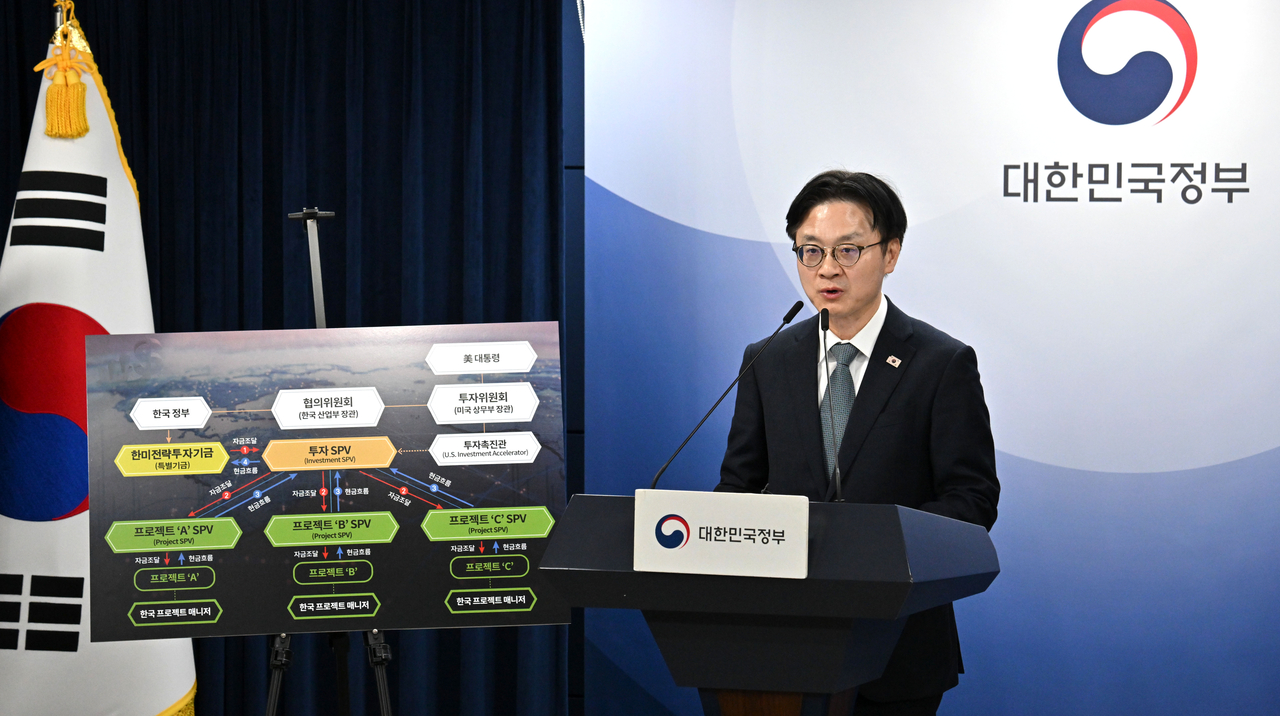
The $200 billion project will fund projects in advanced industries, including energy, semiconductors, pharmaceuticals, critical minerals, artificial intelligence and quantum computing.
To ensure oversight, Kim added that the two countries would establish two bodies, a Consultation Committee headed by Korea’s industry minister, and an Investment Committee headed by the US commerce secretary. Together, they will monitor a special purpose investment vehicle responsible for managing their joint projects.
Automakers, drugmakers relieved
South Korean carmakers were seen as gaining the biggest relief Friday confirming lower tariffs from 25 percent to 15 percent — the same level as Japanese and European rivals.
Since automobiles are Seoul’s biggest export to the US, the adjusted tariff rate — though still higher than the zero tariffs under the previous free trade agreement — provides some relief to the sector that has been hit especially hard since April.
Still, the release of the fact sheet does not mean tariff cuts will take effect immediately. Kim Yong-beom, the presidential chief of staff for policy said after the MOU is signed, the US will apply the 15 percent tariff retroactively from the first day of the month when a bill is submitted to the National Assembly to implement the MOU.
This means if the bill takes effect this month, the tariff reduction could therefore be retroactively applied to Nov.1.
The fact sheet also gave some clarity to the pharmaceutical sector, as it capped tariffs at 15 percent, a significant relief given Trump's earlier threat of 100 percent tariffs on imported drugs.
But the fact sheet does't mention biosimilars, an important Korean export. It remains unknown if they will be treated like generics with lower tariffs or put in a different category.
Chipmakers still uncertain
Since Taiwan, home to foundry giant TSMC, is effectively the only country that trades more semiconductors than Korea, the agreement means Seoul will receive terms no worse than those eventually applied to Taiwan, presidential secretary Kim explained.
Still, experts say uncertainty persists because the wording on the factsheet leaves room for interpretation.
Shin Won-kyu, a research fellow at the Korea Economic Research Institute, said the US used the term “covering a volume of semiconductor trade at least as large as Korea’s, as determined by the US,” which is effectively a reference to Taiwan, according to Korea’s explanation.
“But from Washington’s standpoint, it didn’t explicitly say Taiwan, but left the door open and it could be the EU or China in the future who could surpass Korea in chip trade volume,” he said, noting even the semiconductor tariffs on Taiwan hasn’t been decided yet.
He also added that the phrase “as determined” by the US underscored the discretionary nature of the commitment. “The US gets to decide on what constitutes comparable Korea’s trading volume and what counts as ‘less favorable,” he said. “As these wording leaves room for US interpretation, it’s hard to say the uncertainty around semiconductor tariffs has been fully resolved.”
sahn@heraldcorp.com