Details of Korea’s $350 billion US investment pledge, offered to 'buy down' Trump tariffs, bring milestones in Korea's defense and nuclear capabilities
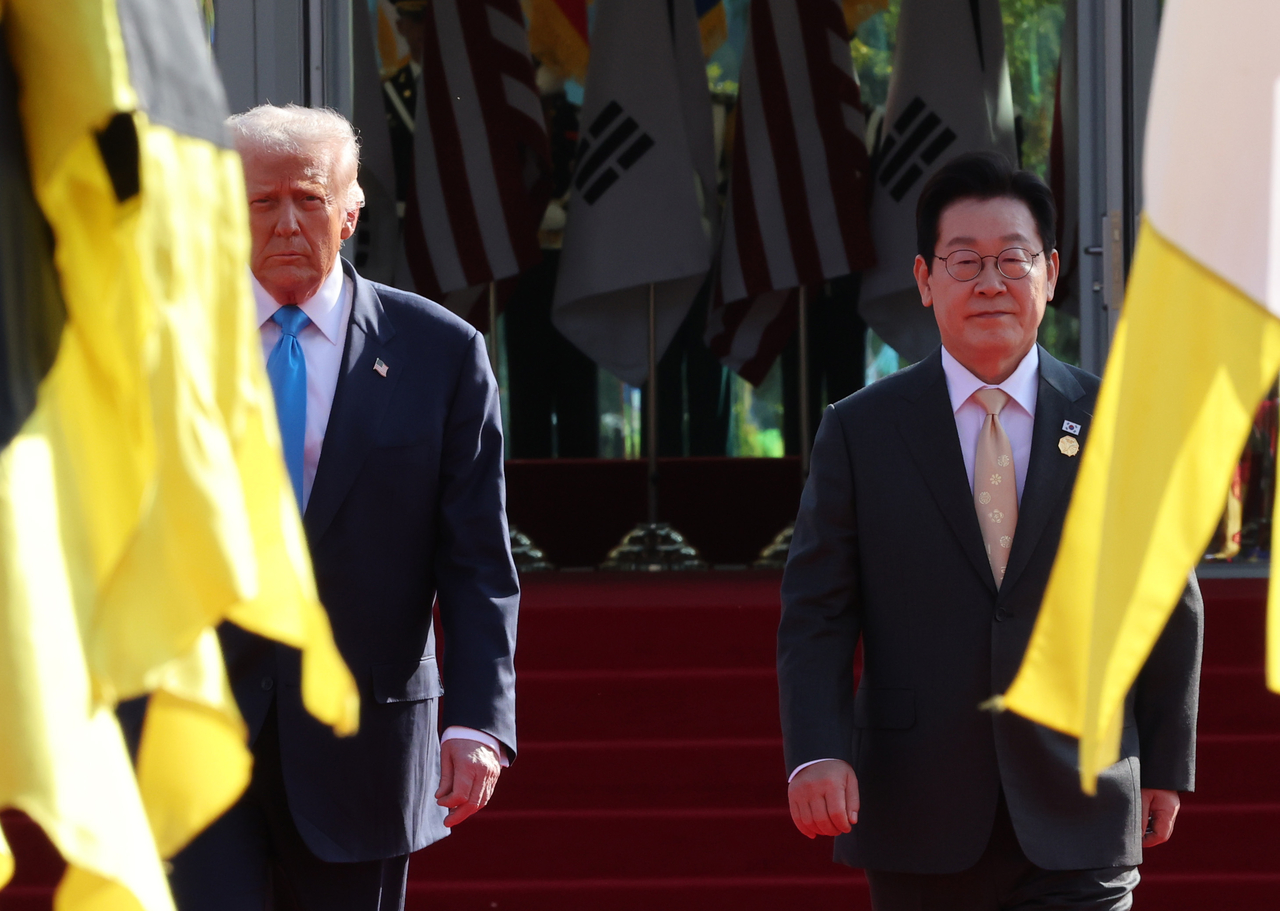
South Korea and the United States on Friday unveiled a joint fact sheet outlining their agreements on trade and security, concluding months of tense negotiations that began after US President Donald Trump raised tariffs and South Korean President Lee Jae Myung offered a pledge of $350 billion investment in the US.
While the document contains details of South Korean spending and lowered US tariffs on key Korean items, including automobilies, the fact sheet also includes significant security-related milestones for Seoul.
Among the highlights are the written approval for the development of nuclear-powered submarines and permission for civilian uranium enrichment, marking landmark moments in South Korea’s defense and nuclear capabilities.
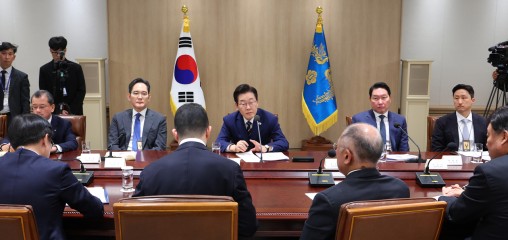
“We have finalized the Korea-US trade and security consultations, which had been the biggest variable,” South Korean President Lee Jae Myung told a press briefing in Seoul, expressing gratitude to President Trump for his “rational decision,” which played a major role in reaching the agreements.
The announcement came about two weeks after Lee and Trump met for summit talks in Gyeongju, North Gyeongsang Province, on Oct. 29, on the sidelines of the Asia-Pacific Economic Cooperation summit. There, two leaders sorted out key details about a reduction of US tariffs on South Korean imports; South Korea's investment in US projects; and the allies' security cooperation, in which the US agreed to allow South Korea to build and operate nuclear-powered submarines.
Lee's office said that the major point of contention that delayed the release of the fact sheet was its language over South Korea's civil use of nuclear power and the construction of nuclear-powered submarines. The fact sheet did not make a clear statement on where the nuclear submarines would be built but does mention "the possibility of US vessels being constructed in the ROK (South Korea)."
Lee called the agreement as "a remarkable step forward."
As for South Korea's $350 billion investment in US projects — in return for a cut in tariffs on South Korean goods including cars — the two countries have staved off concerns that such investments will be impossible to cash out from South Korea's standpoint, by affirming the importance of having its investment go to projects that are commercially feasible. There was no mention of a currency swap.
Korea's total US investment amount was first announced in late July, but follow-up negotiations have ensued, while Lee and Trump held in-person talks twice this year, in August and October.
"Like the US helping out South Korea in need in the past, now South Korea will join hands with our ally to rebuild US' key industries," Lee said. "I'm confident that the US, with advanced technologies and market power, and South Korea, with robust manufacturing capability, will together make forays into the world market."
In line with most of South Korean goods, which have been under 15 percent "reciprocal" US tariffs since Aug. 7, automobiles, auto parts, lumber products and pharmaceuticals will also have tariffs cut to 15 percent. Moreover specific tariffs on generic pharmaceuticals, certain aircrafts and airplane parts will be removed. There was no mention of reductions for tariffs on steel or aluminium.
Semiconductor chips made in South Korea will face tariff rates that are no less favorable than for any future trade deal the US makes, for example, with Taiwan.
According to Kim Yong-beom, chief presidential secretary for national policy, the timing of when the tariff reduction will apply will vary depending on the product.
For example, tariff cuts for cars and car parts are to go into effect beginning at the start of the month legislation to create a fund for South Korea's US investments is submitted. The government plans to submit legislation this month, which would mean tarrifs are retroactively reduced starting Nov. 1.
A tariff reduction for lumber products and aircraft will take effect immediately after the signing of a memorandum of understanding regarding the deal.
The Korean president said the deal would lay the groundwork for an "unprecedentedly strong partnership" in not only traditional industries such as shipbuilding and nuclear energy, but also future-oriented ones such as artificial intelligence and semiconductors.
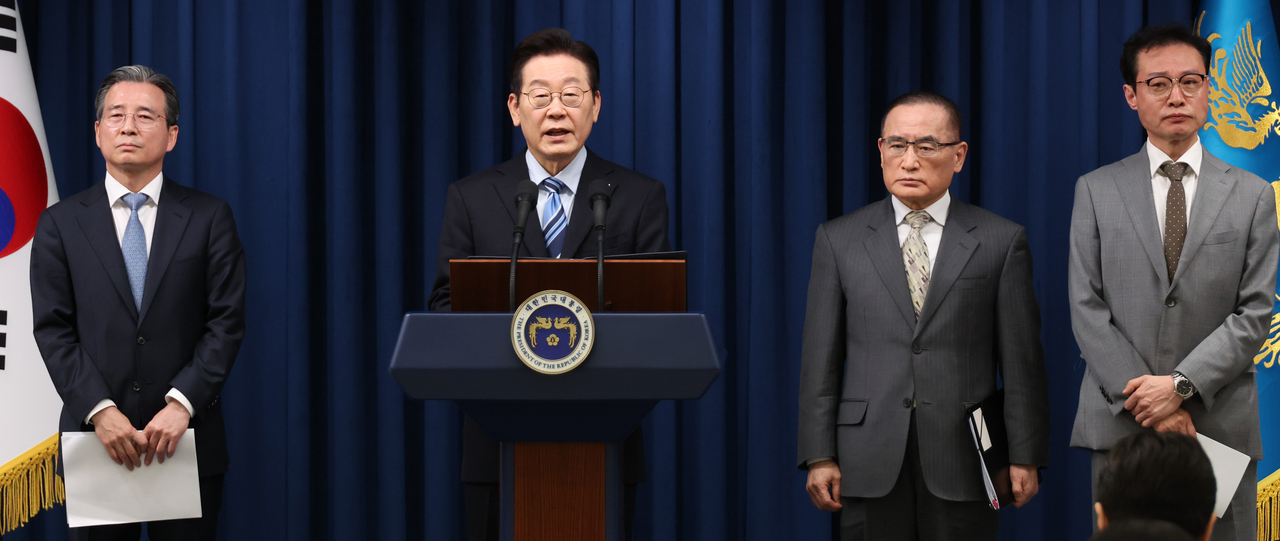
Lee recalls 'hanging tough' to deal with US demands
Lee said the delay was inevitable, Lee added, because all South Korea could do in the face of US demands was to "hang tough." The deal was not meant to "gain" from the counterpart but to "minimize inevitable losses in line with the shift in international order," Lee added.
Recalling the past months of negotiation, Lee said he had to address concerns about what the fateful agreement could bring about in the future of South Korea, as the deal could have been handled "unilaterally due to a sort of power dynamics."
What made him more frustrated was the pressure from within the country, apparently referencing his political opponents, to end the negotiation swiftly.
"In a world where no friendship lasts and no allies last forever, such forceful negotiations get me into thinking that fostering our international standing and our national power will ensure our national interest and better quality of our people's lives," Lee told reporters. "I will do our utmost to build our nation's power in economy, culture and military."
Lee also acknowledged that the outcome of the negotiation came although South Korea was behind in the world's race to clinch a trade deal with the US due to the martial law crisis the country had suffered since December.
Meanwhile, during his remarks about his trade deal with the US, Lee stressed his willingness to continue to pursue "pragmatism" in foreign affairs, especially in engaging with the two superpowers of the US and China.
In this vein, Lee highlighted his bid to improve South Korea's economic ties and exchanges with China, recalling his meeting with Chinese President Xi Jinping two weeks ago on the occasion of the APEC events.
"Given the harsh reality in international affairs, neglecting others due to differences in opinion without grounds is an absurd act," Lee said.
"What we need now is a pragmatic approach. Through dialogues, the government will continue to remain steadfast in developing the ties between South Korea and China and in achieving peace on the Korean Peninsula."
consnow@heraldcorp.com