Lee–Trump summit covered Seoul’s defense cost-sharing, OPCON transition and US extended deterrence
Allies agreed on broader regional security, including the Taiwan Strait, yet Seoul denies it targets China
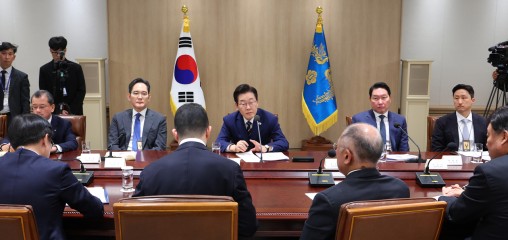
South Korea will increase its defense spending and provide more financial support for US soldiers stationed here, while working toward regaining wartime operational control from the US, according to a fact sheet on President Lee Jae Myung’s summit with US President Donald Trump in Gyeongju last month.
The document, unveiled Friday, comes after months of speculation that Seoul and Washington were preparing to outline elements of a broader plan to modernize the 72-year-old South Korea-US alliance.
According to the fact sheet, Seoul confirmed that it would provide $33 billion in “comprehensive support” for US forces stationed in South Korea. Specific items were not disclosed.
The document also said Seoul plans to raise defense spending to 3.5 percent of gross domestic product “as soon as possible” and intends to spend $25 billion on US military equipment purchases by 2030.
Washington, for its part, reaffirmed its pledge to provide extended deterrence to South Korea, using the full range of US military capabilities, including nuclear assets. It also underscored the importance of the "enduring presence" of US Forces Korea.
The document also highlighted plans to strengthen the Nuclear Consultative Group — a bilateral body established following the 2023 Washington Declaration, which reaffirmed South Korea’s commitment to its non-nuclear policy and the US pledge to provide nuclear-based extended deterrence.
Wartime operational control transition from Washington to Seoul was included among the areas of alliance modernization — a pledge Lee had made during the presidential campaign to complete within his term.
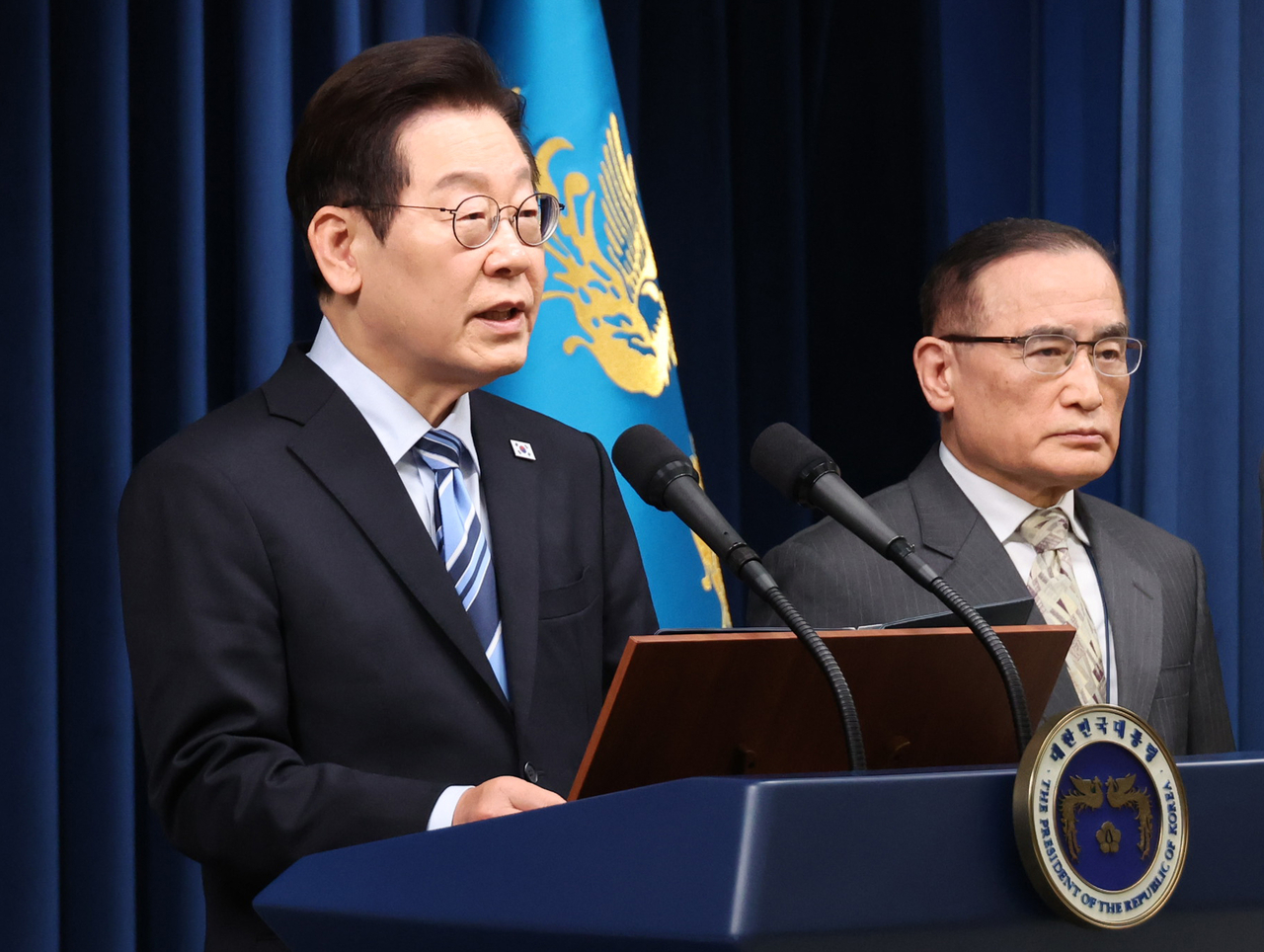
Although the fact sheet did not present a specific timeline and repeated that the transfer remains conditions-based, senior presidential secretary Wi Sung-lac said during a Friday briefing that the process has been moving forward steadily.
Wi said the allies “have been reviewing the required conditions closely, and the process has been progressing smoothly,” adding that the South Korean government maintains its stance of pursuing the transition “as swiftly as possible within the administration’s term.”
The two leaders also committed to strengthening peace, security and prosperity on the Korean Peninsula and across the broader Indo-Pacific region.
On North Korea, the two sides reaffirmed their goal of complete denuclearization and their intention to work together to implement the 2018 Singapore Joint Statement. Both agreed to coordinate closely on North Korea policy, calling on Pyongyang to return to dialogue and comply with international obligations, including abandoning its weapons of mass destruction and ballistic missile programs.
Regarding regional stability, the fact sheet reaffirmed freedom of navigation and overflight and called for peaceful approaches to regional issues, including those involving the Taiwan Strait.
The sheet said the two sides “emphasized the importance of preserving peace and stability across the Taiwan Strait” and also committed to strengthening the trilateral partnership with Japan.
Before the fact sheet was disclosed, Lee told reporters that Seoul would continue to enhance its relationship with Beijing. Rejecting another nation because of differing positions “is an unwise approach in the harsh realities of international politics,” he said at the same Friday briefing.
He added that “even the US both competes and cooperates with China,” stressing that South Korea would maintain steady dialogue with Beijing to advance bilateral ties and support peace on the Korean Peninsula.
The fact sheet also confirmed that Washington approved Seoul’s plan to build nuclear-powered submarines.
Wi said South Korea had secured authority for enrichment and reprocessing using US-supplied nuclear material but emphasized that the project “has nothing to do with nuclear armament,” noting that the fuel would be used solely for conventionally armed submarines.
The two allies also agreed to expand cooperation in cyberspace, outer space and emerging military applications of artificial intelligence.
flylikekite@heraldcorp.com