Automaker to roll out 2.63 million EVs in Korea through 2030
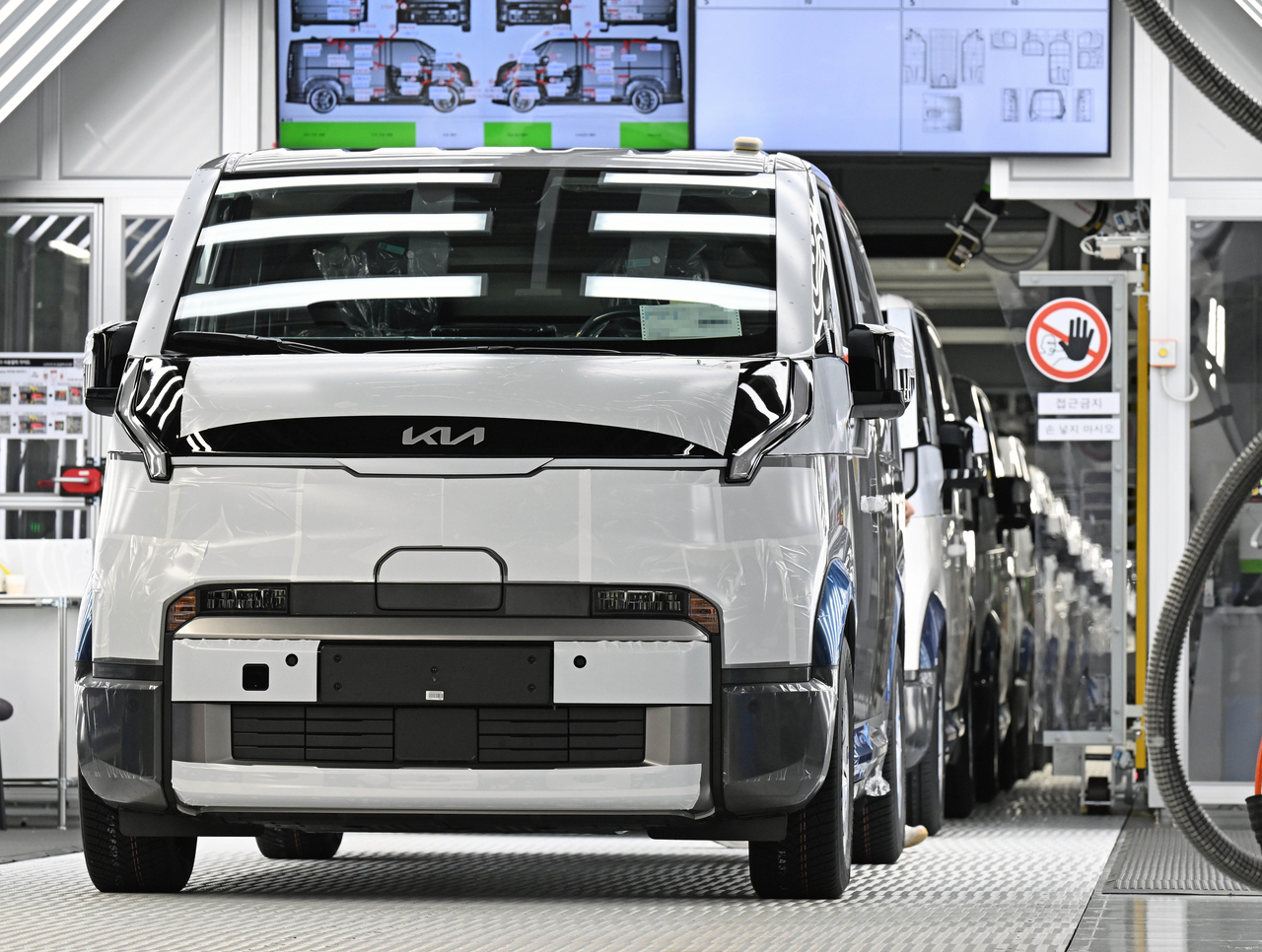
Kia unveiled its newly built EVO Plant East — Hyundai Motor Group’s first factory dedicated to platform beyond vehicle, or PBV — in Hwaseong, Gyeonggi Province on Friday, signifying the automaker’s emphasis on the electrification of light commercial vehicles.
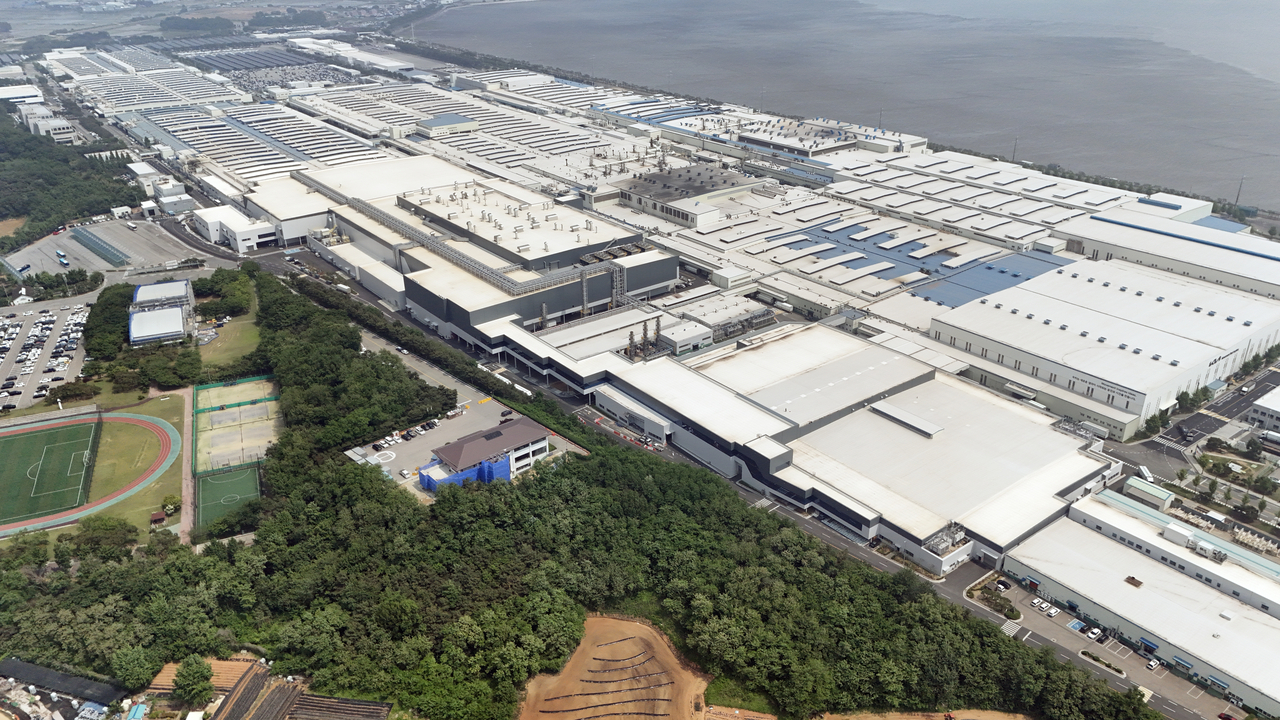
Kia, Korea’s second-largest automaker behind its affiliate Hyundai Motor, held a completion ceremony for the EVO Plant East and a groundbreaking ceremony for the EVO Plant West at Kia Autoland Hwaseong on the same day.
According to Kia, the automaker has committed an investment of approximately 4 trillion won ($2.7 billion) for the two PBV-specialized plants’ facilities and research and development cost on a 300,000-square-meter site. The EVO Plant West is scheduled to begin operation in 2027.
Kia PBVs are modular electric vehicles that can be adapted to serve various purposes with advanced software solutions.
“Kia is pushing PBV as a key future business as it sees an opportunity in the electrification of light commercial vehicles,” said Kia CEO Song Ho-sung.
“In steps with the government’s support policies for EVs, Kia will produce 2.63 million EVs, about 58 percent of what it plans to produce across the globe between 2026 and 2030, in Korea to contribute to strengthening the competitiveness of the country’s auto industry.”
The EVO Plant East, which will roll out the Kia PV5 models, has an annual production capacity of 100,000 units. The EVO Plant West will have an annual production capacity of 150,000 units including the PV7 and large-sized PBV models.
Kia will also operate a PBV conversion center with partners at its Hwaseong site, to develop and produce different models based on the basic versions of the PV series. The conversion center will serve as an outpost to enhance the quality of PBVs and set up flexible response systems to bolster industrial competitiveness.
According to Kia, the conglomerate's E-Forest smart factory system has been installed at the Hwaseong site to allow real-time control of operation and quality. Automated guided vehicles have been dispatched for smart logistics.
Kia noted that the assembly line uses both conventional conveyer belt production and cell production for manufacturing flexibility.
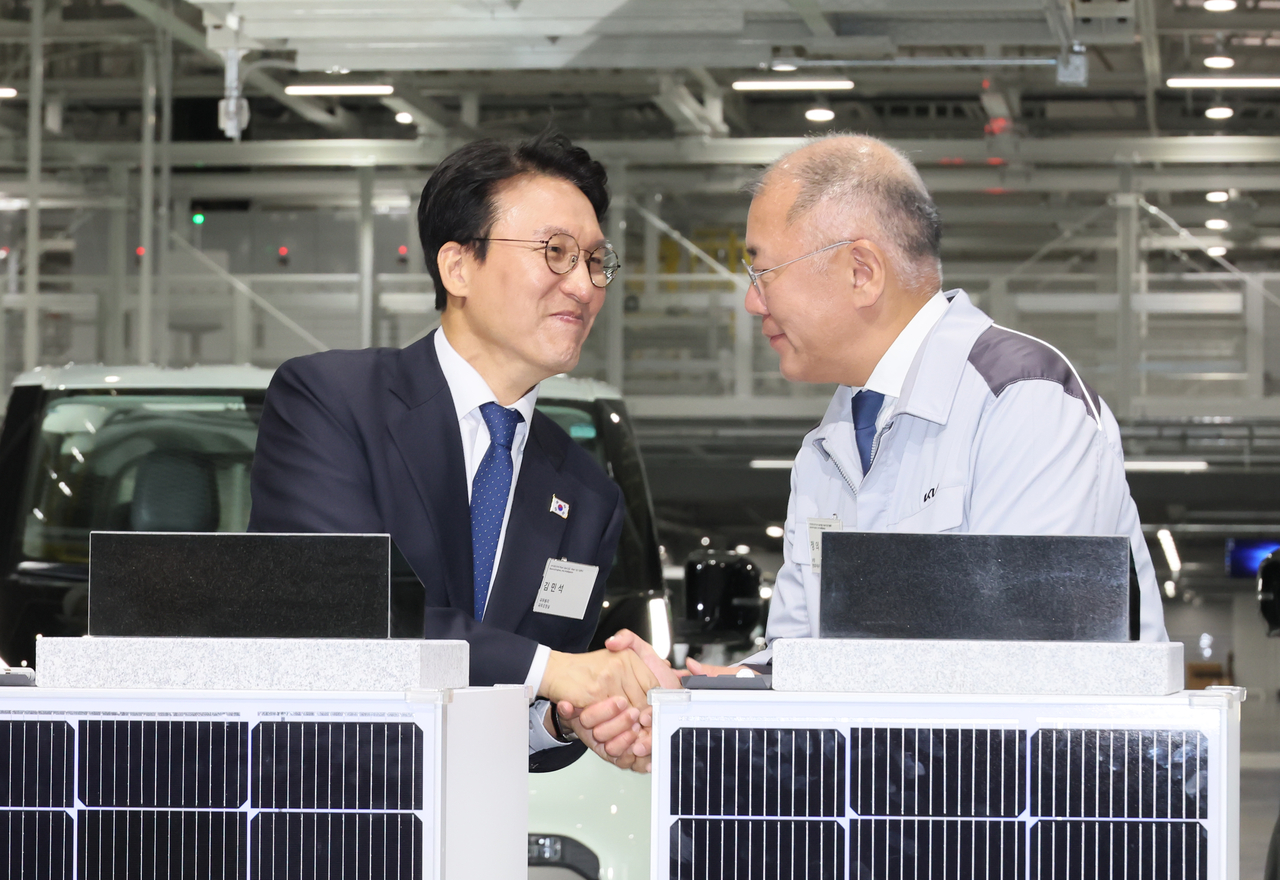
About 200 people including Prime Minister Kim Min-seok, Gyeonggi Gov. Kim Dong-yeon, Hwaseong Mayor Jeong Myeong-geun and Hyundai Motor Group Executive Chair Chung Euisun attended Kia’s plant completion and groundbreaking ceremonies.
“We will open a new era of mobility innovation with the automotive industry preparing for new challenges such as EVs, autonomous driving and AI,” said Prime Minister Kim.
hwkan@heraldcorp.com