South Korea and the United States on Friday released a joint fact sheet on their trade deal outlining Seoul's $350 billion investment pledge and security agreements, including Washington's approval of South Korea's plan to build a nuclear-powered submarine.
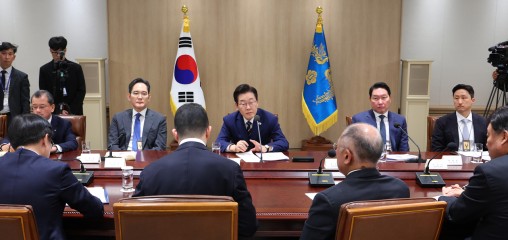
President Lee Jae Myung made the announcement more than two weeks after he concluded the trade deal during his summit with US President Donald Trump on the sidelines of the Asia-Pacific Economic Cooperation forum in South Korea on Oct. 29.
The document outlines the trade deal detailing Seoul's $350 billion investment pledge in return for Washington lowering tariffs on Korean goods from 25 percent to 15 percent, as well as new security agreements granting US approval for Seoul's bid to build a nuclear-powered submarine and to acquire the right to reprocess spent nuclear fuel.
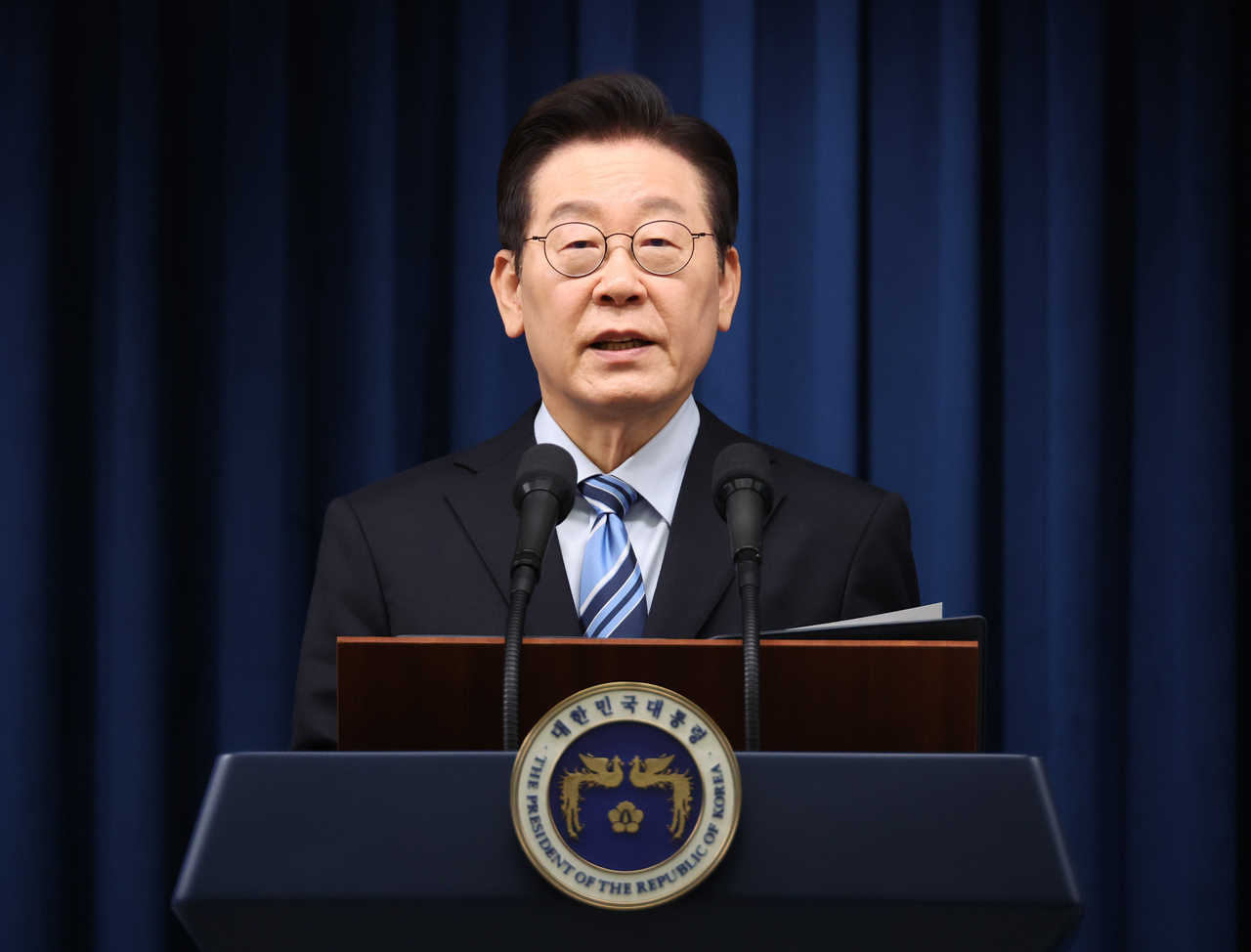
"With this, the Korea-US trade negotiations and security consultations, one of the biggest variables for our economy and national security, have been finally concluded," Lee said during a televised press briefing.
Lee expressed "gratitude and respect" for Trump's decision, saying "a meaningful outcome" was reached after his two summits with the US president.
Of the $350 billion pledge, $150 billion will be invested in the US shipbuilding sector and $200 billion will be allocated to strategic investments under a memorandum of understanding to be signed by the two countries.
Lee said the two sides achieved the best possible outcome "based on common sense and reason."
"The two governments confirmed that Korea's investments will proceed only within a level our economy can fully sustain and only in commercially viable projects," he said. "This has dispelled concerns that these investments would effectively amount to disguised grants for projects unlikely to recover their principal."
Under the agreement, Seoul and Washington will expand their partnership from traditional strategic industries, such as shipbuilding and nuclear power, to future high-tech sectors, including artificial intelligence and semiconductors.
"With this agreement, the Korea-US alliance has further evolved into a future-oriented comprehensive strategic alliance that encompasses security, the economy and advanced technology," he said.
On security, Lee said Washington has approved Seoul's plan to build nuclear-powered submarines and supported its right to reprocess spent fuel, calling it a "meaningful step" in national security.
"The two nations reached a shared understanding on the Republic of Korea's construction of a nuclear-powered submarine, an essential strategic asset sought for decades," he said, referring to South Korea's official name.
"We also secured the US government's support for expanding the rights related to uranium enrichment and spent nuclear fuel reprocessing. This is a highly meaningful step forward," he added.
Lee also said South Korea affirmed its commitment to taking a leading role in the defense of the Korean Peninsula by strengthening its military capabilities and regaining wartime operational control from the US, and the US side expressed its support. (Yonhap)