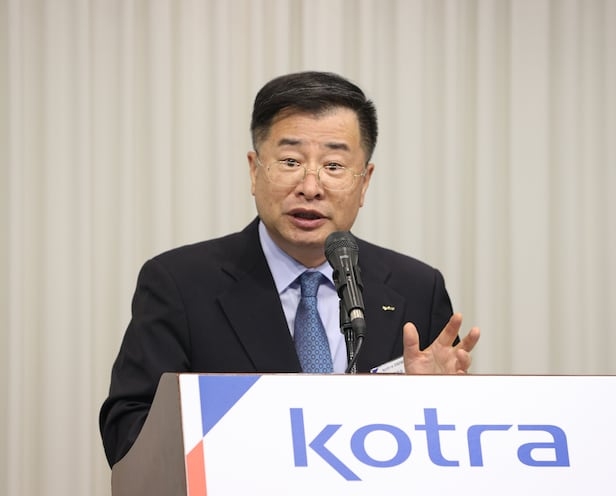
South Korea's exports of consumer goods are widely expected to reach a new high this year on the back of soaring global popularity of Korean culture, the chief of the Korea Trade-Investment Promotion Agency has said, pledging stepped up efforts to help diversify overseas markets and export items.
Outbound shipments of consumer goods have increased 6.6 percent from a year earlier in the first nine months of the year, reaching an all-time high for the January-September period, according to KOTRA President Kang Kyung-sung.
"Among the five major consumer-goods export categories, food has been the top item so far, but this year the growth rate of cosmetics exports has more than doubled," Kang said in a press conference Thursday. "It will be worth watching whether cosmetics surpass food in annual export volume."
Kang attributed the robust performance of consumer goods to the global popularity of Korean culture, food, health and beauty products.
"As the power of the Korean wave grows stronger, Korea has once again seized the opportunity, which was to boost exports of K-consumer goods," he said. "I am convinced that Korea can make a significant leap forward."
The KOTRA chief stressed that diversification of export items and destinations will be the key to maintaining Korea's export competitiveness amid heightened global trade uncertainties.
For the diversification of export markets, KOTRA will work to expand its business in the Global South, such as the Association of Southeast Asian Nations and India, while supporting the globalization efforts of industries that have emerged as new growth engines for the country, including consumer goods, defense and biohealth.
KOTRA will also work to support the country's efforts to stabilize supply chains and adapt to shifts in the global trade environment, such as the increasing alignment of economic security and trade issues, Kang said.
"If this year was all about tariff negotiations, next year will be about intensifying competition over supply chain restructuring," he added. (Yonhap)