Presidential office to launch reforms in areas including regulatory, financial systems next year
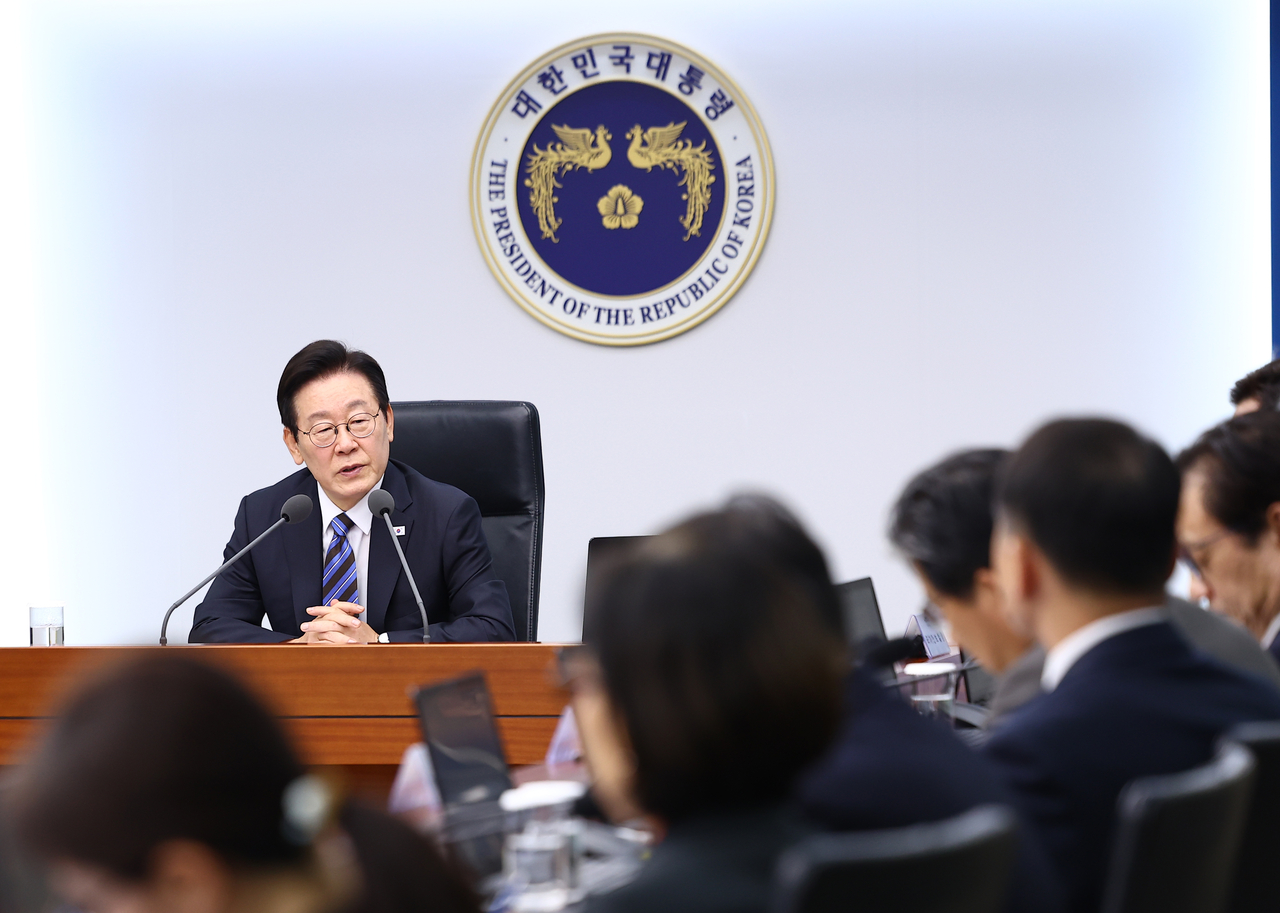
President Lee Jae Myung called for structural reforms across key sectors to boost South Korea’s slowing economy, with a particular focus on regulatory and financial reforms, according to the presidential office, Thursday.
“The most urgent challenge facing the Republic of Korea today is to reverse the decline in our potential growth rate,” said Lee during Thursday’s meeting, referring to Korea by its official name. “To do that, bold, structural reform is essential.”
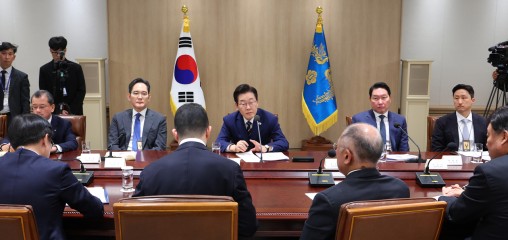
During a meeting held with senior aides, Lee called for structural reforms in six sectors — regulations, finance, public services, pensions, education and labor — to open the path to Korea’s “renewed economic growth” by 2026, through deliberation and compromise among relevant sectors.
Thursday's meeting was centered on discussing the government's direction of implementing the reforms, with details to be finalized before the reforms are put into action in 2026.
For regulatory reforms, the government plans to implement detailed, sector-specific reforms in accordance with each of the sectors’ goals.
“Regulations will be applied flexibly for emerging technologies, while appropriate standards will be maintained in areas related to life and safety, ensuring regulatory reforms remain rational and adaptive to environmental changes,” said presidential spokesperson Kim Nam-joon during Thursday’s briefing.
“The government also aims to strengthen on-the-ground communication with business associations and local communities to further rationalize such regulations.”
Kim added that the Lee administration aims to promote a shift toward productive finance and expand inclusive finance, criticizing current financial policies for failing to address issues such as capital being overly concentrated in real estate and exploitative lending targeting vulnerable groups.
“The government plans to pursue financial policies that support balanced growth and recovery,” said Kim.
Discussions at Thursday’s meeting also included the need for transformation in how Korea approaches industrial safety and labor issues, with reference made to the recent boiler tower collapse at a power plant in Ulsan.
“The current administration aims to achieve genuine growth that respects labor through communication and cooperative labor-management relations,” Kim mentioned.
Within the public sector, Kim stated that the senior aides at Thursday’s meeting agreed to restore public institutions as key drivers of growth, by reforming the evaluation system of personnel in such institutions so that they can lead in areas such as labor, safety and balanced growth, adding that the reform would also focus on “eliminating unnecessary executive positions.
As for pension reforms, Kim added that the government would work closely with the National Assembly’s special committee on pension reforms and support discussions for detailed plans. Reforms in the education sector included fostering universities outside of Seoul and in regions facing depopulation issues.
lee.jungjoo@heraldcorp.com