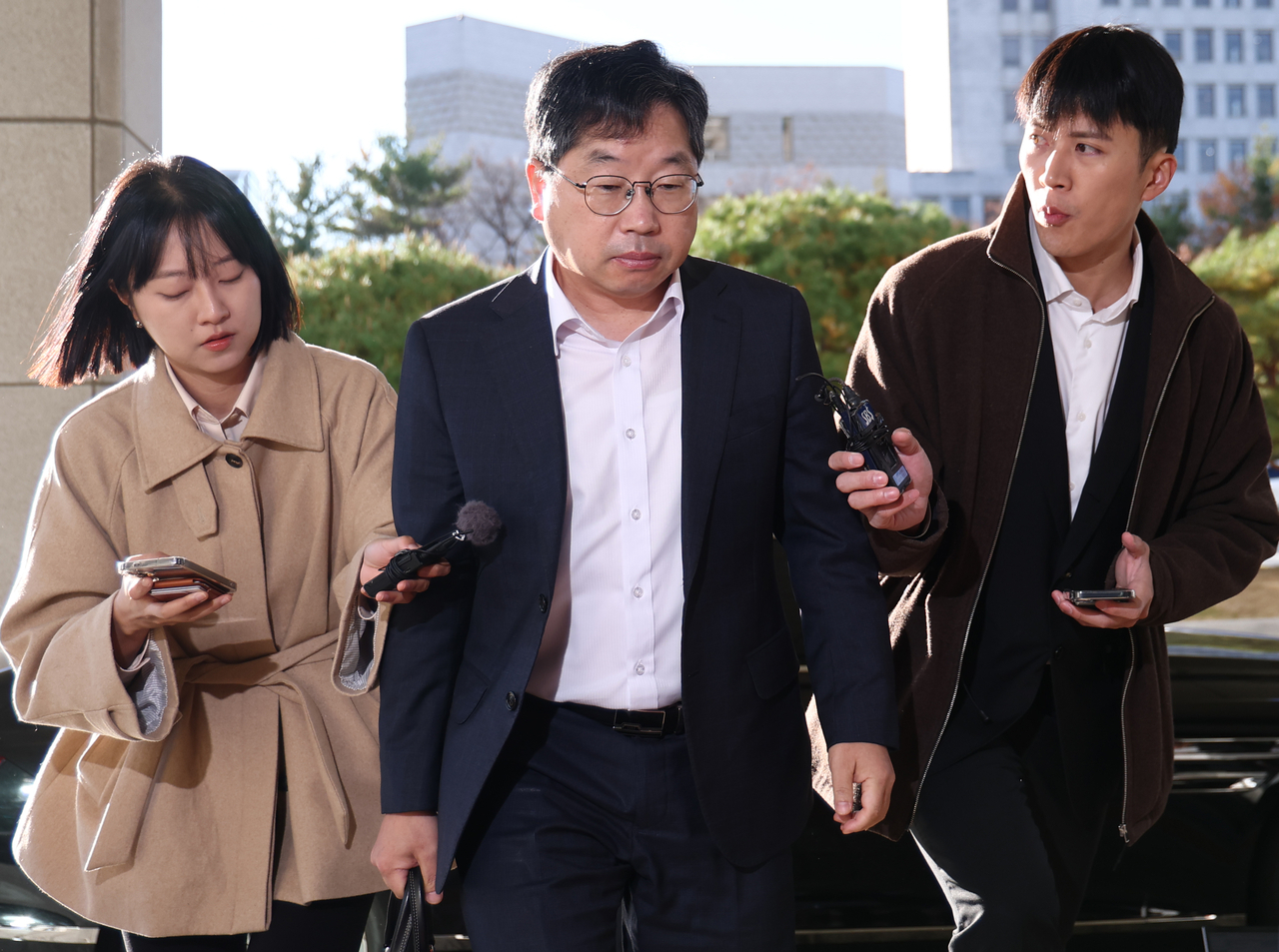
Acting Prosecutor General Noh Man-seok, who offered to resign amid growing objections to the prosecution's decision not to appeal a ruling in the Daejang-dong development corruption case linked to the president, is expected to address whether his decision was influenced by the Justice Ministry.
The Supreme Prosecutors’ Office said Noh will attend a closed-door retirement ceremony at 10:30 a.m. Friday, during which he has indicated he will explain his stance on the decision.
The announcement came without confirmation on whether Noh’s resignation has been formally accepted by the justice minister. The presidential office said it would accept the resignation once the minister submits the formal letter.
The main opposition party has accused the justice minister of pressuring the prosecution, while the ruling party has escalated tensions, signaling it may push for legislation to allow the dismissal of “defiant” prosecutors.
Noh has said he offered to resign “to protect the prosecution,” adding that remaining in office while insisting he had done nothing wrong “would not help the organization.”
The non-appeal involved a case on corruption charges against former city officials and private developers related to the Daejang-dong development project in Seongnam, Gyeonggi Province, where President Lee Jae Myung served as mayor.
On Thursday, the main opposition People Power Party unveiled legislation aimed at blocking prosecutors’ authority to cancel indictments — a move it says is necessary to prevent Lee’s ongoing trials from facing similar non-appeal or indictment-withdrawal outcomes.
In a press briefing at the National Assembly in Seoul, Rep. Kwak Kyu-taek of the People Power Party said that under current law, canceling the indictments would “block judicial judgment on the president.” He stressed that such a move would make reindictment against Lee “practically impossible.”
Rep. Na Kyung-won of the People Power Party said the prosecution leadership's decision was an attempt at “erasing President Lee’s crimes,” warning that allowing prosecutors to cancel indictments could become another tool to protect Lee from criminal charges.
The proposed revision to the Criminal Procedure Act would delete the provision that currently allows prosecutors to withdraw an indictment before a ruling is finalized.
The ruling Democratic Party of Korea countered, calling the prosecutors’ internal resistance “national disruption” and arguing that it underscored the need to complete prosecution reform.
Democratic Party Floor Leader Kim Byung-kee said in a YouTube interview that “the rebellion by prosecutors must be stopped and crushed using all legal and administrative measures available,” announcing plans for legislative amendments that would allow prosecutors to be removed from office.
Rep. Jeon Hyun-heui of the Democratic Party added that the controversy showed the People Power Party and "politically aligned" prosecutors were working to frame the Daejang-dong turmoil as a political issue in order to blunt the ruling bloc’s push for prosecution reform.
Noh offered to resign Wednesday, four days after the prosecution opted not to appeal the Daejang-dong case. The choice sparked rare multilayered dissent across the prosecution.
The uproar also prompted questions over whether outside pressure influenced the non-appeal — a claim disputed by the Justice Ministry.
In a National Assembly testimony Wednesday, Vice Justice Minister Lee Jin-su said that while he conveyed Justice Minister Jung Sung-ho’s instruction to “judge carefully,” the phone call with Noh "was not an exercise of command authority.”
flylikekite@heraldcorp.com