Ruling party weighs bill to dismiss ‘defiant’ prosecutors amid internal unrest
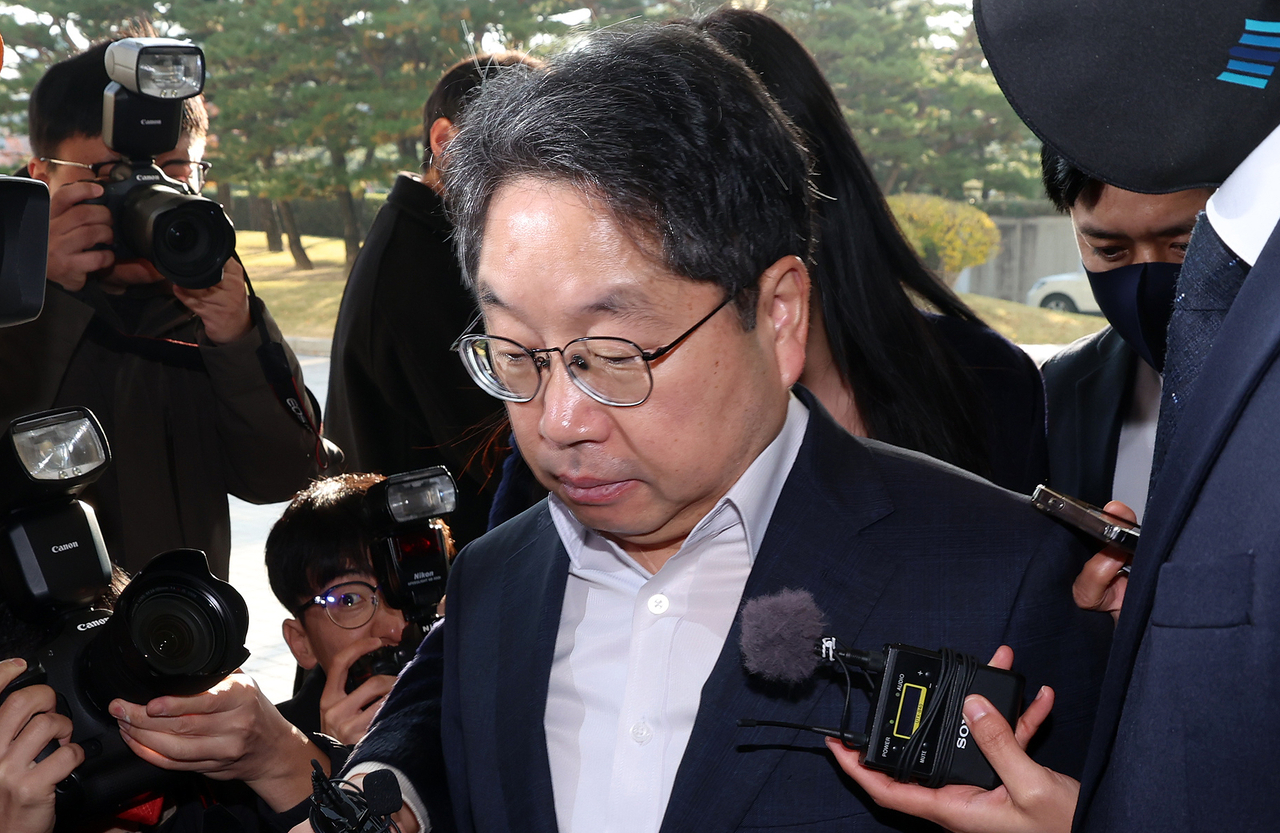
Acting Prosecutor General Noh Man-seok offered to resign Wednesday amid mounting unrest within the prosecution over last week's decision not to appeal a court ruling in a high-profile land development corruption case linked to the president.
The decision sparked an unprecedented backlash from prosecutors nationwide, who accused the Justice Ministry of pressuring the prosecution not to appeal. The main opposition party also raised suspicion that the presidential office interfered in the decision.
Noh's resignation also came hours after the ruling Democratic Party of Korea announced plans to amend the Prosecutors’ Disciplinary Act to allow prosecutors to be fired, labeling the prosecutors' criticism an act of “collective insubordination” and “disruption of state discipline.”
During a Supreme Council meeting at the National Assembly in Seoul, the ruling party's Floor Leader Rep. Kim Byung-kee said the amendment to the Prosecutors’ Disciplinary Act would make it possible to remove prosecutors for serious misconduct.
“Unlike other public officials, prosecutors cannot currently be expelled even for insubordination,” Kim said. “This law has effectively functioned as a shield of privilege for prosecutors. We will abolish it and ensure that defiant prosecutors are subject to dismissal or removal under the National Public Service Act.”
Under Korean law, prosecutors can only lose their jobs if impeached by the National Assembly or convicted of a crime punishable by imprisonment or a heavier sentence, whereas other public officials are subject to the National Public Service Act, which allows dismissal as a disciplinary measure.
Rep. Jung Chung-rae, chair of the Democratic Party, echoed the view, urging Justice Minister Jeong Seong-ho to swiftly report to the National Assembly on disciplinary measures against prosecutors who “incited collective defiance” following the withdrawal of the Daejang-dong appeal.
“The party will mobilize every means available — from a parliamentary probe and hearings to a special-counsel investigation — to bring to justice prosecutors found to have engaged in illegal or improper conduct,” Jung said.
The prosecution's decision not to appeal the case, involving a development project in Daejang-dong, Seongnam, where President Lee Jae Myung was serving as mayor, also drew criticism from the main opposition People Power Party, which accused the ruling bloc of attempting to intimidate prosecutors for political gain.
People Power Party Chair Rep. Jang Dong-hyeok called for a parliamentary probe and special counsel investigation into the case, alleging possible interference from the presidential office.
“Even though the largest development corruption case in Korean history resulted in partial acquittals, the prosecution gave up on appealing,” Jang said during a protest rally in front of the Supreme Prosecutors’ Office in Seocho-gu, southern Seoul, Tuesday.
“Justice Minister Jeong’s remark that the decision should be made carefully sounded to me like a mob boss warning his men to watch their step at night.”
However, Jeong denied that the ministry or the presidential office had ordered him not to appeal.
Appearing before the National Assembly’s Special Committee on Budget and Accounts earlier in the day, Jeong said there was “no instruction to oppose an appeal.”
Asked whether Jeong's admonitions could be perceived as pressure on the prosecution, he replied, “How could that be seen as pressure? It was just a routine comment.”
The acting prosecutor general tendered his resignation only four months after he filled the post left vacant since former Prosecutor General Shim Woo-jung's departure in July.
flylikekite@heraldcorp.com