Cho is 8th NIS director to be arrested, could become 10th to stand trial
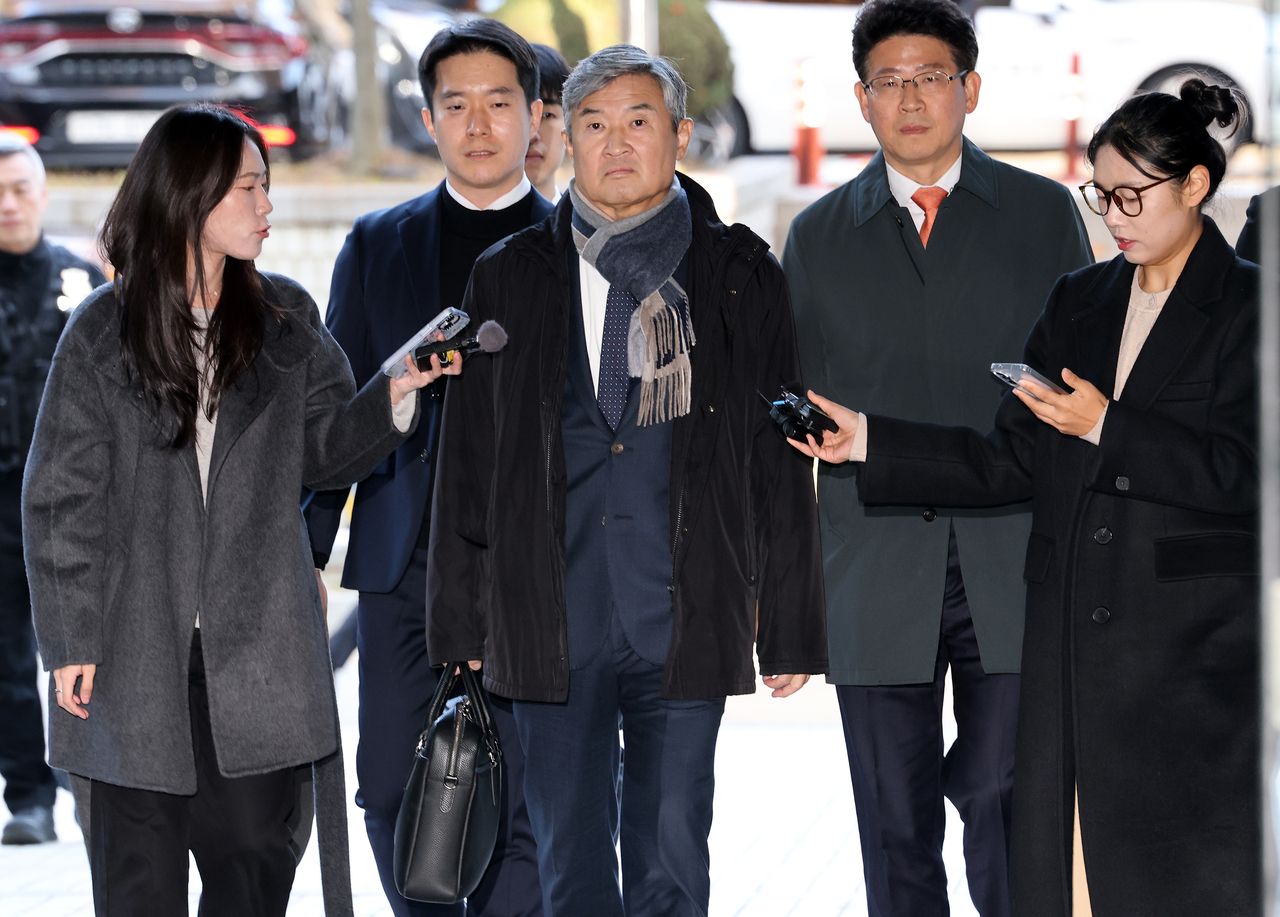
Former spy chief Cho Tae-yong, a key figure in a special counsel investigation into ousted President Yoon Suk Yeol’s short-lived martial law declaration, was arrested Wednesday — just a month before the probe’s mandate expires.
Later in the day, the special counsel also arrested former Prime Minister Hwang Kyo-ahn, who had served in the Park Geun-hye administration, on charges of inciting insurrection by posting a message on Facebook in support of martial law on Dec. 3, 2024.
Unlike Cho, Hwang remains under arrest. A request for his detention warrant is anticipated to be filed by the special counsel before the 48-hour custody limit expires.
The detention of Cho, who led the National Intelligence Service when Yoon declared martial law last year, is expected to smooth progress in the investigation led by special counsel Cho Eun-suk, after the team hit setbacks in securing custody of other key suspects.
The Seoul Central District Court issued a detention warrant for Cho early Wednesday morning, citing "concerns that he might destroy evidence." This decision followed a warrant hearing held the previous day.
The warrant was requested by the special prosecution team on Nov. 7 on several charges. These charges include violating the National Intelligence Service Act’s political neutrality clause, dereliction of duty, perjury, destruction of evidence, falsifying official documents and violating the Act on Testimony and Appraisal before the National Assembly.
At the heart of the special counsel's suspicions is that Cho neglected his duty as NIS director to immediately report information of grave national security implications to the National Assembly before and after Yoon's martial law declaration.
According to the special counsel, Cho did not report Yoon’s plans to declare martial law to the National Assembly even though he was aware before Yoon’s public address.
Furthermore, Cho failed to inform the Assembly after receiving a report that, under martial law, troops were moving to arrest then-Democratic Party of Korea leader Lee Jae Myung as well as then-People Power Party leader Han Dong-hoon.
The mandate of an NIS director is stipulated in Article 15, under the heading “Report to the National Assembly,” of the National Intelligence Service Korea Act.
"This marks the first case that a violation of the NIS director’s duty to report to the National Assembly’s Intelligence Committee has been legally construed as dereliction of duty," Park Ji-young, a deputy to the special counsel, told Wednesday's press briefing.
The arrest of Cho came amid mounting concerns that the special counsel’s investigation could lose momentum after the courts dismissed arrest warrants for key figures, including former Prime Minister Han Duck-soo and former Justice Minister Park Sung-jae.
The arrest also follows the effective conclusion of one of the two key branches of the probe — alleged “acts benefiting the enemy.” The special counsel has indicted Yoon, former Defense Minister Kim Yong-hyun and former Defense Counterintelligence Commander Yeo In-hyung on charges including aiding the enemy and abuse of authority for sending drones to North Korea to create a pretext for declaring martial law.
Prosecutors are now expected to focus the remaining one month on the insurrection investigation before its mandate expires on Dec. 14.
With Cho’s arrest, the special counsel is now seeking to detain two remaining key suspects — former Justice Minister Park Sung-jae and Rep. Choo Kyung-ho, who served as floor leader of the People Power Party during Yoon’s martial law declaration.
Cho’s detention also has once again cast a spotlight on the troubled and recurring history of South Korea’s spy chiefs — a position long marred by scandal, political meddling and prosecution.
Cho is the eighth NIS director to be arrested among 16 who have served since the agency was reestablished as the National Intelligence Service in 1999, replacing the Agency for National Security Planning. If indicted, he would become the 10th spy chief to face trial.
Leaders of the agency, responsible for safeguarding state secrets and national security, have often been accused of political interference and corruption under successive governments.
Every NIS chief since the Lee Myung-bak administration (2008-2013) has faced criminal investigation.
Under the conservative Lee Myung-bak and Park Geun-hye administrations, successive chiefs were convicted of channeling secret funds and orchestrating online opinion-rigging campaigns to support the government.
Under the liberal Moon Jae-in administration, their successors faced trials over mishandling inter-Korean incidents, from the killing of a fisheries official to the forced repatriation of North Korean fishers.
dagyumji@heraldcorp.com