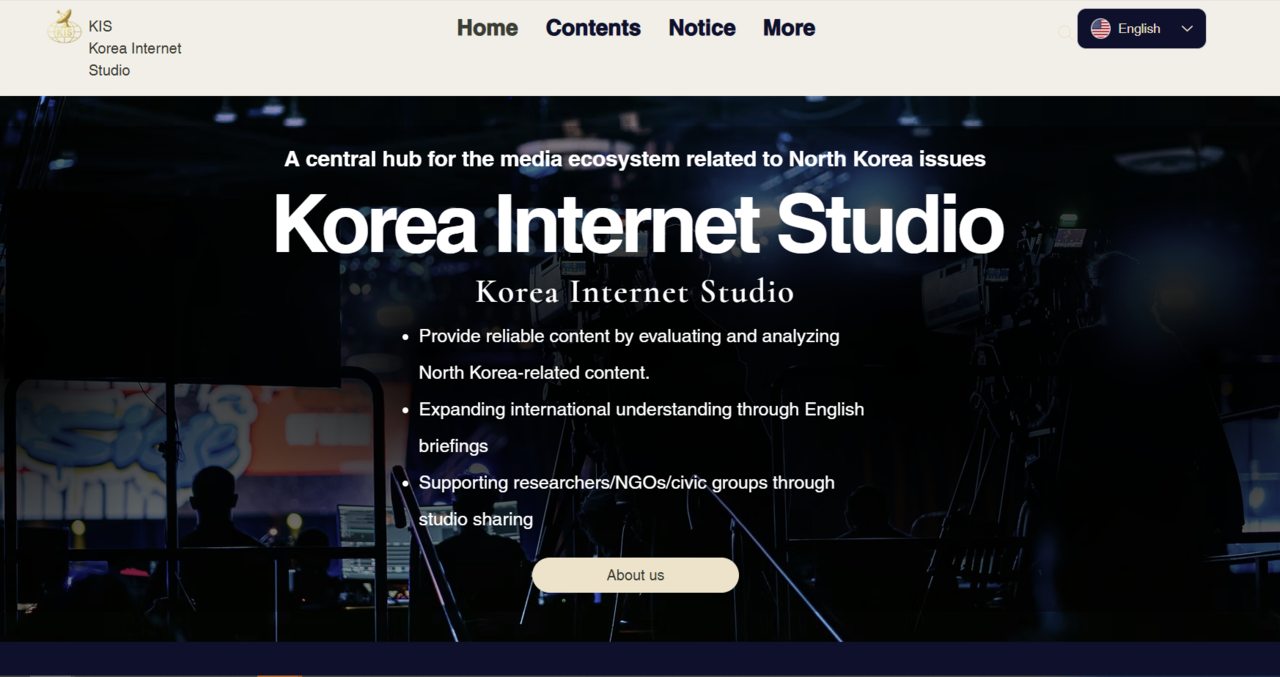
A group of North Korean defectors and human rights activists has launched an online media platform aimed at delivering information to North Koreans living and working abroad, with the long-term goal of reaching audiences inside North Korea.
The new outlet, called Korea Internet Studio, was officially launched Tuesday amid the shutdown of multiple radio and broadcast services long operated by the US and South Korean governments to deliver information to North Korean audiences.
These include the US-headquartered Voice of America and Radio Free Asia, which have been off the air, as well as the suspension of radio and TV broadcasts to North Korea by South Korea’s National Intelligence Service as of July.
“This moment is not just the beginning of a broadcast, but a historic starting point that opens a new window for North Korean people to connect with the world,” said Lee Young-hyeon, executive director of KIS, during the inauguration ceremony.
“Our mission is to deliver accurate and reliable information to North Koreans cut off from the outside world, helping them understand and judge the world for themselves.”
KIS provides information tailored for online media platforms, but radio or TV remain more accessible to North Koreans, who have virtually no access to the global internet.
“Our primary goal is to provide information to North Koreans staying overseas,” Lee said. “In particular, we plan to develop customized content tailored to specific groups such as overseas dispatched workers, diplomats and students studying abroad.”
KIS aims to develop, produce and distribute information through its own applications as well as global platforms including YouTube and Instagram, China’s Youku, Kuaishou and TikTok, and Russia’s two most popular social networks, OK and VK.
The main content features inspiring success stories of North Korean defectors. KIS will also provide information that offers practical help to those seeking to flee North Korea, such as details on policies and support programs implemented by foreign countries for North Korean defectors abroad, along with guidance on refugee application and approval procedures.
Lee explained that most North Koreans residing abroad possess mobile phones and thereby have access to the internet.
"Even among the diplomats or dispatched workers who defected to South Korea, quite a number said they decided to come after watching YouTube channels run by North Korean defectors and obtaining information through those channels," Lee said.
"Although surveillance and control (by the North Korean regime) continue, (North Koreans) remain thirsty for information and make every effort to gain access to it. Our primary goal is to provide information to those individuals first."
Lee underscored that KIS’s long-term goal is to deliver news to all North Korean residents living inside the country through satellite communication technologies such as Starlink.
In North Korea, the number of mobile phone subscribers has been on an upward trajectory.
Cellular subscriptions in the country, which has a population of roughly 24 million, are estimated to have risen to between 6.5 and 7 million despite restrictions. That figure far exceeds the estimated 1.2 million fixed-line telephones, according to a report by 38 North published in 2024.
In addition, North Korean authorities have been pilot-testing the introduction of a Wi-Fi service in wider areas of Pyongyang since October.
“We believe that the internet will eventually become available in North Korea, and we are operating this broadcasting station in preparation for that time,” Lee said.
dagyumji@heraldcorp.com