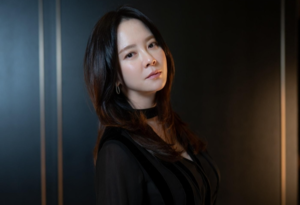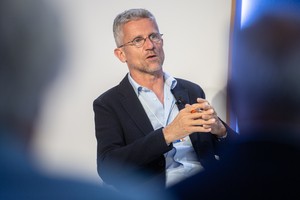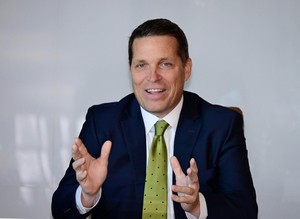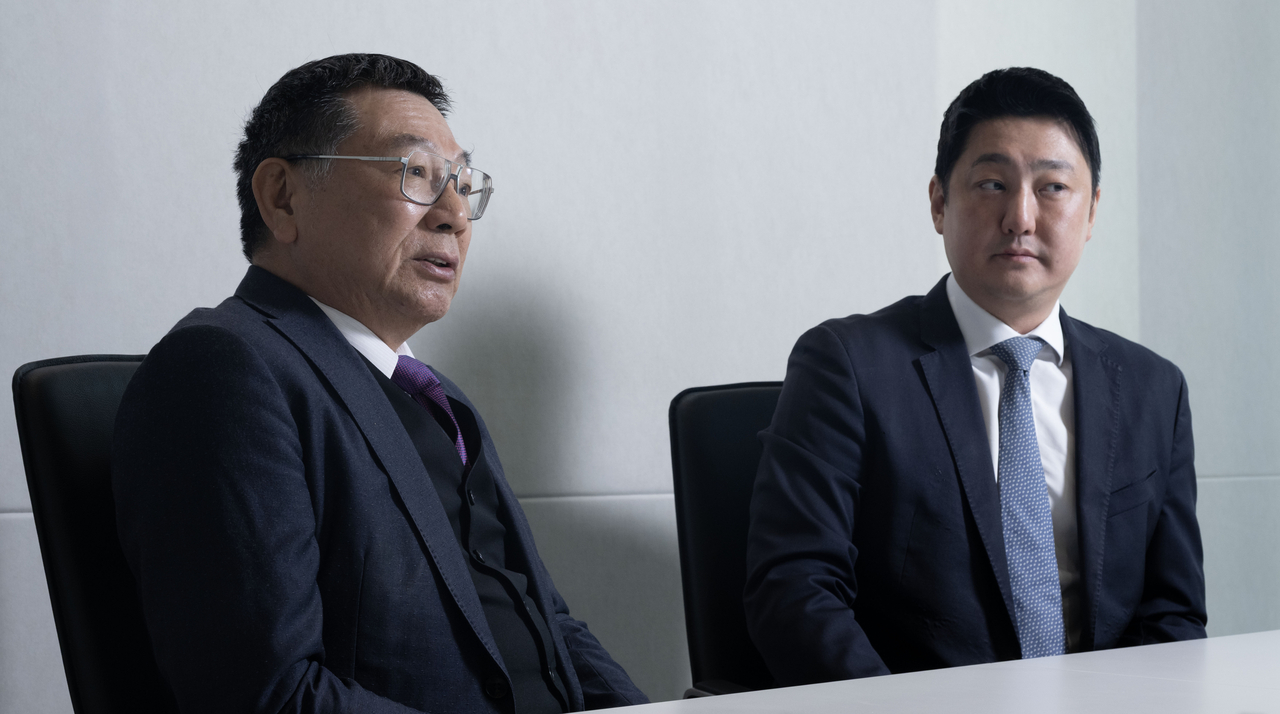
Despite the steep selloff in global chip and AI stocks that rattled markets this week, industry veterans Colley Hwang and Kim Sung-soo Eric laid out a rosy outlook, downplaying concerns of an "AI bubble" and predicting that the semiconductor "supercycle" will continue.
"I think the concerns about an AI bubble come from not really understanding how much the technology is evolving right now," Kim, CEO of Datacrunch Global, said during an interview with The Korea Herald in Seoul on Friday.
"The current AI market is very primitive. Still we're going to see things that we never imagined could really happen in a couple of years."
As an AI expert leading the AI strategy advisory service for multinational companies, Kim explained that the AI sector is where "duplicate investment" is being made.
"Every country needs their sovereign AI and wants to build their own data centers, just like the global big techs such as OpenAI and Google. So the investment in these efforts will be significant and will not slow down in a couple of years," Kim said. Kim is also an AI business strategy professor at the Graduate School of Business at Yonsei University, Keio Business School and at National Taiwan University.
Colley Hwang, founder and chair of Digitimes, a leading semiconductor and electronics market intelligence outlet based in Taiwan, said the AI field also holds an immense potential in high performance computing — extending beyond mobile phones to high-value sectors such as electric vehicles, drones and robotics.
"I don't have any hesitation about the demands for the future, because we need more computing power," Hwang said. "Semiconductors and AI will be a driving force for economy, digital economy and even quantum economy in the future."
"So it is not an AI bubble we should be worried about, we need to think about who could win the games and who will win the majority of the market opportunities in the coming decades."
Kim also noted that there are new devices being developed, such as augmented glasses, and the metaverse, so new demands will constantly emerge.
Global investors have recently turned cautious on AI-related equities amid warnings from major investment banks that valuations had run ahead of earnings.
Korea's benchmark Kospi, which had surged on AI momentum through the second half of the year, fell nearly 6 percent on Wednesday and ended the week 1.8 percent lower at 3,953.76. The pullback followed declines in US megacap chip and software firms amid concerns about overvaluation and potential restrictions on advanced semiconductor exports to China.
herim@heraldcorp.com