Taiwan's Digitimes chair says Samsung faces decadeslong path to 20 percent foundry share
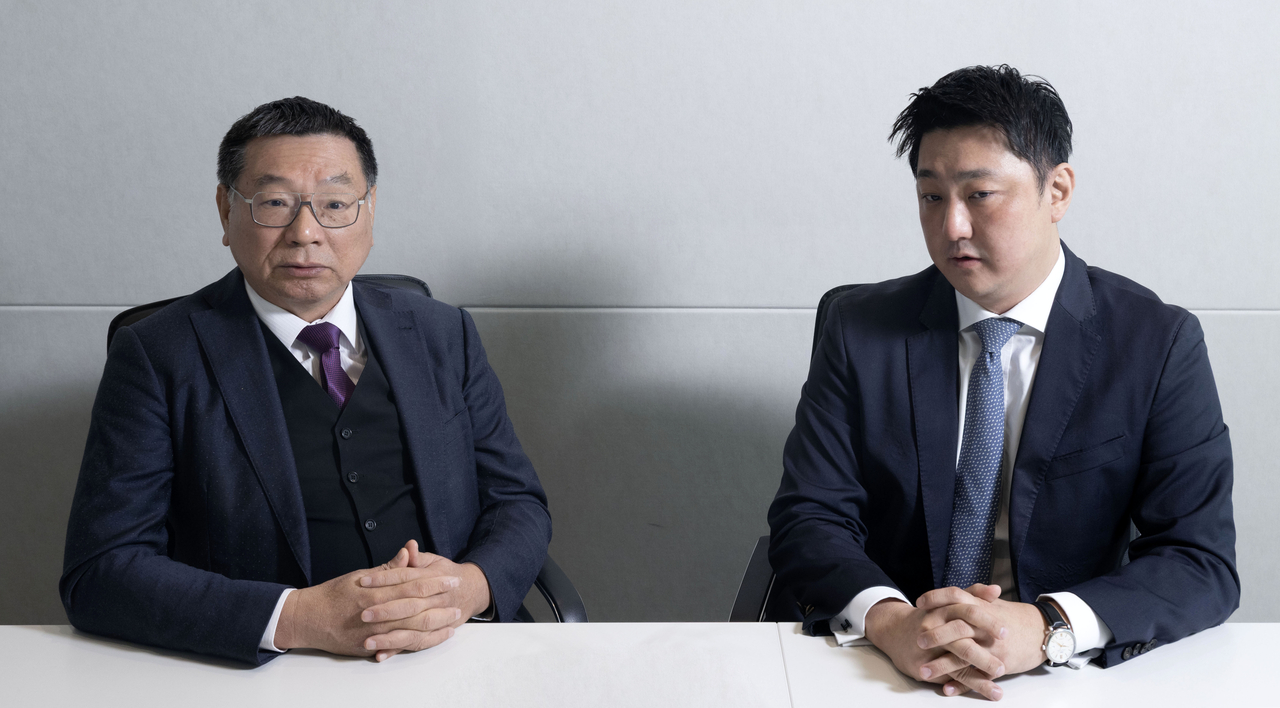
Samsung Electronics needs a bold new strategy to navigate the next industrial shift driven by artificial intelligence — one on par with the late Chair Lee Kun-hee’s “New Management” initiative that reshaped the company more than two decades ago, according to Colley Hwang, founder and chair of Taiwan-based tech research firm Digitimes.
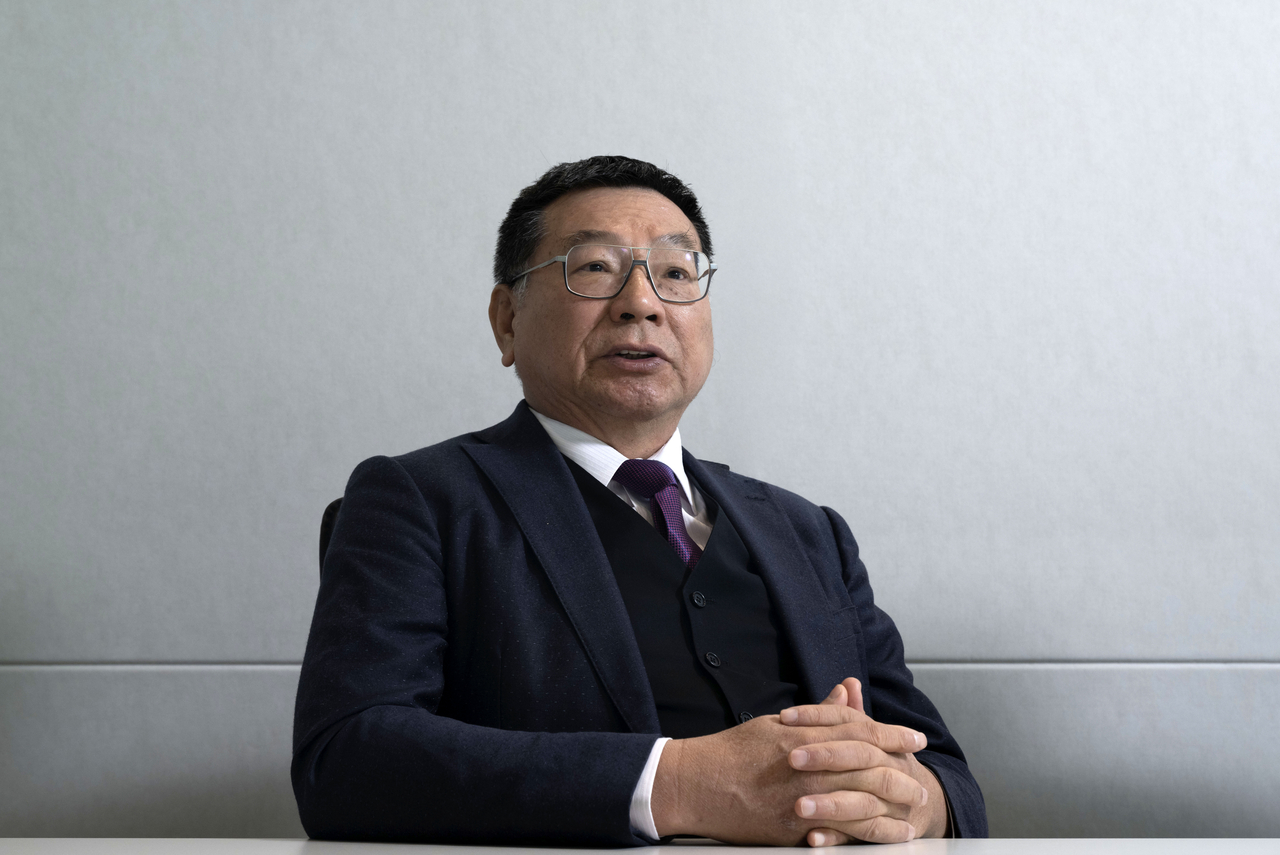
Hwang, a four-decade industry veteran, said such reinvention is vital for the future survival of South Korea’s largest industrial powerhouse. He spoke in an interview with The Korea Herald on Friday, alongside Datacrunch Global CEO Kim Sung-soo Eric, who is also an AI business strategy professor at Yonsei University’s Graduate School of Business, Keio Business School and National Taiwan University.
“In 1998, Huawei had grown sevenfold in five years, but its founder realized he could not handle the company through traditional management style,” Hwang said, recalling a recent meeting with Huawei executives in Shenzhen. “He took his team to visit companies like Cisco, Nokia and IBM — the most successful firms at the time — only to conclude that Huawei didn’t need to learn from them.”
Instead, Huawei studied e-commerce companies and adopted a more diversified business model to serve global markets for the future, he said.
Samsung, he argued, needs to think in similar terms. The late Lee Kun-hee’s 1993 New Management initiative shifted Samsung from OEM manufacturing toward building a global brand — a strategy that was widely emulated in East Asia. But that model has run its course, Hwang said.
“Samsung was very successful and we all needed to learn from it at the time,” he said. “But now, the branded business strategy is not important anymore. They need to think about a new strategy.”
Kim of Datacrunch Global echoed the view, urging Samsung to adopt new work ethics, strategies and organizational systems to advance cutting-edge chipmaking processes at 2 nanometers and below.
Foundry challenge and market position
Samsung continues to struggle to expand its share in the global contract chip manufacturing market, where Taiwan’s TSMC remains dominant. Hwang estimated it could take Samsung 10 to 20 years to reach a 20 percent market share — even if it were to spin off its foundry business.
“Samsung’s strength is memory and it has capabilities in system LSI. They may need to think about how to leverage their memories, not to build the foundry army. It’s impossible,” Hwang said, noting the wide gap between Samsung and its Taiwanese rival.
TSMC controls about 70 percent of the global foundry market, while Samsung trails at roughly 7.3 percent.
“Taiwan always says that we are harmless ponds, meaning we don’t compete with customers,” Hwang added, suggesting Samsung’s vertically integrated business model can undermine customer trust. “Integrity is at the core of Taiwan’s business philosophy. TSMC guys always think about customer needs.”
Building in the US to win market share
Both experts dismissed concerns that chipmakers risk losing technological edge by building fabs in the United States. Instead, they view the investments as necessary to secure access to the world’s largest semiconductor market.
“Building chip factories in the US does not mean our technology is being stolen,” Kim said. “Given how Korea and Taiwan are aging societies with low birthrates, I am not sure if technological innovation will continue unless they attract talented professionals. It is a better strategy to internationally collaborate on science and technology.”
Hwang said that the US remains the center of economic and technological power.
“Its top eight companies together are worth $22 trillion. About 70 percent of the $12 trillion global chip market is created by US-based firms,” he said. “A strong supply chain should support the firms for the survival of the market.”
He added that the prosperity of the American economy is a “global benefit.”
"Only about 10 percent of the US' (gross domestic product) comes from manufacturing, which means nearly 90 percent of its economy is driven by consumption," Hwang said. "So the only way for Korea and Taiwan to survive is to build a chip industry that is sensitive, competitive and tangible."
Cooperate for survival
A strong advocate for regional cooperation in the chip sector, Kim called for cooperation at three levels — governmental, industrial and human resources.
Governments, he said, must prevent diplomatic friction from disrupting supply chains. Industry players should work together to establish shared global standards.
And talent exchange will be necessary to build resilient ecosystems — as seen in chipmakers building fabs in the US and TSMC's joint venture in Kumamoto, Japan.
“Korea’s problem is that we want to do everything by ourselves,” Kim said. “We have to mix blood for a strong supply chain.”
On China, a key neighbor that serves as both Korea's major trading partner and a rival, Hwang predicted gradual policy evolution rather than abrupt shifts.
“The national policy cannot change within months or years, but China remains competitive and influential in the global market,” he said. "I believe its approach will evolve from bottom-up."
China still dominates in high-performance computing, mobile manufacturing, robotics and AR devices, he noted. "Because China has the market where industries can integrate, it will keep expanding its influence.”
As emerging technologies accelerate, both China and Western economies will push to set new global standards — a process he warned will grow more complex.
“That’s a big challenge for everyone,” he said. “But I expect China will change its policy to check in with everyone and not fight.”
herim@heraldcorp.com