Most parts of South Korea are expected to see cloudy skies and intermittent rain over the weekend, with mild daytime temperatures, the Korea Meteorological Administration said Friday.
According to the KMA, light rain will begin late Friday along the coast of Gangwon Province.
On Saturday, the showers will move south, reaching Jeju Island in the late afternoon and extending to the southern coast of South Jeolla Province. By evening, rain is forecast to fall across South Chungcheong Province, the Jeolla region and parts of Gyeongsang Province. Drizzle — less than 0.1 millimeter — may also appear in parts of the central region, including Seoul, in the afternoon.
The rain is expected to continue into Sunday morning. Cumulative rainfall is forecast at 10–60 millimeters for Jeju Island, the highest nationwide, and 5–30 millimeters for Gangwon Province due to easterly winds.
On Sunday, most areas will stay cloudy and rainy, with morning lows similar to the previous day before clearer skies return in the afternoon, the agency said.
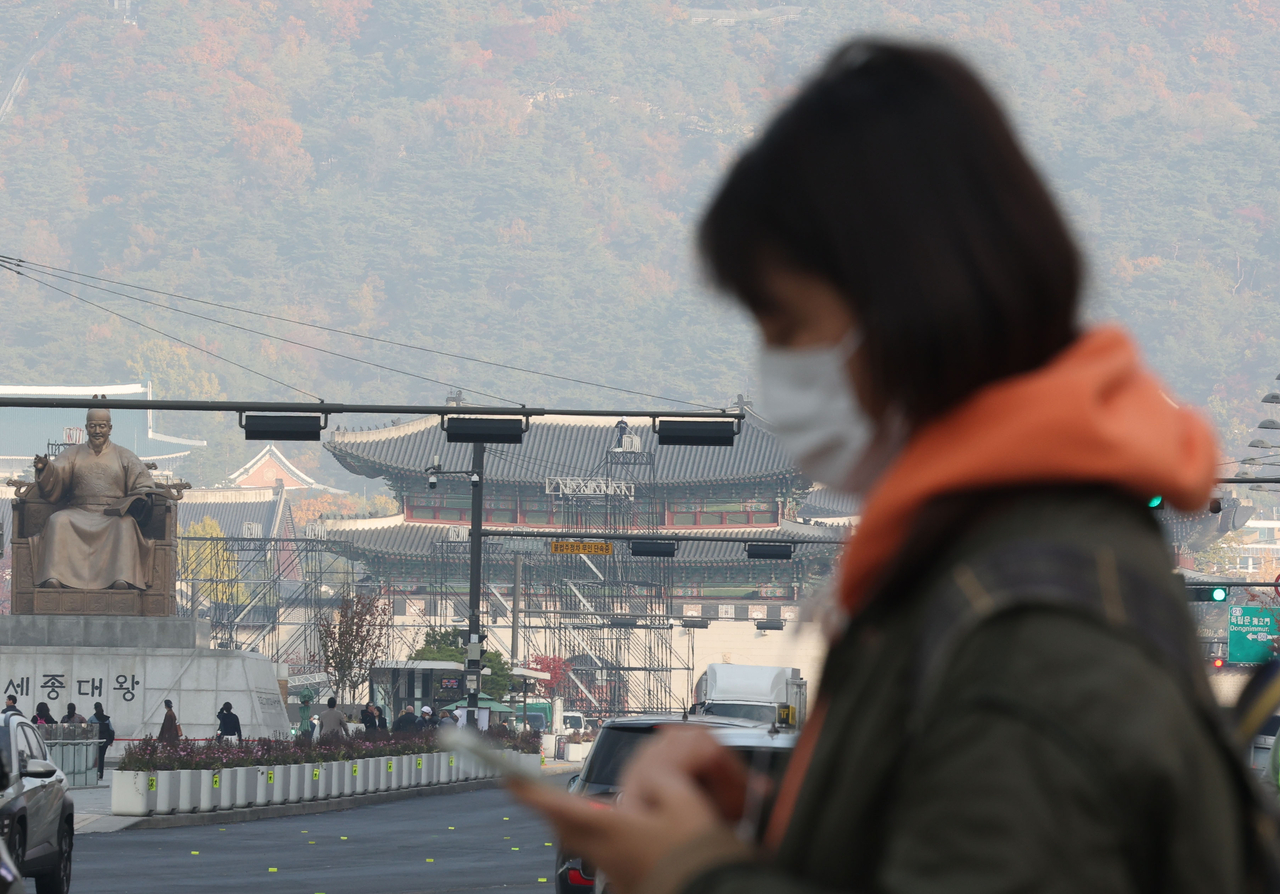
Korea was blanketed by fine dust and fog Friday, but air quality is expected to improve over the weekend.
The Korea Environment Corporation, which operates the Air Korea monitoring network, said stagnant high-pressure conditions trapped pollutants from both domestic and overseas sources, keeping concentrations elevated across many western and inland areas.
As of noon Friday, ultrafine dust levels above 36 micrograms per cubic meter — classified as “bad” — were reported across much of the country. Western and central regions, including Seoul, Incheon, Gyeonggi Province, North and South Chungcheong Provinces, Daejeon, Sejong and North Jeolla Province, saw poor air quality, with Sejong posting the highest reading at 61 micrograms per cubic meter. Other regions recorded lower concentrations, mostly at “moderate” levels.
The KEC said air quality would gradually improve later Friday as easterly winds disperse pollutants, with most regions expected to return to “good” or “moderate” levels on Saturday. Data for Sunday has yet to be released.
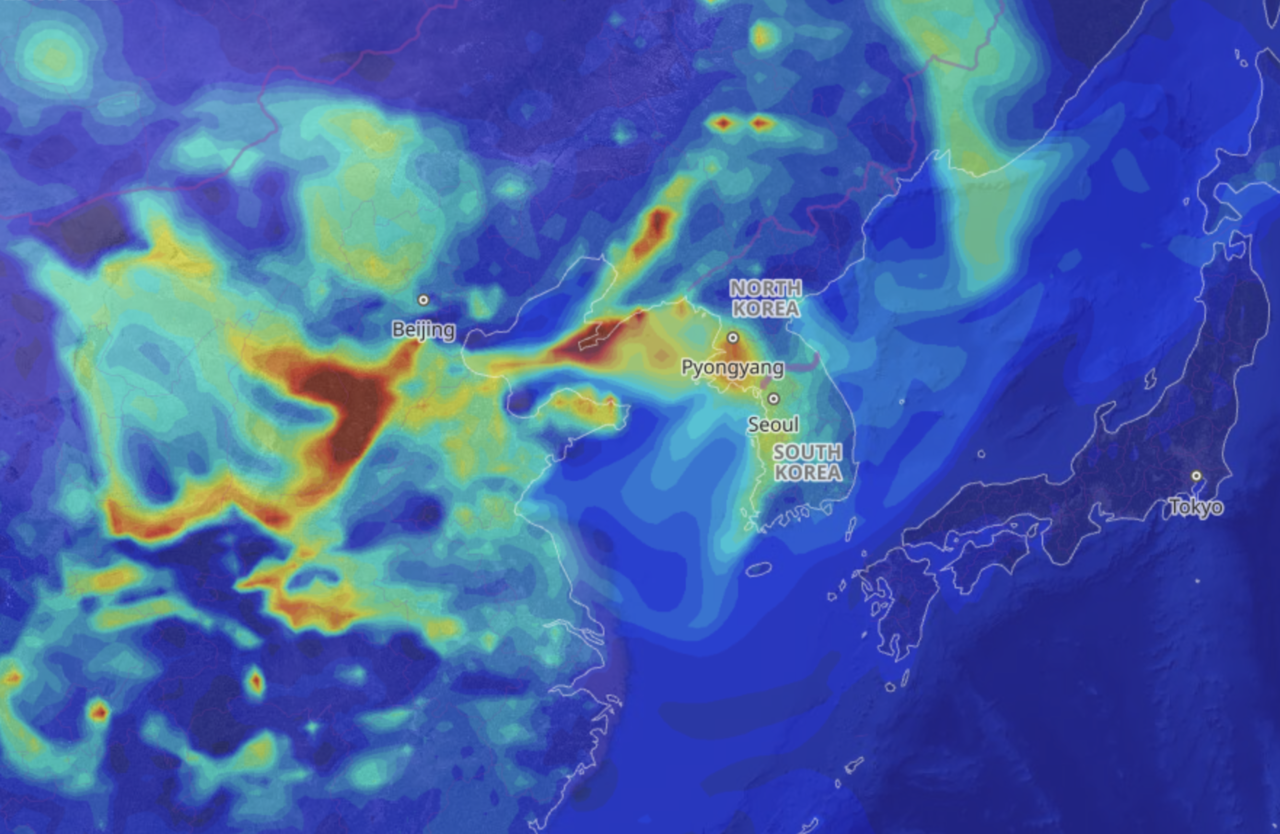
While pollutants remained trapped domestically under stagnant air, cross-border inflows also contributed to the buildup. According to the National Institute of Environmental Research, the main source of external fine dust was eastern China, with particles drifting into the Korean Peninsula across the West Sea.
Fine dust concentrations in Korea often rise at this time of year as colder weather sets in across Northeast Asia. In China, coal-fired heating typically begins around ipdong — the start of winter in the traditional East Asian calendar — which falls on Friday this year. As heating demand surges, emissions from coal combustion are carried eastward by westerly winds over the West Sea, contributing to higher particulate matter levels in Korea during late autumn and early winter.
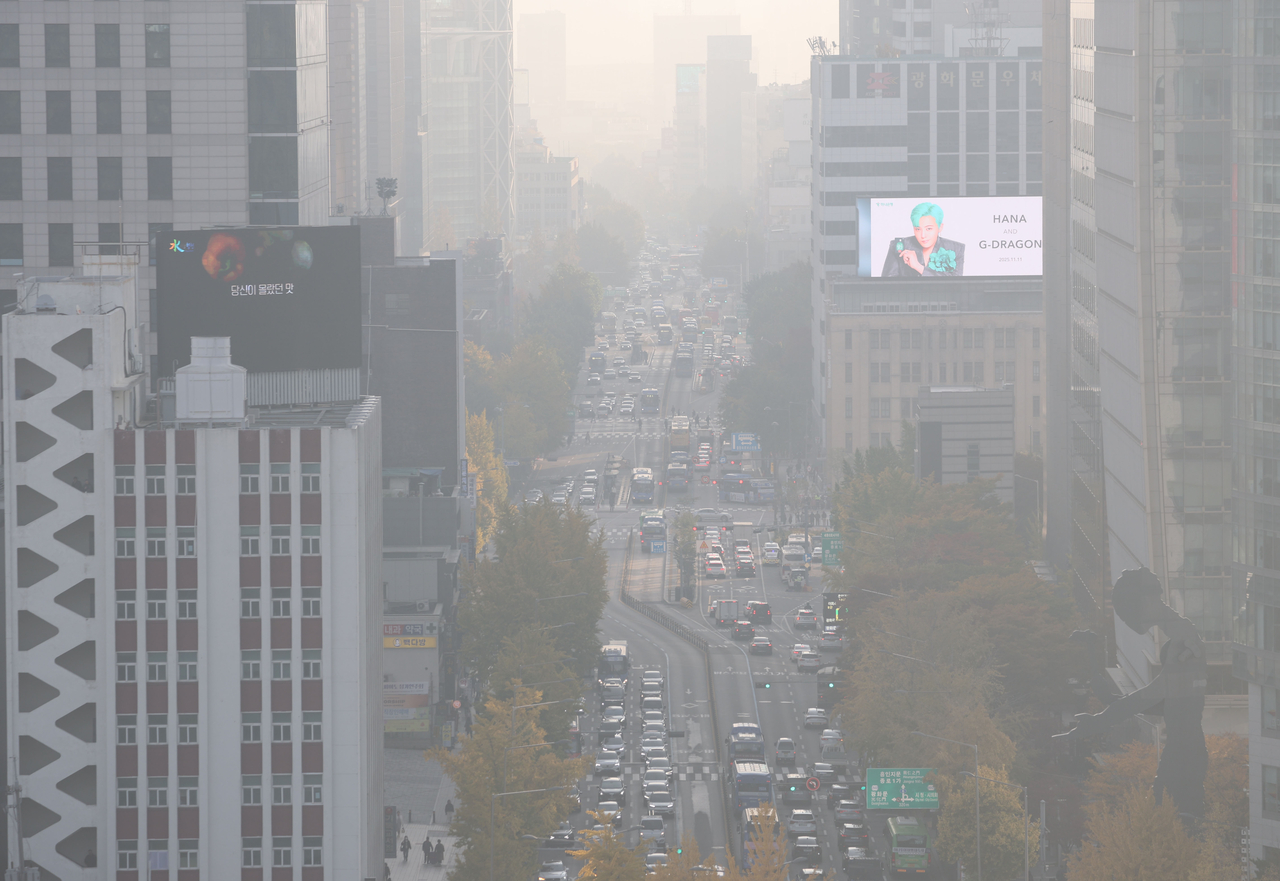
Fog also covered much of the country, particularly around rivers, lakes and valleys in the Chungcheong and Jeolla provinces. Parts of inland Gyeonggi Province and North Gyeongsang Province also saw dense fog, with visibility dropping below 100 meters in places.
In Hongseong, South Chungcheong Province, visibility fell to around 80 meters early Friday. The Korea Meteorological Administration warned drivers to exercise caution on expressways and coastal roads where fog could mix with drizzle.
flylikekite@heraldcorp.com