The recently concluded APEC summit in Gyeongju, Korea, offered more than a ceremonial diplomatic gathering. It delivered scenes so symbolic and revealing that they may well be remembered as inflection points when the world caught a glimpse of future directions. Among countless interactions and formal declarations, five moments stood out for their power to reframe thinking and reshape global dynamics.
First, it was a tech titan who stole the show: Nvidia CEO Jensen Huang. In Seoul, Huang sat shoulder-to-shoulder with Samsung Chair Lee Jae-yong and Hyundai Motor Group Chair Chung Eui-sun, enjoying a plate of simple fried chicken and beer, Korea’s beloved “chimaek.” The meeting was broadcast live across major television networks. What stunned viewers was not simply the sight of three men worth tens of billions of dollars sharing a humble meal. It was the realization that even the most powerful business figures could appear approachable, human and relaxed. For many Koreans, the scene shattered stereotypes. These captains of industry were not dining behind velvet curtains on thousand-dollar courses; they were laughing and toasting like college friends. The symbolism was profound and priceless. In an era of distrust toward corporate power, the image boosted public affection for Nvidia, Samsung and Hyundai overnight.
Huang offered more than an appealing image. He announced that Nvidia would supply Korea with an additional 260,000 Blackwell GPUs, the most coveted hardware in the artificial intelligence race. With this deal, Korea not only secures a decisive technological edge but accelerates its ambition to become one of the world's three major AI powers. Huang emerged as a beloved figure among many Koreans not only for his charm, but also for his bold decision to bet on Korea’s technological future.
The second defining moment came from an unexpected source: the US-China summit held on the sidelines of APEC. Since July 2018, Washington and Beijing have been locked in a bruising strategic competition marked by tariffs, tech sanctions, rare-earth export restrictions and retaliatory trade barriers. Many expected this meeting to harden positions and escalate confrontation. Instead, the outcome was startling in its simplicity: a mutual pause. President Trump stepped back from confrontation, signaling a halt to tariff escalation. Trump may have lost face, but calling it a victory for President Xi would be an exaggeration. Beijing has suffered economic and technological strain in recent years. Yet the outcome made one truth inescapable: The assumption that tariffs alone could suffocate China has proven misguided.
Rather than collapsing, China has adapted, strengthened domestic supply chains and sustained economic resilience. Interdependence between the two superpowers has not diminished; in some sectors, it has even deepened. This summit showed a simple truth: Both Washington and Beijing are now too tired and gain too little to keep escalating. The rivalry has cooled into an uneasy pause — tense, unresolved and shaped by mutual exhaustion.
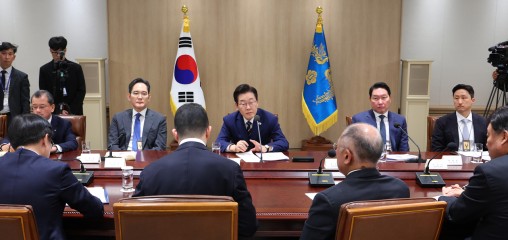
The third scene of consequence emerged from the Korea-US bilateral meeting. Skepticism was widespread beforehand. Residual tension remained from the shocking arrest of Korean workers in the US state of Georgia, and the two countries had yet to conclude contentious tariff negotiations. Yet what unfolded surprised even seasoned observers. Trump overturned the hard-line stance taken by his working-level negotiators and accepted nearly all of Seoul’s key demands. The tariff dispute was settled on terms favorable to Korea. Moreover, Trump publicly endorsed President Lee Jae Myung’s proposal for nuclear-powered submarine construction, which may signal that he supports expanding Korea’s autonomy in uranium enrichment and spent-fuel reprocessing. In doing so, Trump diverged from long-standing US nonproliferation orthodoxy, a gesture of trust both in the alliance and in President Lee. Only a few years ago, the Korea-US alliance seemed to wobble under uncertainty; in Gyeongju, it reanchored itself with renewed strategic confidence.
Fourth, the adoption of the Gyeongju Declaration placed artificial intelligence squarely at the center of the global governance agenda. AI is no longer a futuristic concept; it is the defining force of economic hierarchy, social stability and national security. Without guardrails, the technology risks widening the chasm between developed and developing nations, and even among citizens within advanced societies. A world where wealth, power and knowledge concentrate in the hands of a few is fertile ground for resentment, unrest and extremism. The Gyeongju Declaration was not merely diplomatic language. It was a warning and a call to action. If humanity does not shape AI’s trajectory, AI will shape humanity’s fate. By committing to cooperative frameworks at this early stage, APEC members acknowledged a simple truth: A technological future without moral architecture leads not to progress, but peril.
Finally, the summit rediscovered an older source of power: culture. Holding the event in Gyeongju — the thousand-year capital of the Silla Kingdom, one of the world’s longest-lasting dynasties, ruling from 57 BC to AD 935 — was more than a venue choice. It was a reminder that civilizations endure not only through military triumphs and commercial success, but through cultural radiance. Silla’s golden crowns, including the special replica gifted by President Lee to Trump, epitomize grace, balance, restraint and sophistication. They tell a story stretching back 1,500 years in which creativity and elegance were as vital to national greatness. In the age of K-culture, such symbolism resonates deeply. Korea’s cultural ascent is not an accidental phenomenon; it is rooted in long-accumulated artistic tradition. We can draw inspiration from this: Sustainable innovation often springs not from imitation of the present, but from rediscovery of the past.
Taken together, these five moments form an unexpected mosaic that can inspire people around the world and influence the course of global affairs. The Gyeongju APEC events reminded us that collaboration, coupled with passion and strategic vision, can generate moments with gestures, choices and symbols that quietly shift history. Sometimes, the future begins not with grand speeches, but with the humble pairing of fried chicken and beer, or the quiet shine of ancient gold.
Wang Son-taek
Wang Son-taek is an adjunct professor at Sogang University. He is a former diplomatic correspondent at YTN and a former research associate at Yeosijae. The views expressed here are the writer’s own. — Ed.
khnews@heraldcorp.com