Thousands of carnations on stage for LG Arts Center’s 25th anniversary
When a choreographer dies, their art lingers in the memories of those who moved with them, in the steps and movements passed down through generations of dancers, and becomes part of the company’s repertoire.
Right now, few embody that process as vividly as Tanztheater Wuppertal Pina Bausch, a company that continues to carry the legacy of its founder, the late German choreographer Pina Bausch, more than a decade after her death -- this time with a new generation of dancers who have never worked with her in person.
This week, the company returns to Seoul to restage one of Bausch’s most iconic works, “Nelken (Carnations),” at the LG Arts Center from Thursday to Sunday, followed by performances at the Sejong Art Center in Sejong City on Nov. 14-15. The production marks a homecoming of sorts: “Nelken” (1982) was first introduced to Korean audiences in 2000 as part of the LG Arts Center’s inaugural season. Now, 25 years later, it hopes to bloom again on the same stage with a new generation of dancers and audiences.
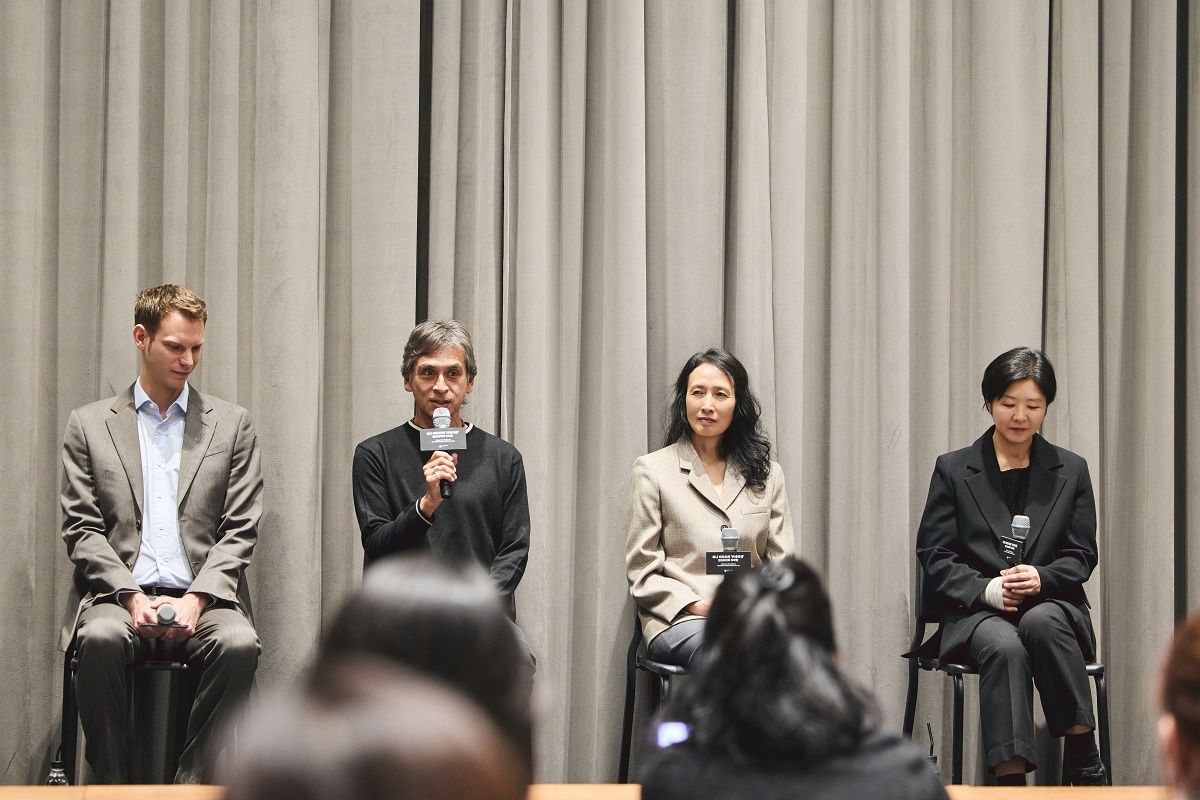
At a press conference in Seoul on Tuesday, the company’s artistic and executive director, Daniel Siekhaus, acknowledged both the challenge and the privilege of reviving a work so deeply tied to its creator’s spirit, especially one whose process was built on dialogue between the choreographer and her dancers.
“Very often in the creative process with (Pina) Bausch, she would ask questions to the dancers and, so, how the scenes were created often has to do with what happened between in this very specific group of people, how they're responding,” said Siekhaus.
“I think the human aspect is the most important. Transmission goes from an artist to an artist,” he added. “So I think it's essential to have dancers with a wealth of experience who come into the rehearsal room and who recreate the pieces with a young and new generation of dancers.”
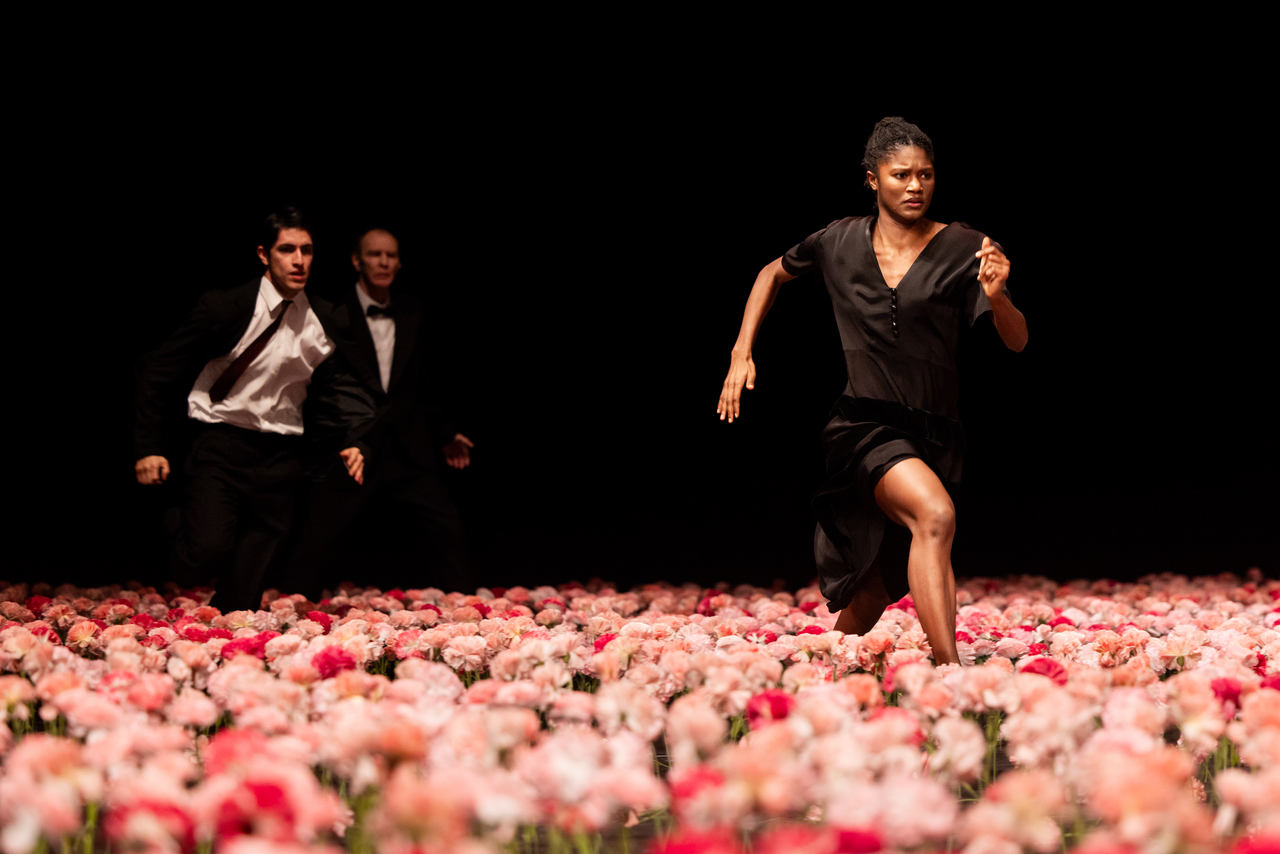
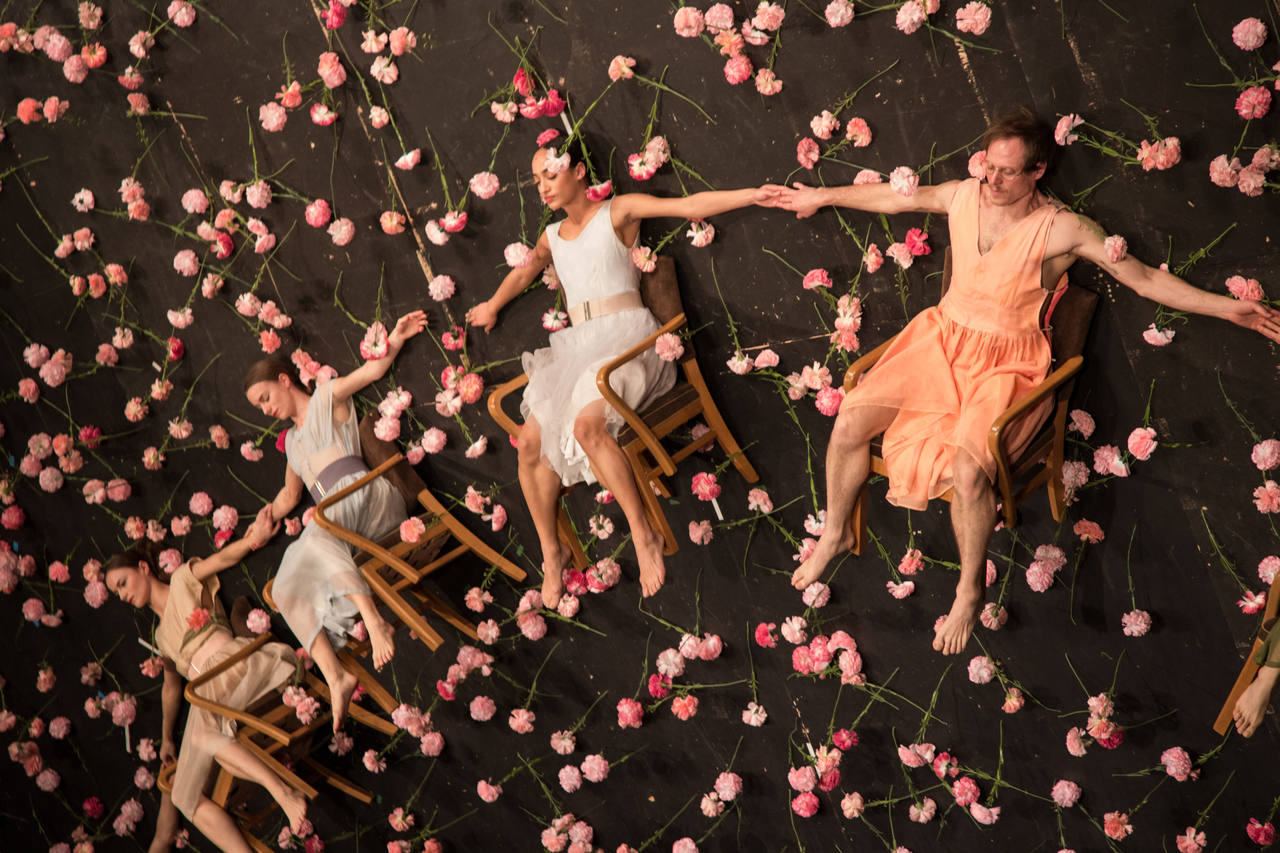
Premiered in 1982, “Nelken” unfolds on a stage blanketed with thousands of carnations (in this version, some 9,000 flowers). The dreamlike landscape becomes a battleground as dancers march, fall and rise again, blurring the line between beauty and brutality. The piece, often described as a meditation on humanity’s contradictions, remains one of the defining works of Bausch’s pioneering Tanztheater form, a contemporary dance genre that fuses movement, spoken word and theatrical elements.
In this version of “Nelken,” 17 of the 19 dancers who take the stage are young newcomers who bring their own approach and understanding to the piece, while the two long-time company members perform special roles.
Joining the piece with new titles and responsibilities are Eddie Martinez, who has been with Tanztheater Wuppertal for three decades and now serves as one of two rehearsal directors, and Kim Na-young, who joined the company in 1996 and danced in the 2000 Korean premiere. Kim returns this season as a rehearsal assistant.
“It was tough in the beginning,” Martinez admitted. “The weight of what we were trying to achieve for the company and for ourselves as new rehearsal directors was quite a big task.”
Kim also reflected on what it means to pass down Bausch’s work to a new generation.
“Each of us had a different relationship with Pina. We talk together, share our memories and experiences from working with her, and pass them on to the younger dancers. Pina always told us, ‘Dance, dance, otherwise we are lost.’ I believe continuing her work means allowing a new generation to understand it in their own way and to make it their own. That’s how her spirit continues into the future and that was something she cared about deeply.”
The company’s long relationship with Korea is also woven into this return. When the LG Arts Center first opened its doors in Yeoksam-dong in southern Seoul in 2000, it was Bausch herself who suggested “Nelken” for the venue opening, saying the piece would “bring hope” to the fledgling stage. Over the following years, the company performed eight of her works there, including “The Rite of Spring” and “Masurca Fogo.” In 2005, Bausch created “Rough Cut,” a work commissioned by the LG Arts Center and inspired by Seoul.
LG Arts Center relocated to Magok-dong in southwestern Seoul in October 2022, and "Nelken" is Tanztheater Wuppertal Pina Bausch's first performance at the new vanue.
LG Arts Center CEO Lee Hyun-jung said bringing Nelken back felt both inevitable and timely.
“This was the first work Bausch recommended to us 25 years ago,” Lee said. “It speaks about humanity, our hope, pain and resilience. Today’s audiences, especially the younger generations, have been asking to see it again. Watching how a new generation of dancers interprets her vision for a new generation of audiences will be deeply meaningful.”
hwangdh@heraldcorp.com