S. Korea eyes first nuclear-powered submarine by 2030s: Seoul official
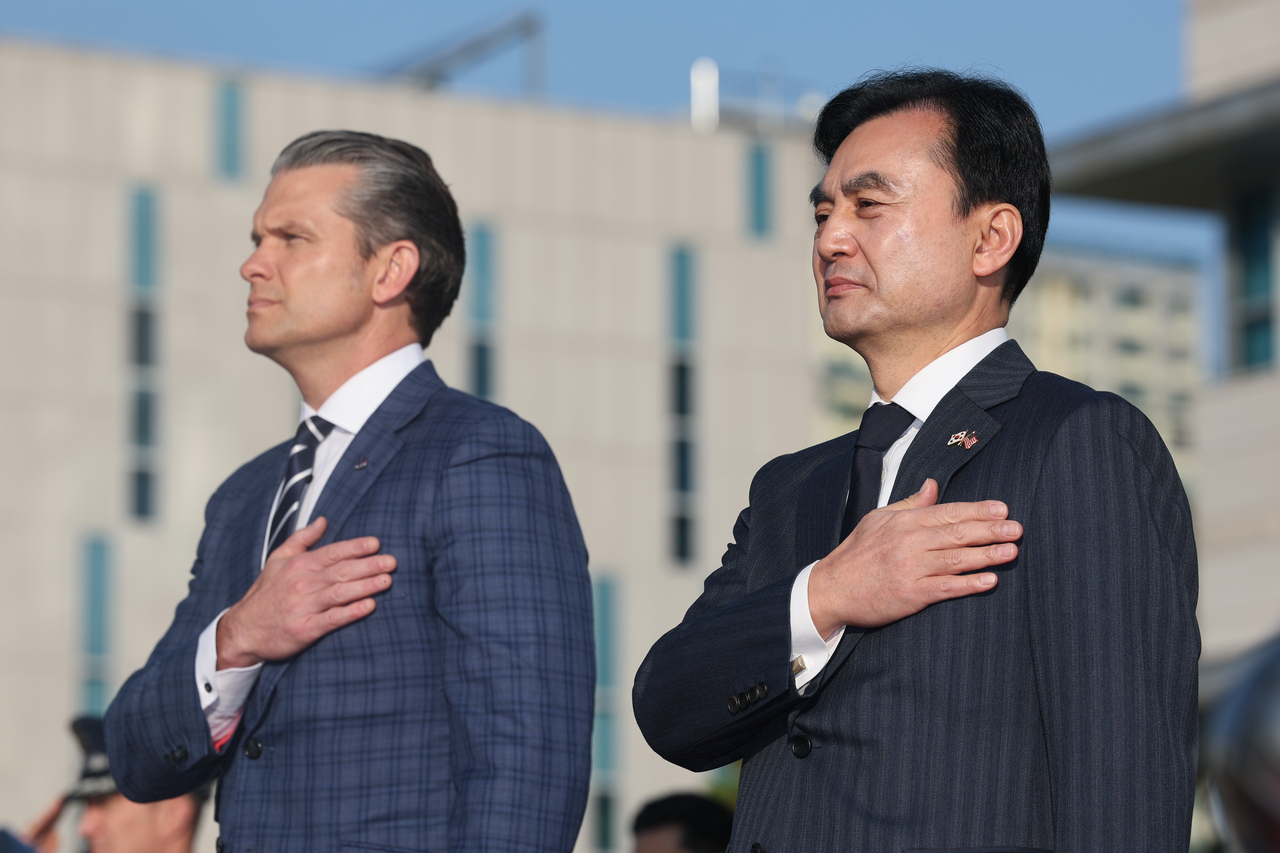
US Defense Secretary Pete Hegseth on Tuesday backed US President Donald Trump’s recent approval for South Korea to build nuclear-powered submarines, saying Washington will coordinate closely with the State and Energy departments to move the plan forward — a development seen as marking a major shift in the allies’ defense cooperation.
“We are going to work closely with the Department of State and the Department of Energy to fulfill President Trump’s commitment in a deliberate manner,” Hegseth told reporters at a press conference in Seoul following the 57th ROK-US Security Consultative Meeting with Defense Minister Ahn Gyu-back. ROK refers to South Korea’s official name, the Republic of Korea.
Hegseth’s remarks came days after Trump announced via Truth Social that he had granted South Korea approval to construct a nuclear-powered submarine at the Philly Shipyard, which is operated by South Korean conglomerate Hanwha Group in Philadelphia. The move marked the first explicit US green light for Seoul’s decadeslong pursuit of nuclear propulsion at sea.
“President Trump wants our allies to be strong — and the Republic of Korea is a model ally,” Hegseth said. “Korea has an incredible shipbuilding industry, and we look forward to partnering with it a lot more, whether it’s in surface warfare or submarine development.”
At the SCM, Hegseth and Ahn reaffirmed that the 72-year-old alliance between the two countries remains “stronger than ever” and agreed to expand cooperation across missile defense, space operations and maintenance of US naval vessels in South Korea.
“We need to increase our defense cooperation through a common-sense approach grounded in realism,” Hegseth said, praising Seoul’s pledge to boost defense spending and modernize its armed forces. “For the first time in history, we agreed to demonstrate the ability to maintain and repair US warships here in Korea, harnessing this country’s world-class shipbuilding capabilities.”
The defense chief’s comments reflect growing emphasis on industrial collaboration between the two allies, aligning with Seoul’s strategic ambition to expand its role in regional deterrence and maritime security.
Nuclear-powered submarines offer longer endurance, higher speed and greater stealth compared to conventional diesel-electric models, enabling continuous patrols that could enhance South Korea’s deterrence posture amid North Korea’s expanding submarine-launched ballistic missile capabilities and China’s naval buildup.
Trump’s nuclear submarine approval, while politically declarative and still subject to congressional and Pentagon review, represents a watershed moment in US policy with its allies. The plan would allow South Korea to pursue a limited nuclear submarine program, potentially using US-supplied fuel for propulsion, within the boundaries of the ROK-US Atomic Energy Agreement.
The issue gained momentum after President Lee Jae Myung pressed Trump during their APEC summit talks in Gyeongju, North Gyeongsang Province, last week to make a “resolute decision” on nuclear fuel cooperation.
Defense analysts view the move as both strategic and symbolic — a signal of deepening trust between Seoul and Washington and a recognition of South Korea’s growing defense capabilities.
“Supporting South Korea’s acquisition of nuclear-powered submarines aligns with US strategic interests and will ultimately strengthen combined readiness,” said Yu Ji-hoon, research fellow at the Korea Institute for Defense Analyses. “It’s a milestone in alliance modernization and a step toward a more stable regional order.”
While details of the shipbuilding plan remain under discussion, Hegseth underscored the broader message behind Washington’s new stance: trust and capability-sharing.
“President Trump wants allies to have the best capabilities,” Hegseth said. “Because Korea has been a model ally, he’s open to opportunities like this that ensure they have the strongest defense — alongside us as partners.”
On Monday, Hegseth visited the Joint Security Area inside the Demilitarized Zone, accompanied by South Korean Defense Minister Ahn Gyu-back, marking the first joint visit by the two nations’ defense chiefs in eight years.
During the trip, the two reviewed front-line security operations and reaffirmed the ironclad South Korea-US alliance. North Korea, meanwhile, fired artillery rockets toward the Yellow Sea on Monday, according to the North's Korean Central News Agency on Tuesday.
With the US, United Kingdom and Australia already moving forward with their AUKUS submarine initiative, Washington’s support for Seoul’s own nuclear submarine ambitions signals that undersea deterrence is fast becoming an important frontier in the alliance — and a defining test of South Korea’s emergence as a fully fledged security partner in the Indo-Pacific region, observers say.
A senior South Korean defense official said Tuesday that the country could launch its first domestically built nuclear-powered submarine by the mid-to-late 2030s.
Won Chong-dae, director general for resource management at Seoul's Defense Ministry, said progress has been made on resolving the nuclear fuel supply issue — long considered the biggest hurdle in Seoul’s submarine ambitions — paving the way for the project to advance.
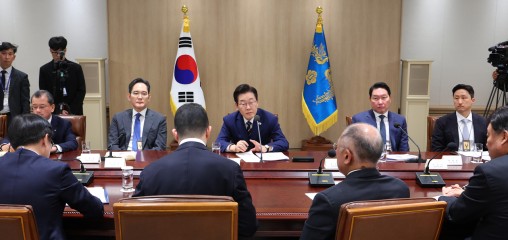
“If South Korea secures the necessary fuel through consultations with the US and begins construction in the late 2020s, the submarine could be launched in the mid-to-late 2030s,” Won said during a Cabinet meeting presided over by President Lee.
He added that the government plans to establish an interagency task force to oversee the implementation of the nuclear-powered submarine program.
mkjung@heraldcorp.com