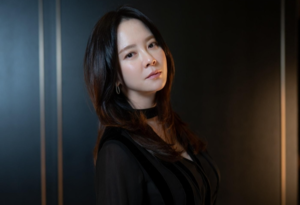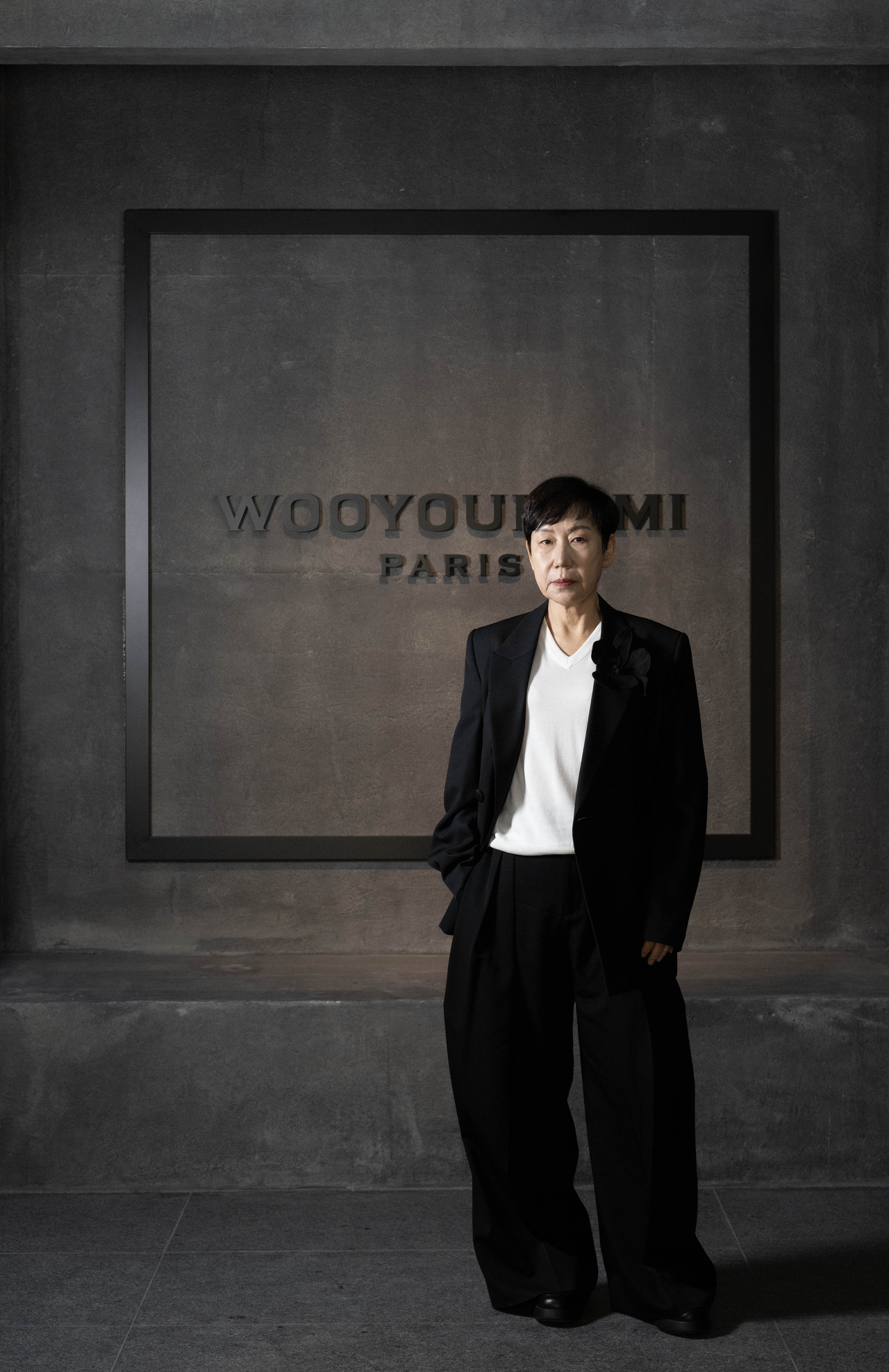
More than two decades after launching her eponymous high-fashion label in Paris, South Korean designer Woo Young-mi has returned home with a landmark debut: Wooyoungmi’s first flagship store in Itaewon, Seoul, on Wednesday.
“Itaewon is a town of diversity where different cultures and nationalities coexist, creating a young and hip energy. Embracing such diversity is our brand’s most important philosophy,” Woo said in an interview with The Korea Herald.
The store’s striking architecture reflects that ethos. Designed with Swiss firm Stocker Lee Architetti, the facade of concrete and glass blocks rises in organic curves, echoing Itaewon’s undulating terrain. Inside, shifting ceiling heights and layered vertical lines allow light and sound to sculpt the atmosphere.
Woo, who took an active role throughout the project, said the collaboration was rooted in shared experience. “The architect Lee Dong-joon and I are similar — we are both Asian creatives working in Seoul and abroad. Because I have a deep interest in architecture, I wanted this to be a joint project from one to ten,” she said.
Born in Seoul, Woo studied fashion at Sungkyunkwan University before winning the Osaka International Fashion Award in 1983. She soon emerged as a groundbreaking force in Korean fashion.
In 1988, Woo debuted Solid Homme, one of the country’s first design-driven menswear labels, presenting new silhouettes in a market then dominated by conservative tailoring.
She launched Wooyoungmi in 2002 and made the bold decision to build the brand in Paris, becoming the first South Korean designer to show on the Paris Men’s Fashion Week calendar in 2003. In 2011, Wooyoungmi became a full member of La Chambre Syndicale, the prestigious French fashion association. Today, the brand is stocked at leading global retailers, including Le Bon Marche and Selfridges.
Wooyoungmi operates two flagship stores in Paris — one in the Saint-Honore district and another in Saint-Claude.
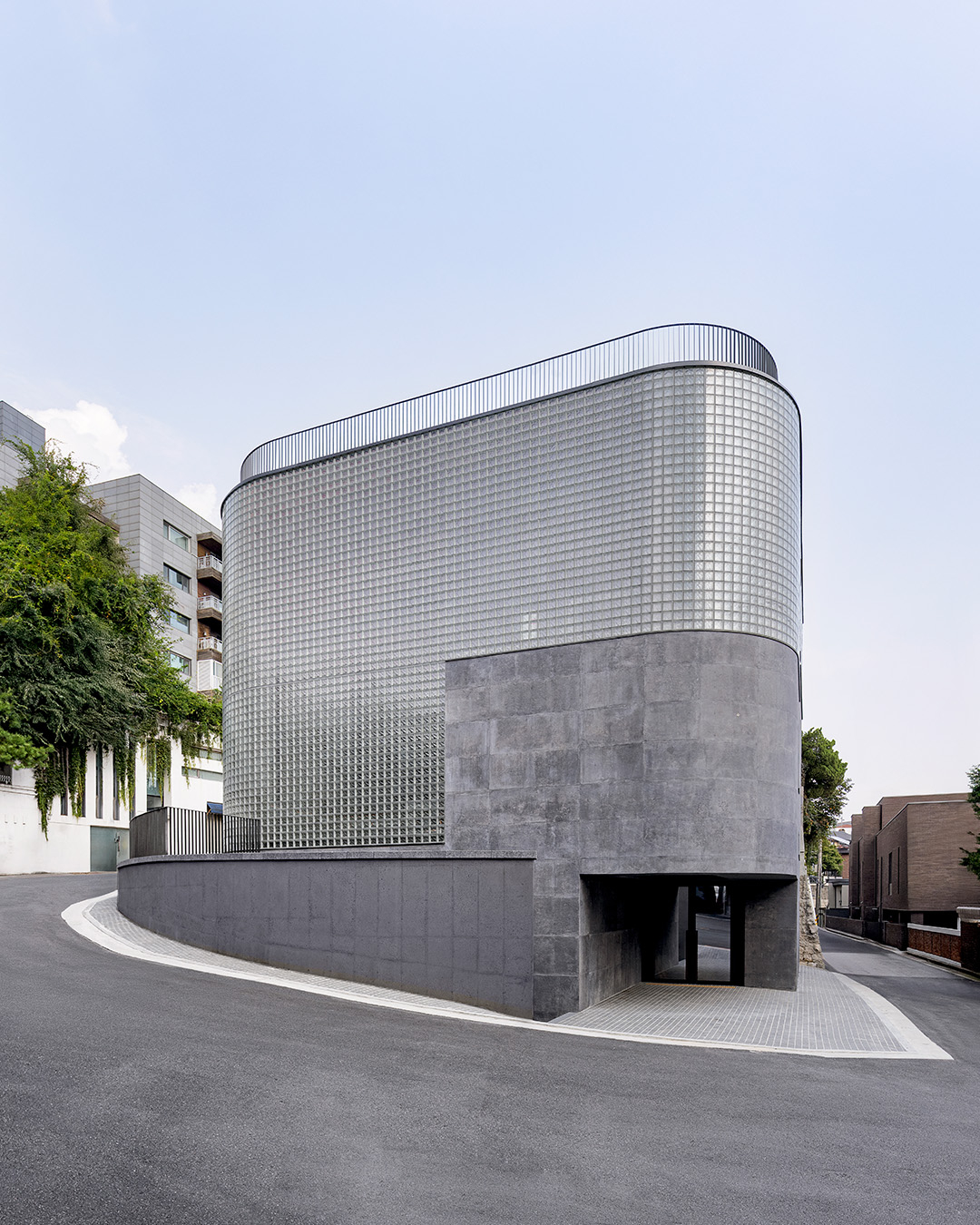
The goal with Wooyoungmi Itaewon was to build something “bold yet simple,” offering visitors space to fully absorb the brand’s elegant, modern identity, she added.
At the core of that identity lies openness — a mindset Woo considers essential not only for design, but for survival in the ever-evolving fashion industry. It also guides her approach to collaboration. For the flagship, she partnered with artists including furniture designer Choi Dong-wook, creating custom pieces such as a curvy fabric sofa in the ground-floor lounge.
The sofa, one of six objects scattered throughout the space, represents touch — part of a symbolic series exploring what Woo calls “the obsessions locked in our senses.” Alongside the sofa are a red ear at the counter and nose-shaped stools, corresponding to sight, sound, smell and other sensory experiences.
“These senses are what trap us in obsession,” Woo explained. “To stay open-minded, we have to free ourselves from those constraints. These objects are a reminder to our clients: Let go, breathe and shop comfortably.”
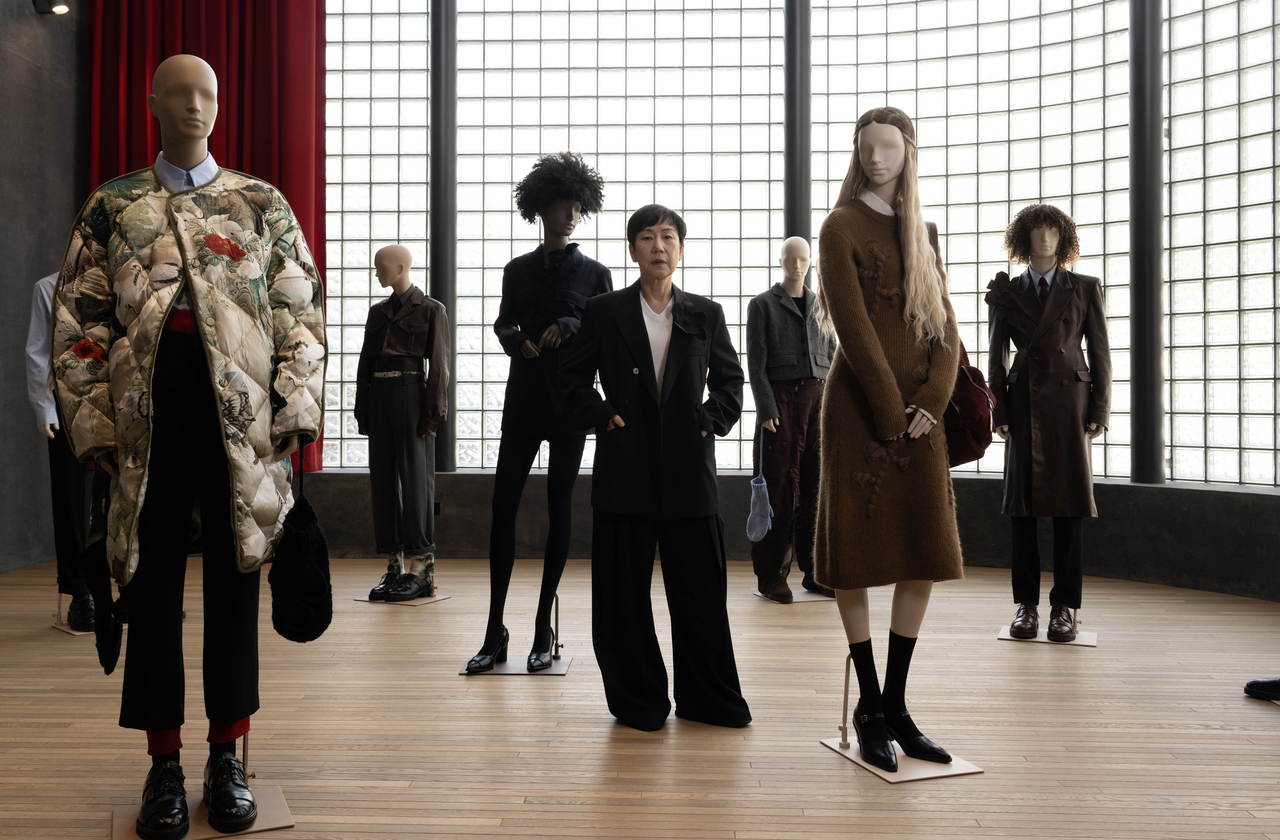
Woo’s philosophy extends to emerging Korean designers eyeing global expansion, especially as fashion gains greater visibility alongside the Korean Wave.
“I define myself as a hybrid designer — neither too Eastern nor too Western,” she said. “I don’t think, ‘I must show something Korean because I’m Korean.’ You evolve only when your mind is open enough to create something young people around the world want to wear.”
Evolution, she emphasized, must never come at the expense of authenticity. “It’s hard to survive in this fast-changing industry if you can’t evolve. But remember — you must evolve with identity.”
yoohong@heraldcorp.com