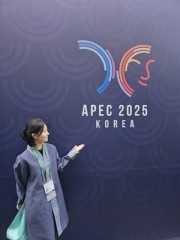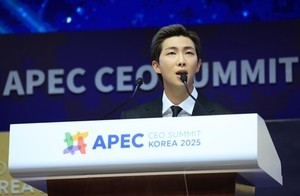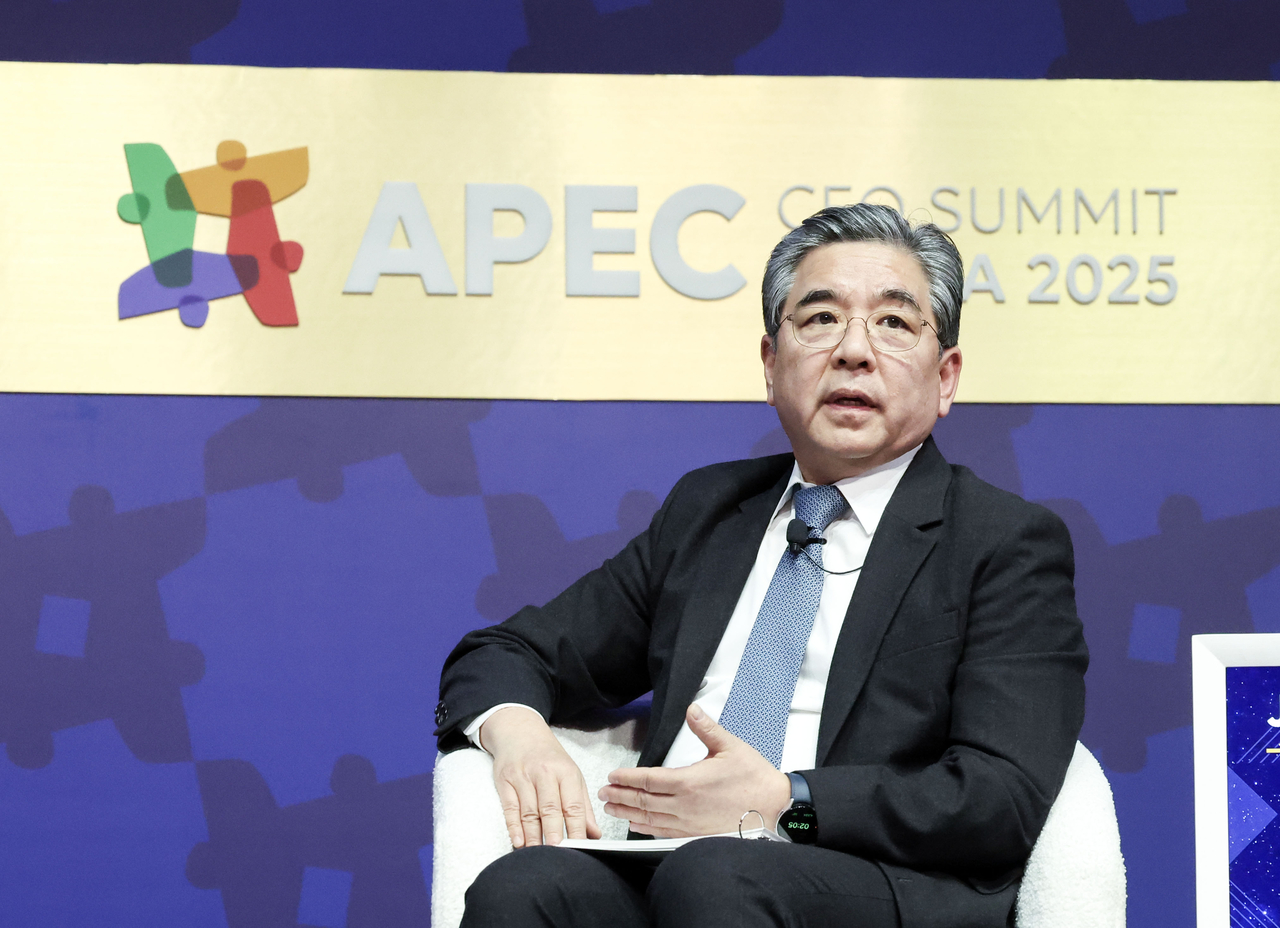
Hyundai Motor Group called for global collaboration to accelerate the hydrogen economy at the Asia-Pacific Economic Cooperation CEO Summit 2025, held Thursday in Gyeongju, North Gyeongsang Province.
During the session titled “Hydrogen, Beyond Mobility: New Energy for Society,” Hyundai Motor Group Vice Chairman Jang Jae-hoon -- who also serves as co-chair of the Hydrogen Council, a global initiative promoting the hydrogen economy -- emphasized the strategic role of hydrogen in achieving carbon neutrality during a discussion with Hydrogen Council CEO Ivana Jemelkova.
“As the global energy landscape transitions toward sustainability, hydrogen is emerging as a key pillar of that transformation,” Jang said. “By solving renewable energy’s intermittency and enhancing efficiency, hydrogen accelerates the path to carbon neutrality.”
Jang outlined Hyundai’s ongoing efforts to establish a comprehensive hydrogen ecosystem. Since creating a dedicated hydrogen R&D division in 1998, the group has achieved major milestones -- including the world’s first mass production of heavy-duty hydrogen trucks and leading global sales of hydrogen-powered passenger vehicles.
Currently, Hyundai’s Xcient fuel cell trucks are used to transport export-bound vehicles from Hyundai’s Asan plant in South Chungcheong Province to Pyeongtaek port in Gyeonggi Province, while the company is working with Incheon International Airport Corporation to introduce clean-energy commercial vehicles. In the US, Hyundai operates 30 Xcient trucks under the NorCAL Zero project in California and an additional 21 units at its Hyundai Motor Group Metaplant America in Georgia.
Jang also unveiled plans to scale up hydrogen production. The group aims to develop a 5-megawatt polymer electrolyte membrane water electrolysis system in Jeju by 2029, which will use electricity to split water into hydrogen and oxygen for clean energy generation.
Earlier on Thursday, Hyundai held a groundbreaking ceremony for a 930 billion won ($652.9 million) hydrogen fuel cell plant in Ulsan, which will serve as Korea’s first dedicated fuel cell production base. Scheduled for completion in 2027, the facility will have an annual capacity of 30,000 fuel cell units.
Meanwhile, at the APEC Summit, Hyundai Motor Group showcased its all-new NEXO hydrogen fuel cell SUV, along with a model of a fuel cell stack and a diorama of a hydrogen ecosystem.
hyejin2@heraldcorp.com