Once a cultural export, Korea’s pop phenomenon now defines the nation’s identity on the world stage
When BoA performed her hit “No. 1” at the Asia-Pacific Economic Cooperation leaders’ dinner in Busan in 2005, she represented the youthful energy of Korean pop culture before an audience of global power brokers, including then–US President George W. Bush, Japan’s Junichiro Koizumi, China’s Hu Jintao and Russia’s Vladimir Putin.
Sharing the stage with world-renowned soprano Sumi Jo, BoA embodied Korea’s ambitions to project its modern culture abroad. It was an early glimpse of what would become known as the Korean Wave — a time when “K-pop” itself was a term recognized only in Korea.
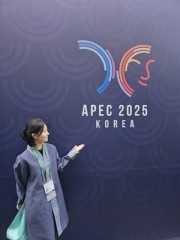
Two decades later, the atmosphere surrounding APEC 2025 in Gyeongju, North Gyeongsang Province, shows just how wide that wave has spread. K-pop has evolved from being a showcase of national talent to a key instrument of diplomacy, branding and policy communication. It is no longer a musical interlude for foreign dignitaries, but an essential feature of Korea’s global identity.

K-pop meets diplomacy
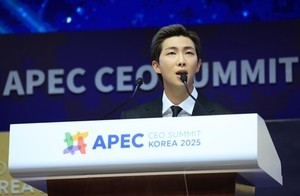
G-Dragon, APEC’s honorary ambassador, fronted the event's promotional campaign alongside Jang Won-young of Ive. Meanwhile, BTS’ RM became the first K-pop artist to address the APEC CEO Summit, delivering a keynote speech titled “Cultural and Creative Industries in the APEC Region and the Soft Power of K-culture.” His appearance, combining star power and intellectual influence, illustrated how Korea now positions its artists as cultural envoys rather than entertainers.
The APEC organizing committee emphasized G-Dragon’s selection as a reflection of K-pop’s stature, describing him as “a symbol of creativity and innovation who embodies APEC’s values of connection and sustainability.” His appointment, they added, is expected to “amplify international attention toward the summit” — a statement that underscores how K-pop’s visibility now functions as strategic diplomacy.
That shift is also evident in the corporate sphere.
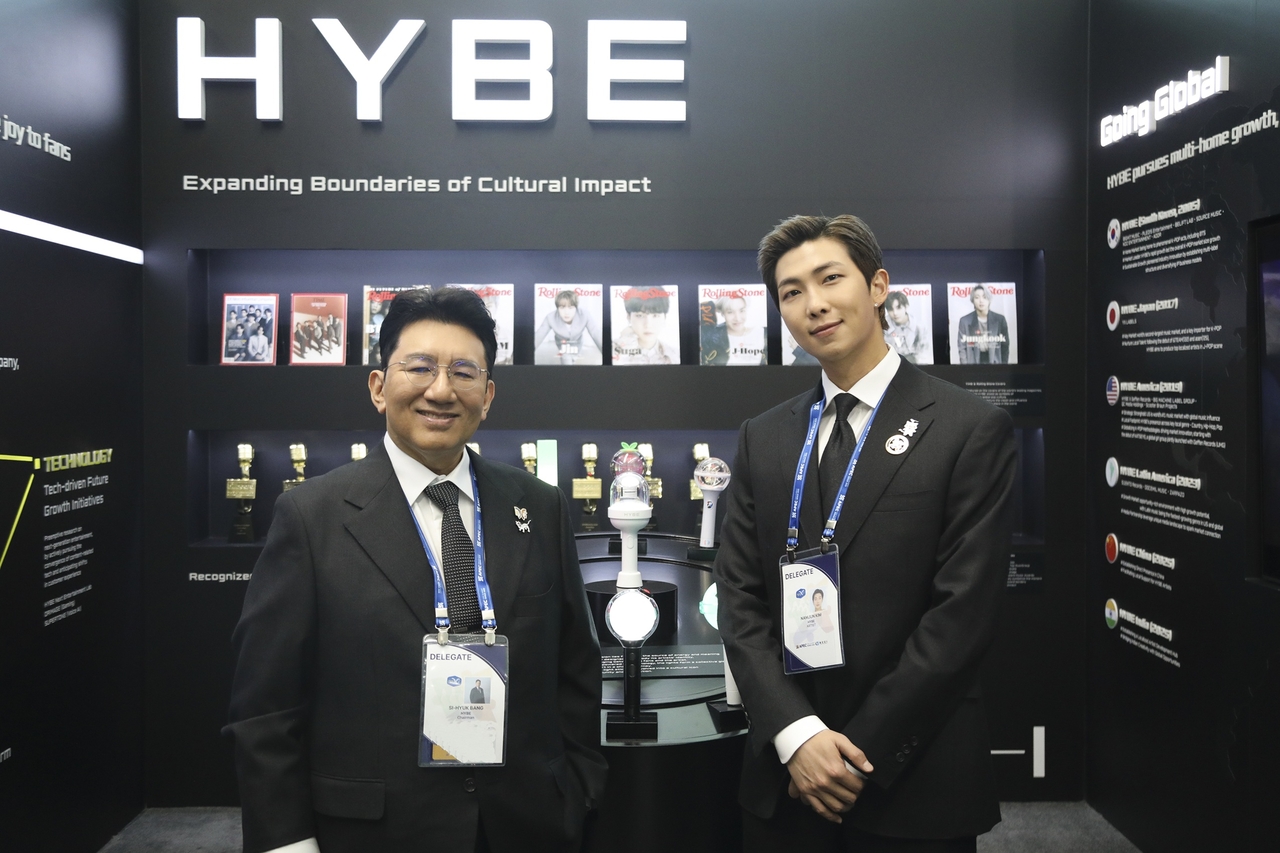
Hybe, the parent company of BTS’ agency Big Hit Music, joined the APEC CEO Summit as a diamond sponsor — the event’s highest sponsorship tier — becoming the only entertainment company among major international backers. At the Gyeongju Arts Center, the firm showcased an exhibition highlighting its worldwide operations across the US, Japan, China, Latin America and India. An interactive light-stick zone allowed fans and executives to experience K-pop’s unique fandom culture firsthand, blurring the line between popular entertainment and international exchange.
Culture as global currency
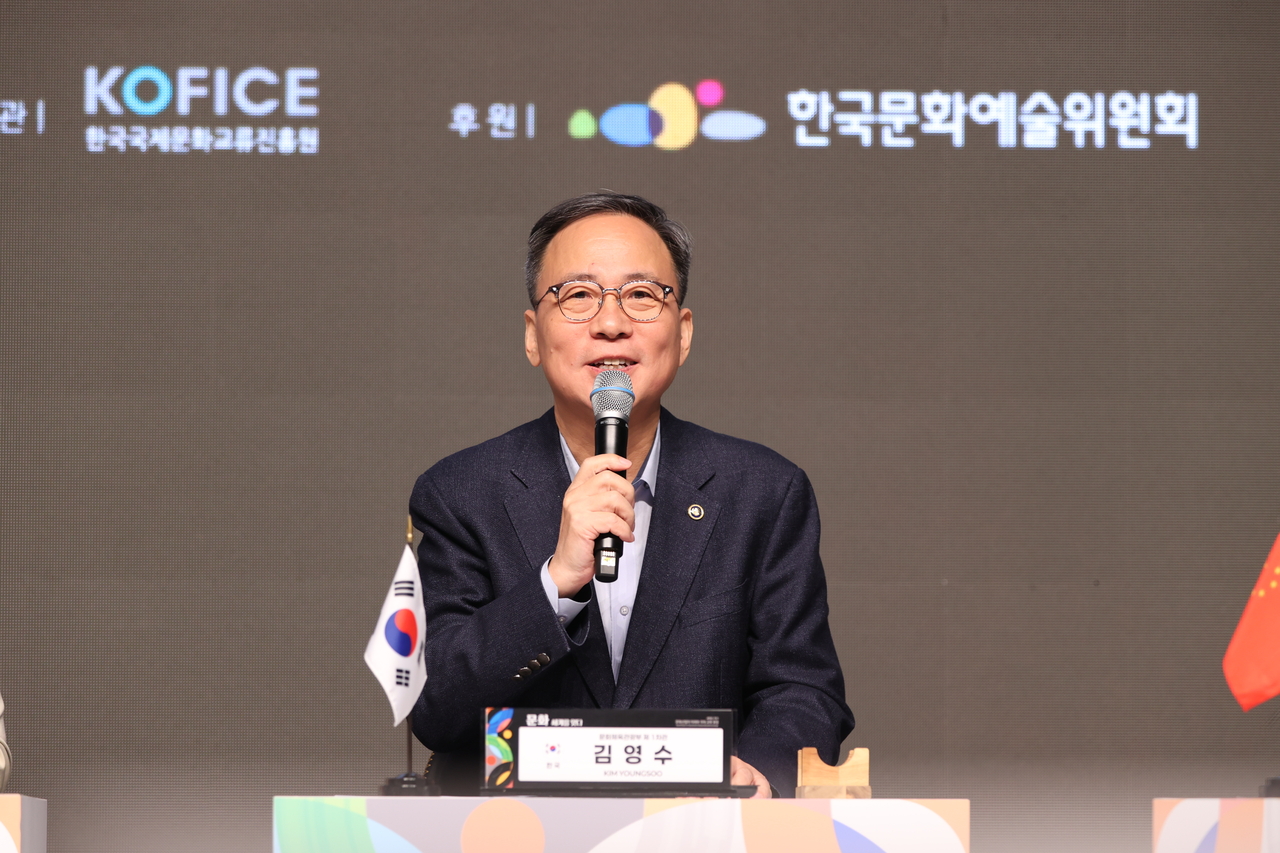
First Vice Minister of Culture, Sports and Tourism Kim Young-soo said during a dialogue with youth representatives from APEC member economies in Seoul, Monday, that “culture has become a major driver of national growth and K-culture has proven its value.”
He added that the government aims to position the cultural sector “as a central engine of future global cooperation,” calling APEC an “ideal stage for that vision.” His remarks echoed a broader government narrative that treats pop culture not merely as an export, but as diplomacy in action.
Scholars say this transition of K-pop from performance to policy tool illustrates the depth of K-pop’s global integration.
“When non-Koreans think of Korea, the first thing that comes to mind is probably K-pop,” said Grace Kao, a sociology professor at Yale University. “Idols are the physical embodiment of Korea’s growing visibility on the global stage. In recent years, K-pop acts have topped the Billboard Hot 100 multiple times, BTS has spoken at the United Nations and visited the White House and G-Dragon has been appointed as a visiting professor at KAIST. In many ways, K-pop idols are the face of Korea abroad.”
That level of influence was unimaginable two decades ago, according to music critic Lim Hee-yun.
“In 2005, the Korean Wave was in its infancy. The term ‘K-pop’ didn’t even exist,” Lim said. “BoA was one of the few artists recognized in Japan. Big Bang hadn’t debuted yet. What we called Hallyu at the time was mostly driven by TV dramas like ‘Winter Sonata’ or early idol fandoms in China.”
Lim added that K-pop’s viral potential today is “unmatched,” noting that “even if it remains a subculture in the Western world, its visibility and measurable impact are enormous — few other cultural sectors have achieved comparable results.”
The presence of figures like G-Dragon and RM at this year’s APEC, paired with corporate participation from Hybe, signals a new stage in how South Korea presents itself to the world.
An entertainment industry official observed that the Gyeongju APEC represents more than just a diplomatic gathering.
“If 2005 represented the dawn of the Korean Wave, 2025 shows Korea as a global cultural hub,” the official said on condition of anonymity. “G-Dragon’s appointment, his international tours and his recognition even by figures such as France’s First Lady Brigitte Macron demonstrate how K-pop has become part of global diplomacy.”
jaaykim@heraldcorp.com