As Gyeongju hosts world leaders, APEC faces defining test over its ability to foster cooperation amid deepening geopolitical divides
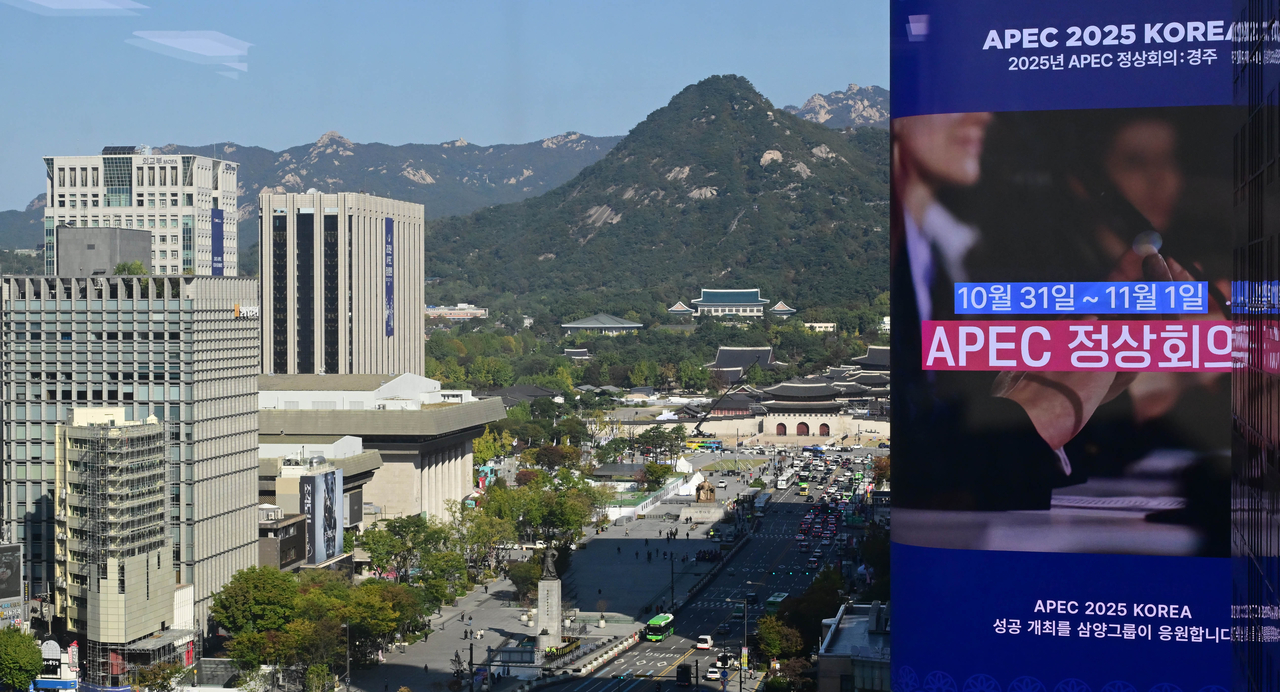
When the Asia-Pacific Economic Cooperation forum was launched in 1989, its founding goal was ambitious yet clear — to promote open trade, regional economic integration and sustainable growth across the Pacific Rim.
Formed at the end of the Cold War and amid rising globalization, APEC emerged as a platform to bridge advanced and developing economies in the region. With 21 member economies accounting for nearly 60 percent of global gross domestic product, the forum quickly became a cornerstone of regional dialogue on trade and growth.
Unlike the World Trade Organization, APEC operates on voluntary consensus rather than binding agreements, allowing for flexible cooperation but also limiting its capacity to enforce commitments.
The forum’s founding members — Australia, Brunei, Canada, Indonesia, Japan, South Korea, Malaysia, New Zealand, the Philippines, Singapore, Thailand and the United States — came together in 1989 to form the bloc. Over the following decade, new members joined in waves: China, Hong Kong and Chinese Taipei in 1991; Mexico and Papua New Guinea in 1993; Chile in 1994; and finally Peru, Russia and Vietnam in 1998, completing the current roster of 21 member economies.
South Korea played a pivotal role in APEC’s early development. In 1989, then-Australian Prime Minister Bob Hawke visited Seoul to propose the creation of a new regional economic forum — a vision that laid the foundation for APEC’s establishment later that year. Two years later, Seoul hosted the third APEC Ministerial Meeting in 1991, where member economies adopted the landmark Seoul Declaration, setting out APEC’s principles of open regionalism and voluntary cooperation. The forum was further elevated to the level of the APEC Economic Leaders’ Meeting in 1993, solidifying its status as the region’s premier dialogue mechanism.
South Korea has since remained an active contributor, hosting the APEC Summit in Busan in 2005, where members adopted the Busan Roadmap to achieve the Bogor Goals of free and open trade and investment.
Over three decades on, APEC’s role and effectiveness have become subjects of growing debate. While the forum continues to serve as an important venue for dialogue, critics argue that it has struggled to translate discussions into concrete action.
The organization’s ultimate goals — accelerating regional economic integration and achieving balanced, inclusive and sustainable growth — remain aspirational rather than realized. APEC’s consensus-based structure often makes it difficult for members to move beyond declarations to implementation.
The bloc’s members range from the world’s largest economies to small island states, encompassing diverse political systems and stages of development. These disparities have frequently stalled progress on key agendas such as free trade, investment liberalization and digital cooperation.
Geopolitical tensions — particularly between the US and China — have further complicated APEC’s mission. The ongoing trade rivalry between the two powers has undermined the forum’s founding vision of open and rules-based trade.
In 2018, the rift became so pronounced that APEC leaders failed for the first time in history to issue a joint communique. Since then, protectionist trends have only deepened, as many economies erect new trade barriers to protect domestic industries.
These divisions have eroded trust and cast doubt on whether APEC can still function as an effective mechanism for regional cooperation in an era of strategic competition.
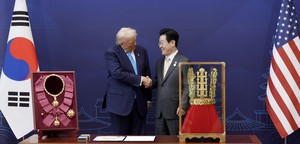
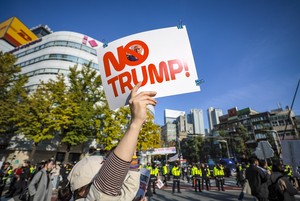
This week, APEC returns to South Korea for the first time in 20 years — with the 2025 APEC Summit in Gyeongju bringing together leaders including US President Donald Trump and Chinese President Xi Jinping for face-to-face talks.
As the global economy faces slower growth, supply chain fragmentation and accelerating technological change, the Gyeongju meetings offer a timely platform for reflection.
South Korea, hosting a series of high-level sessions from Monday to Saturday, has positioned this year’s summit around the theme of “Building a sustainable tomorrow: connect, innovate, prosper.”
For now, the forum remains one of the few places where the world’s major economies — despite their differences — share the same table. Whether that alone can sustain its relevance in a fractured world may determine APEC’s future beyond Gyeongju.
However, tension was reflected this week in remarks by South Korean Foreign Minister Cho Hyun, who acknowledged ongoing differences between the US and other member economies over whether to include language supporting “free trade” in the leaders’ declaration.
Speaking during a parliamentary audit hosted by the National Assembly’s Foreign Affairs and Unification Committee on Tuesday, Cho responded to a question from ruling Democratic Party Rep. Yoon Hu-duk, who asked whether APEC — as a community supporting the multilateral trading system centered on the WTO — would reaffirm that commitment.
“It’s not as easy as expected,” Cho said, admitting the difficulties in reaching consensus.
Since 2021, APEC leaders’ declarations have consistently included the phrase “a rules-based multilateral trading system with the WTO at its core.” However, the rise of protectionism — including recent US tariff measures and intensifying trade frictions among major economies — has made it harder to secure agreement on such language this year.
“We are making every effort to produce a consensus-based declaration,” Cho added. “There have been instances in the past when a leaders’ declaration was not issued, but this time, our negotiators have already gone down to Gyeongju and are in the final stages of wording adjustments to ensure the statement can be finalized smoothly.”
mkjung@heraldcorp.com