Chey Tae-won says summit in Gyeongju will gauge geopolitical shifts, chart new paths for Korea’s growth
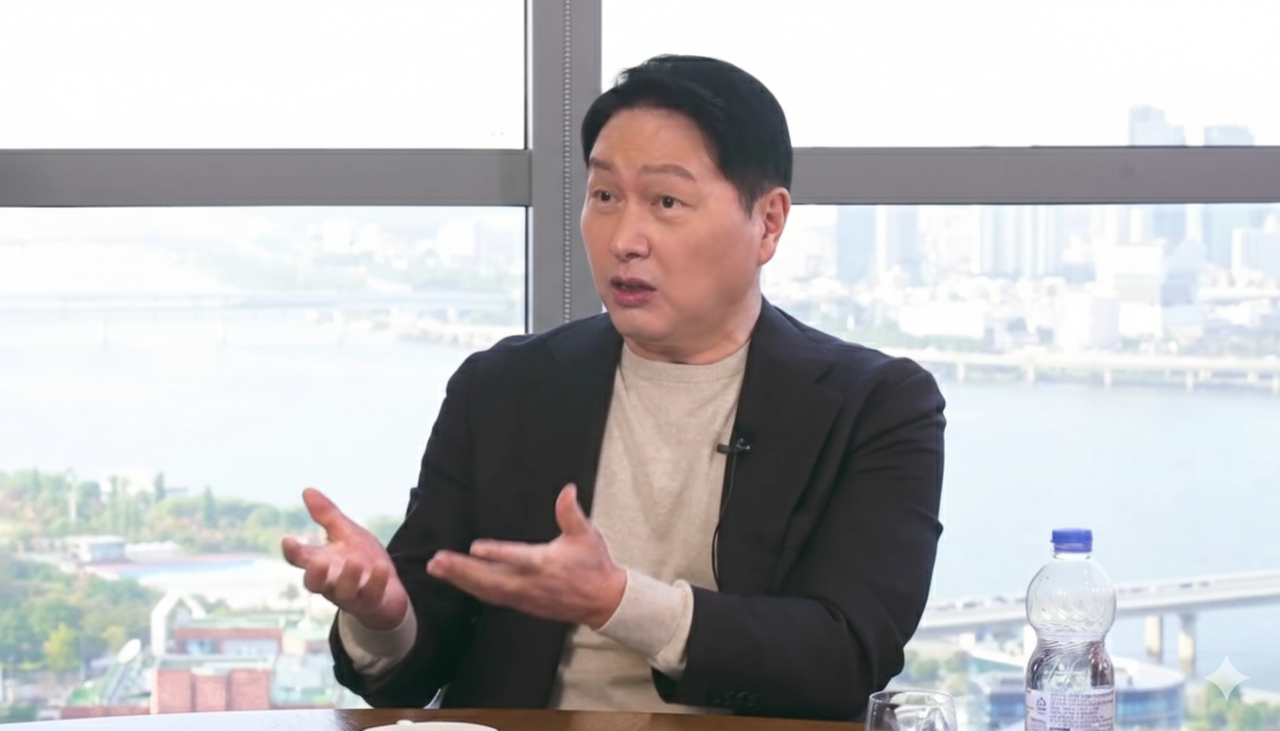
As global business and political leaders convene for the APEC meetings this week, SK Group Chair Chey Tae-won, who also heads the Korea Chamber of Commerce and Industry, stressed the importance of the gatherings in Gyeongju, saying they will serve as a critical gauge for US-China relations.
Speaking in a joint interview with popular YouTube channels 3Pro TV, Understanding and Apkwon that was released Sunday, Chey, who chairs the APEC CEO Summit as the head of KCCI, discussed the significance of the global gathering and South Korea’s growth strategy amid uncertainties.
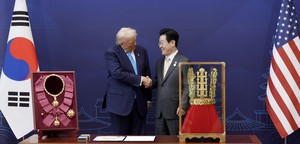
“US President Donald Trump and Chinese President Xi Jinping, along with other leaders of APEC member economies, will gather and engage in extensive discussions,” Chey said. “It will serve as a barometer for how US-China relations will unfold in the coming years.
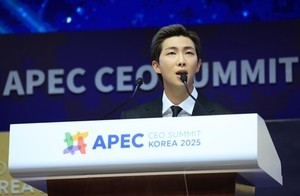
Regarding the APEC CEO Summit, Chey said that with over 1,700 participants in attendance, including Nvidia CEO Jensen Huang and other executives, it will be a forum for “finding solutions in the era of protectionism.”
The main APEC Leaders' Summit will take place from Friday to Saturday, bringing together the heads of 21 economies in Gyeongju, North Gyeongsang Province. Trump and Xi are expected to hold talks on the sidelines of the event, marking their first face-to-face meeting since Trump's second term began in January, as the world's two largest economies seek to dial down trade tensions.
Preceding the main summit is the APEC CEO Summit, which runs Tuesday to Friday. The event will bring together global tycoons, tech leaders, senior economic leaders and renowned experts for discussion on artificial intelligence, energy transition and digital innovation, as well as to network and forge partnerships.
During the interview, Chey also discussed how South Korea’s economy can grow, suggesting that it must move beyond the decades-old export-driven model.
“It is difficult to return to the days of free trade under the (World Trade Organization) system,” he said. “The export-driven economic growth formula that worked since the 1960s no longer functions due to tariffs.
Chey suggested five key areas as potential solutions for boosting South Korea’s economy: a Korea-Japan economic alliance, growth-oriented regulatory reform, AI investments, recruiting overseas talent, and the creation of “mega sandboxes” across regions to spur innovation.
Chey reiterated his earlier calls for forming an economic bloc between Seoul and Tokyo to combat shared challenges such as protectionism and external uncertainties.
“By cooperating with Japan, we could create a $6 trillion market and achieve an economy of scale,” he said, adding that such a union would form the world’s fourth-largest economic bloc that could withstand external challenges.
Chey further emphasized the need to expand investment in AI.
Comparing the ongoing US-China competition in AI to the Cold War-era arms race between the US and the Soviet Union, he said, “the two countries will not stop their AI investment war.”
“Even amid geopolitical uncertainty, we must continue making necessary investments,” he said, emphasizing that “falling behind in the AI sector would pose a serious risk.”
sahn@heraldcorp.com