Seoul weighs partnership against pressure as Washington turns friendship into payment
When US President Donald Trump demands that South Korea and Japan each provide colossal sums — $350 billion and $550 billion, respectively — to invest in the US, it stretches the limits of diplomacy and common sense.
What might appear as a hard-nosed negotiation is, in truth, an act of financial coercion dressed up as economic nationalism. Even the Wall Street Journal, in an editorial, called the plan unrealistic and warned of its implications for fiscal oversight.
The WSJ’s editorial goes further than fiscal arithmetic. It questions the underlying principle: Should the American president, any president, be allowed to extract such sums from allied democracies without congressional authorization or clear public purpose?
For South Korea, the numbers alone are staggering. The requested amount equals roughly 6.5 percent of its GDP over three years. Japan’s share would approach 4.5 percent of its output. To put this in perspective, Seoul spends about 2 percent of its GDP on defense; Tokyo slightly less. Such sums far exceed what any democratic government could promise without parliamentary consent or political backlash. The WSJ noted that it was difficult to imagine Japan’s new Prime Minister Sanae Takaichi, who leads a minority coalition, approving such a payment.
The larger worry is structural. The Trump administration reportedly wants these funds to flow into a US-managed vehicle for strategic sectors such as energy, semiconductors and advanced computing. The US president and his appointees would exercise broad discretion over allocations, without congressional oversight or transparent rules. It would resemble an improvised sovereign wealth fund financed by allied democracies.
That prospect unsettles even friendly observers. No US president has ever sought to command hundreds of billions raised through pressure on partner nations. Such a system would blur the boundary between public policy and political patronage, inviting favoritism and misuse. US Commerce and Treasury officials could be pushed to reward firms aligned with the Trump administration’s interests.
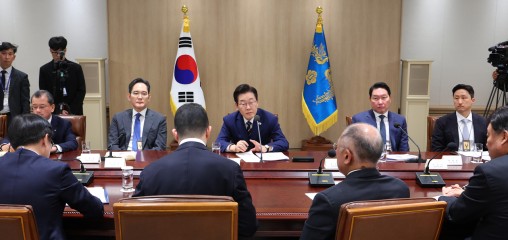
In Seoul, the reaction has been cautious but unyielding. Officials close to President Lee Jae Myung have signaled that an immediate $350 billion payment is impossible. Instead, they are exploring phased contributions tied to specific investment guarantees. Privately, Korean policymakers warn that a one-time transfer of that scale could strain foreign exchange reserves and spark domestic outrage.
Yet President Lee has chosen diplomacy over confrontation. In a CNN interview on Wednesday, he acknowledged “differences in opinion” between the two countries but expressed faith that “eventually we will get there because the United States is the leading country when it comes to the values of democracy and the free market system.”
Lee added that he believed both sides “will, in the end, be able to reach a rational result that can be acceptable.” His remarks suggest a careful balance: defending national interests while leaving room for Washington’s dignity.
Japan faces a similar predicament. With a sluggish economy and limited fiscal space, a half-trillion-dollar contribution is politically implausible. Yet both Tokyo and Seoul, dependent on US security guarantees, must navigate the pressure without appearing defiant. The choreography of deference has become part of modern alliance management.
This controversy exposes the cost of Trump’s transactional worldview. Allies are treated less as partners than as accounts to be tapped for cash. That approach weakens not only goodwill but also the credibility of American leadership. If Washington treats friendship as a billable service, it should not be surprised when partners start calculating the price of loyalty.
The Trump plan, even if softened in negotiation, will leave a lasting impression: that coercion, not cooperation, defines the new alliance arithmetic. And when the world’s democracies begin to question whether America’s power still rests on trust, the damage will be far costlier than any unpaid invoice.
khnews@heraldcorp.com