Ruling party pushes punitive damages, heavy fines for false, manipulated info
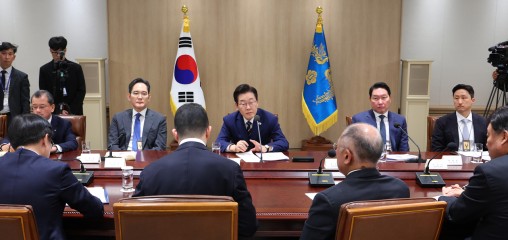
The ruling Democratic Party of Korea on Monday announced measures to root out false and manipulated information.
The party plans to process the related bill within the year. Under the bill, news companies and YouTubers would be slapped with punitive damages if they disseminate false or manipulated information maliciously. Such damages could amount to up to five times the loss calculated by the court.
If media organizations spread disinformation repeatedly, they could be fined up to 1 billion won ($700,000).
Disinformation, such as vicious rumors and doctored images and videos, can aggravate social unrest and division. Many agree that this reality should not be neglected.
But the problem is that the bill could stifle freedom of expression and the essential roles of the press in observing and criticizing power.
Because of these concerns, legislators should take a cautious approach to regulating the media. Above all, five-fold punitive damages and the maximum fine of 1 billion won are excessive.
Journalists raise suspicions based on facts and data obtained through interviews and sources. The grounds for reports that raise such suspicions for the first time are often shaky. Naturally, this cannot be helped.
Usually, the whole picture of irregularities involving those in power is exposed when a certain outlet makes breaking news, followed by other media with deeper reports.
Setbacks to further coverage will be inevitable when reporters must prove in court that every bit of information is factual. The bill holds news companies responsible for proving a lack of malice, which seems unreasonable. Generally, in lawsuits related to news reports, plaintiffs prove malice.
If the bill becomes law as is, government officials and politicians will likely use the law to arbitrarily block reports uncomfortable to them.
Some politicians are already spreading false information from behind parliamentary immunity.
One such case is the argument by Rep. Seo Young-kyo of the Democratic Party that the chief justice of the Supreme Court had a secret meeting with the then-prime minister and two others to discuss a case involving Lee Jae Myung before the early presidential election in June.
In her desire to get the chief justice to a National Assembly hearing, she echoed the content of a YouTube channel as if it were a factual report.
However, the channel admitted later that the report was not fact-checked, and the chief justice completely denied meeting them. Still, Seo stands by her claim.
These days, some lawmakers frequently appear on YouTube channels aligned with their political inclinations, where they show sympathy with misinformation and sometimes even raise tenuous suspicions of their own.
If politicians spread unverified information on YouTube, not only news companies and YouTubers, but lawmakers themselves should also be regulated. Their privilege of immunity ought to be removed first.
The bill targets traditional news outlets and YouTubers that have a certain number of subscribers or hits, but this criterion itself is controversial. Though the bill sets eight conditions for the recognition of malice, confusion will still be hard to avoid in discerning between malice and good intentions.
The bill allows politicians, high-ranking public officials and large companies to file suits for punitive damages. But the tougher penalties stipulated in the bill would easily tempt those in power into suing to preemptively block unfavorable reports.
Malicious, false or manipulated information and public-interest news reports must be distinguished.
A careful review of the bill is needed to ensure freedom of expression and prevent the abuse of lawsuits for damages.
Those YouTubers who cause harm to society by uploading inflammatory disinformation habitually should vanish, but the error of burning the house to roast the pig should be avoided. Sufficient debates and social consensus should precede strengthening media regulations.
To weaken the functions of the press in watching and criticizing power under the pretext of reform is to shake the foundation of democracy.
khnews@heraldcorp.com