ASU president seeks deeper ties with Korea to advance AI, education
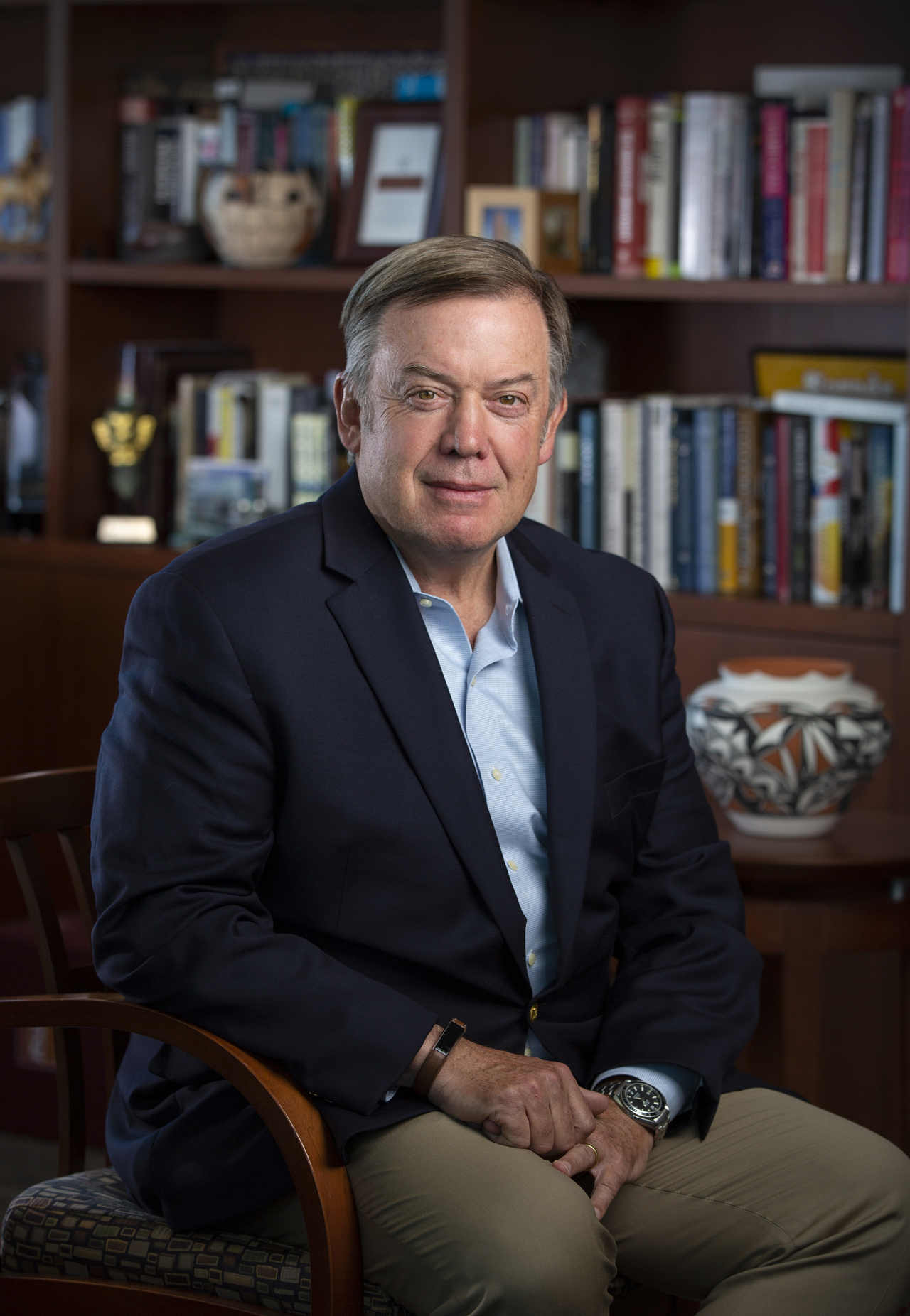
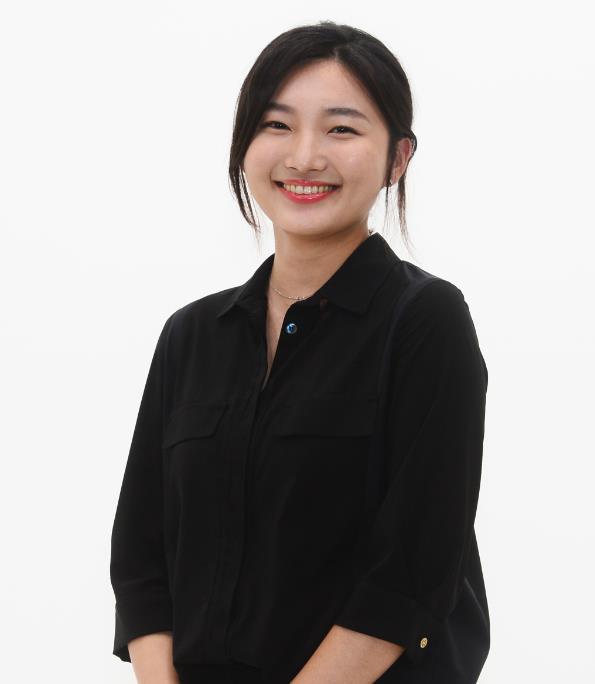
Artificial intelligence is “everywhere and impossible to ignore,” and universities must harness it to empower rather than replace human learning, Arizona State University President Michael Crow said in an interview during his visit to Seoul this week.
“With its unique ability to instantaneously transfer detailed information across time and generations, AI demonstrates the powerful potential to transform how we teach, learn and work,” Crow said, adding that ASU is committed to “advancing the thoughtful development, integration and practice of AI in service to our charter.”
Crow highlighted a range of AI-driven tools already deployed at ASU, from e-advisers and chatbots to virtual-reality biology courses, that have improved course outcomes and personalized student experiences.
He also added that will.i.am, founder and CEO of FYI.AI, will join ASU as a professor of practice to teach a new course on integrating human communication, empathy and values into AI agents.
“Is AI a source of creative disruption? Yes. Do we need to consider how it can be used wisely to empower human performance? Absolutely,” Crow said.
The visit marked his return to Korea after many years and came as part of a three-day trip to strengthen ties with Korean universities, government leaders and technology industries.
Crow said he is exploring opportunities for a new public policy graduate program and studying Korea’s media and entertainment sector, which he sees as a fertile ground for collaboration between technology and the arts.
ASU’s partners in Korea include Seoul National University, Yonsei University, Korea University, Hanyang University, Postech, and the KDI School of Public Policy and Management.
In the last five years alone, leaders from over 40 Korean universities have visited ASU to learn firsthand about the use of technology for teaching and learning, and university-industry collaboration.
His meetings in Seoul reflect a broader agenda of forging university-industry partnerships in advanced sectors such as semiconductors, where ASU has become a key player in Arizona’s own tech boom.
Afterward, Crow will go to Taiwan and visit TSMC, which has its US fab located in Phoenix, Arizona, partly because of its proximity to ASU. ASU has 34,000 engineering students, Crowd explained.
He pointed to ASU’s role in revitalizing the US semiconductor industry through close collaboration with companies, saying “collaboration and adaptability are key.”
“Advancing growth and resilience can’t be accomplished by a single entity, and it is vital not to overlook the expertise and opportunity that exists in higher education."
Crow’s message was clear: In an age of rapid technological change, universities must remain open, adaptive and inclusive while using AI to accelerate human creativity and problem-solving.
Expanding on ASU’s digital initiatives, Crow described the university’s partnership with OpenAI, the first such partnership announced in January 2024, which brought the capabilities of ChatGPT to students and faculty.
Looking ahead, Crow envisions ASU as a university that serves learners at every stage of life.
“It should be able to provide quality K-12 learning, timely and flexible career education, and augment learning for degree-seekers and non-degree seekers of all ages, accessible from anywhere on the planet,” he said.
“Ultimately, our goal is to make everything the university has to offer available to the greatest number of people in order to be of the most service in improving lives.”
jychoi@heraldcorp.com