
Plan to build 250-ship US fleet could open doors to Korean shipyards
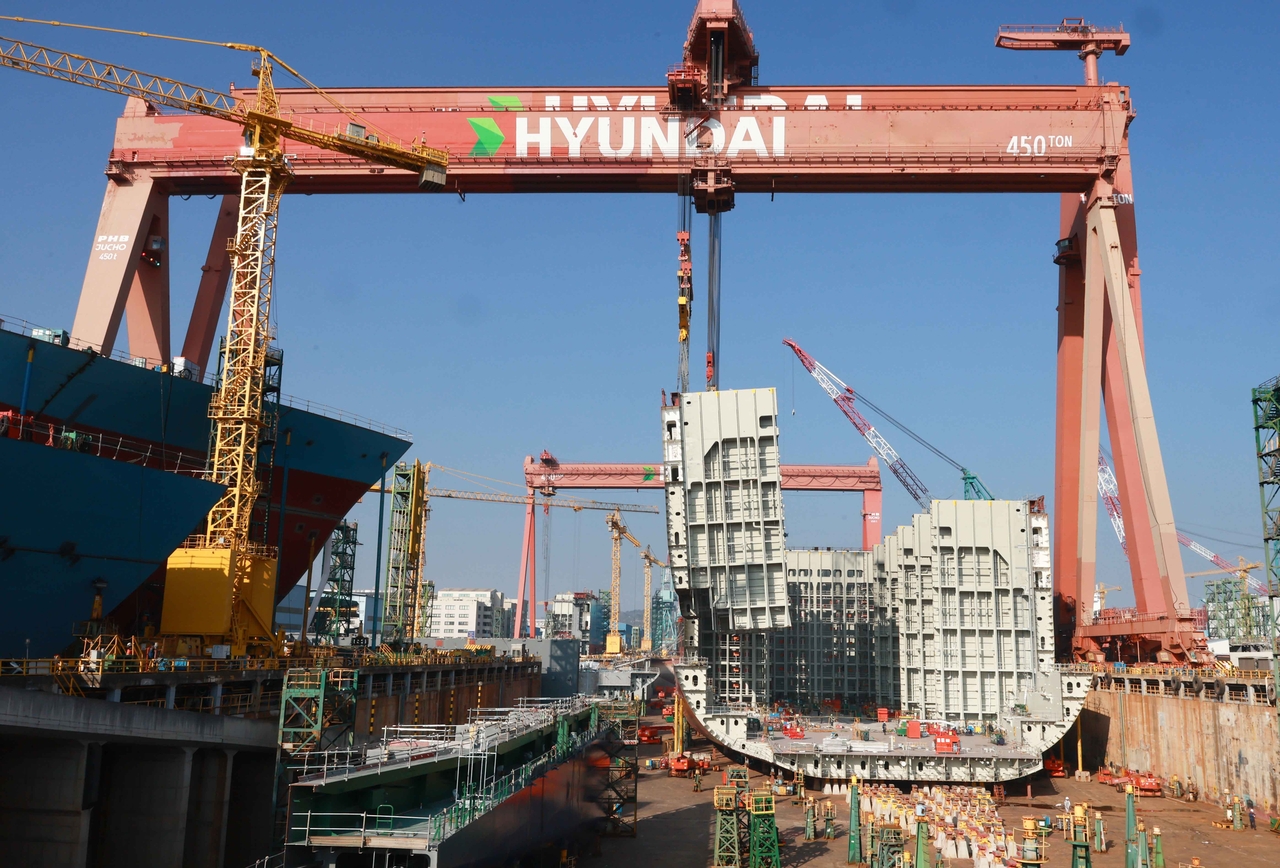
Korea’s “Make American Shipbuilding Great Again” initiative -- better known as MASGA -- is gaining steam as several US labor unions have upped the pressure on lawmakers to pass legislation that would allow the American commercial fleet to include foreign-built vessels.
According to a Reuters report on Wednesday, five labor unions, including the United Steelworkers and the International Brotherhood of Electrical Workers, sent a letter to lawmakers urging them to “support and schedule action” for the bipartisan Shipbuilding and Harbor Infrastructure for Prosperity and Security for America Act introduced in April.
US senators, including Todd Young, a Republican from Indiana, and Mark Kelly, a Democrat from Arizona, were among the sponsors of the SHIPS Act, which aims to revive US maritime infrastructure and commercial vessel prowess. Lawmakers, however, have not yet taken tangible action on the bill.
As the SHIPS Act aims to create a fleet of 250 US-flagged vessels within the next decade under the Strategic Commercial Fleet Program, US ship carriers and operators are inevitably going to have to turn to American allies, according to shipbuilding industry sources.
“Right now, the US accounts for less than 1 percent of global commercial ship production,” said an official at a Korean shipyard. “With China taking up more than 50 percent of the world’s shipbuilding, the US will have to turn to allies with competent shipbuilding capabilities like Korea and Japan.”
Over the past 10 years, China has built 6,765 commercial ships and Korea has built 2,405 commercial ships, while the US has built only 37 commercial ships, according to the United Steelworkers.
In order to increase the US fleet rapidly, the SHIPS Act states that carriers are allowed to submit a bid to bring a foreign-built vessel into the fleet and reflag it. According to the legislation, a foreign-built vessel may serve as an “interim vessel,” meaning it remains in the fleet only until it can be replaced by a US-built vessel or if under a full-term operating agreement. However, foreign-built vessels other than “interim vessels” will not be allowed to enter the fleet after fiscal year 2029.
“The SHIPS Act has the potential to open up more contracts for Korean shipbuilders,” said another shipbuilding official.
“Considering that the US recognizes that its domestic shipyards have limitations and it needs to utilize the shipyards of its allies, we are closely monitoring the legislation’s progress as Korean firms could be beneficiaries of the US Navy’s maintenance, repair and overhaul sector.”
Noting the recent merger between HD Hyundai Heavy Industries and HD Hyundai Mipo, the official added that HD Hyundai’s expanded production capacity of combat vessels will be able to capitalize on the SHIPS Act.
Hanwha Group announced a $5 billion investment in Hanwha Philly Shipyard last month when President Lee Jae Myung visited the site after his first summit with US President Donald Trump. With the investment, Hanwha said it plans to install two additional docks and three quays to increase the shipyard's production capacity.
For the MASGA initiative, Seoul in July pledged a $150 billion shipbuilding cooperation fund for Korean shipbuilders to invest in the US and support the American shipbuilding sector's revitalization, which the Korean government leveraged during tariff negotiations with the US.
hwkan@heraldcorp.com