In Gyeonggi Province city of Gwangju, 87.7 percent of middle school classes above 28-student limit
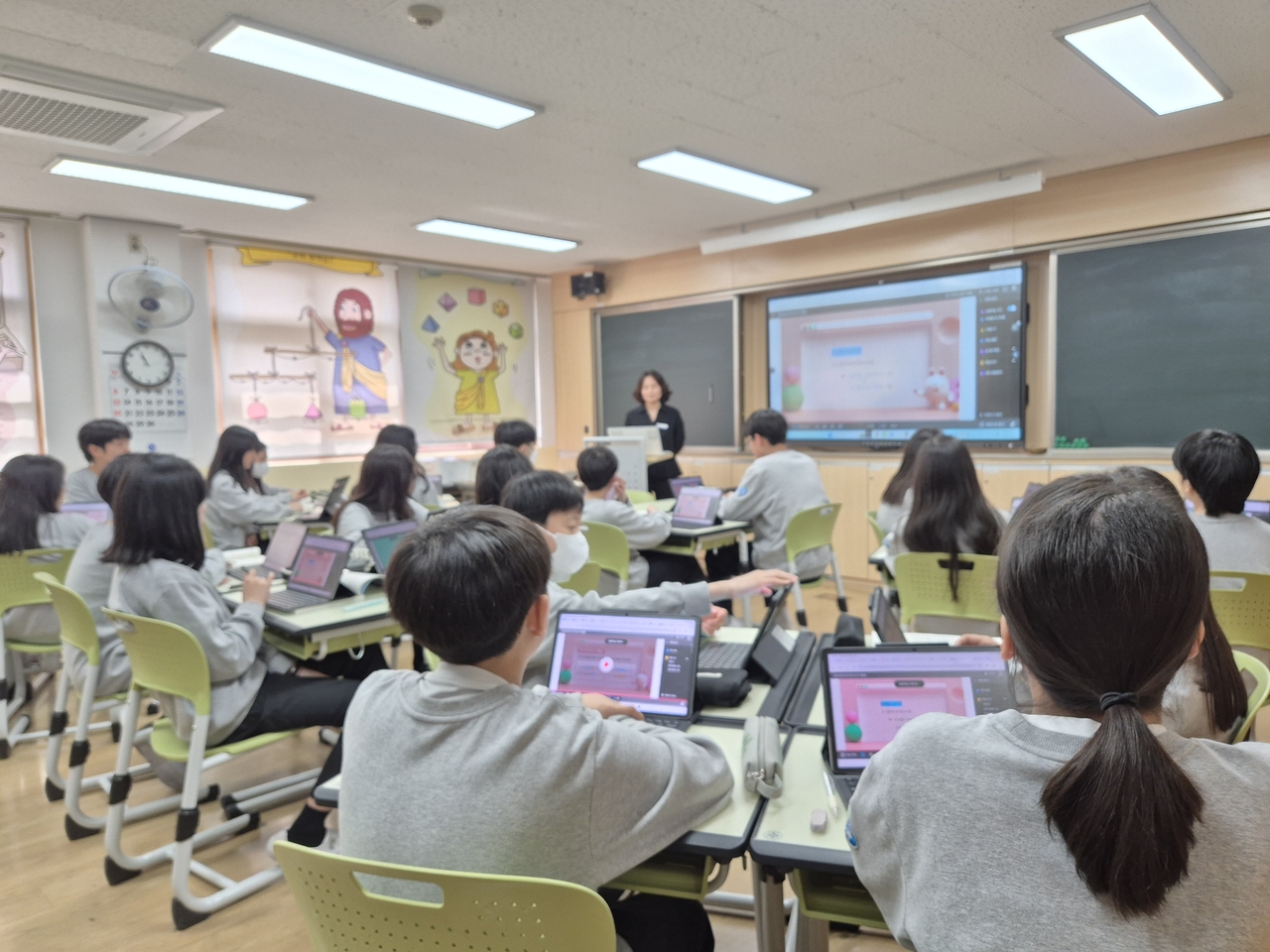
South Korea is seeing more of what the government defines as "overcrowded" classrooms, especially in middle and high schools, despite a shrinking school-age population.
Data from the Ministry of Education on Thursday showed that 16.8 percent of all classes in elementary, middle and high schools in 2025 had 28 or more students, classifying them as overcrowded. The rate was up from 16.5 percent last year, with 39,123 of 231,708 total classes exceeding the threshold.
Elementary schools reported improvement, with overcrowding falling from 4.56 percent in 2024 to 2.83 percent this year. But middle schools rose sharply from 34.7 percent to 38.8 percent, with nearly 4 in 10 classes now overcrowded.
High schools also edged up, from 25.5 percent to 25.7 percent.
The strain is most evident in urban and suburban areas.
In Gyeonggi Province, which surrounds Seoul, 58.6 percent of middle school classes were overcrowded, followed by Incheon at 53.2 percent and Jeju Island at 48.7 percent. Within Gyeonggi Province, the city of Gwangju recorded 87.7 percent of middle school classes above the limit, while Gimpo, Gwacheon and Hwaseong also exceeded 80 percent.
Seoul’s Gangnam-gu showed 78.1 percent overcrowding in middle schools and 51.3 percent in high schools, both far above national averages.
The Education Ministry introduced the 28-student benchmark in 2022 as part of a five-year staffing plan intended to improve classroom conditions and expand personalized instruction. At the same time, the overall number of teachers nationwide has declined.
According to separate ministry statistics released Aug. 28, South Korea employed 506,100 teachers in 2025, down 0.6 percent from the previous year. Elementary schools lost 3,527 teachers, declining 1.8 percent, while high schools shed 1,103, a drop of 0.9 percent. Middle schools added 1,266 teachers, an increase of 1.1 percent, but the gain has not been enough to keep pace with rising student enrollment.
The student population itself continues to shrink, but unevenly so across age groups.
The same ministry report found that as of April 1, the number of children in kindergarten through high school was 5.55 million, down 2.3 percent from 2024. Elementary schools saw a 6 percent decline, while middle school enrollment grew 2.8 percent, pushing up class sizes.
“Even though the school-age population is shrinking, the number of ‘overcrowded’ classrooms is rising,” said opposition lawmaker Go Min-jeong, who obtained the data from the Education Ministry. “We need a better standard for optimal class size, and education funding and teacher staffing plans must be adjusted accordingly.”
mjh@heraldcorp.com