Treasury share reform raises concerns over conglomerates' takeover defenses and financial flexibility
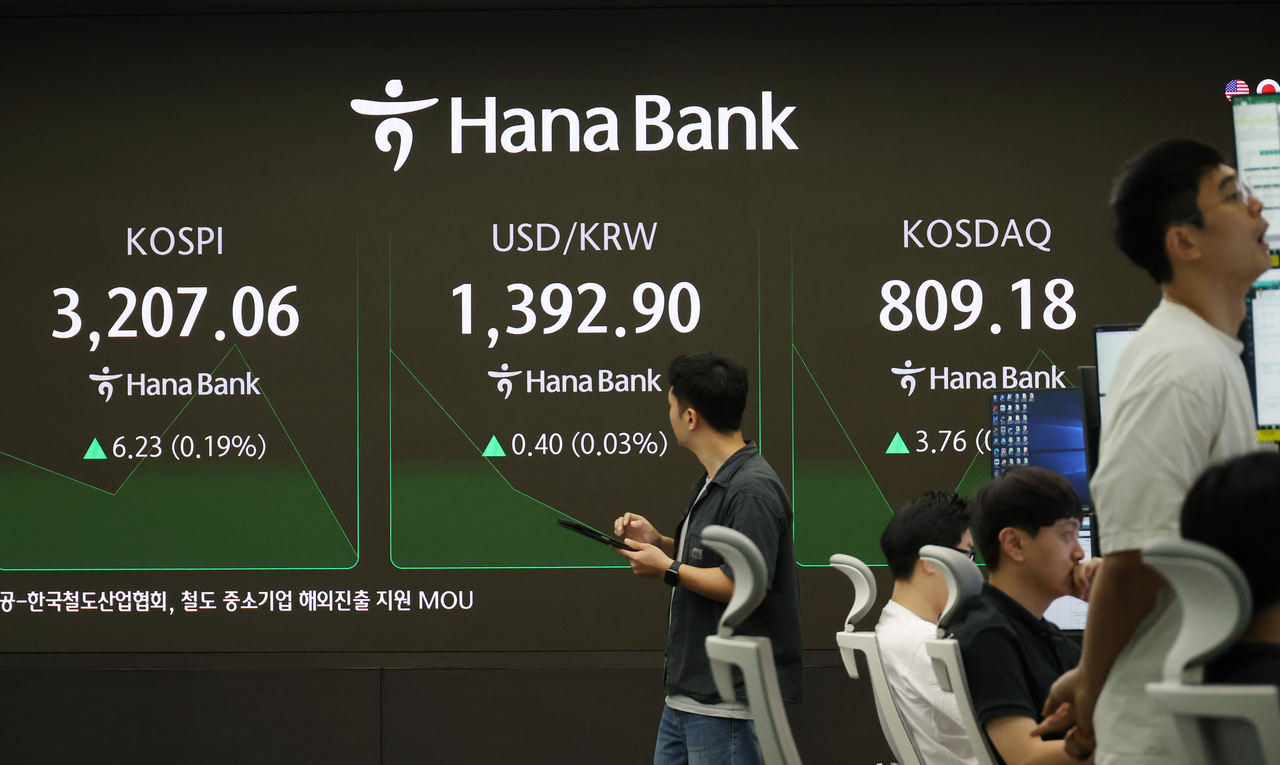
South Korea's ruling Democratic Party is seeking to push for a third round of amendments to the Commercial Act, requiring listed companies to cancel treasury shares within a set timeframe.
The proposal, expected to put forward in the parliamentary session this month, has triggered debate between minority shareholders, who consider it an essential reform and corporate leaders, who view it as a fundamental threat to corporate control.
Reform momentum builds
The move follows two waves of corporate governance reforms passed in July and August. The first revision to the Commercial Act expanded corporate directors’ fiduciary duty to all shareholders, not just their companies, and also limited the power of controlling shareholders over the choice of audit committee members.
The second revision, passed in August, mandated cumulative voting at large companies with assets exceeding 2 trillion won ($1.44 billion), and increased the number of separately elected audit committee members from one to two.
In its third legislative push, the Democratic Party, leveraging its majority control at the unicameral parliament, is proposing to require companies to retire treasury shares within fixed deadlines. Treasury shares are shares owned by the company after buybacks.
Several versions of bills are already proposed. They either focus on newly acquired shares, requiring them to be retired immediately or within one year, or mandate that existing holdings be retired within six months to five years of the law’s enactment.
As mandatory cancellation would shrink the total number of shares, proponents argue it would lift earnings per share and strengthen investor confidence. President Lee Jae Myung has also made treasury share retirement a centerpiece of his “Kospi 5000” agenda, a broader initiative aimed at eliminating the so-called "Korea discount" — the low valuation of Korean companies' stocks compared to international peers, thought to be due to weakness in corporate governance.
Treasury share cancellations can boost shareholder value by raising EPS and often drive up stock prices, at least in the short term. After HMM and LG announced their share retirement plans, their stock prices rebounded sharply, reflecting investor expectations of improved returns.
Corporate resistance grows
The initiative is causing headaches for South Korean conglomerates, which have long relied on treasury shares as a shield against hostile takeovers. Unlike other markets, Korea lacks common defense tools such as poison pills — which let existing shareholders buy discounted shares to dilute a bidder’s stake — or dual-class shares, which grant major shareholders multiple votes.
While treasury shares lack voting rights, companies can transfer them to friendly third parties who then gain voting power, effectively acting as “white knight” investors that can tip votes in management’s favor.
Notable cases in the past include SK Corp's 2003 sale of 4.5 percent in treasury shares to friendly parties to fend off hedge fund Sovereign Asset Management’s attempt to replace the leadership.
Hyundai Elevator and Hyundai Motor also used treasury holdings to fend off Schindler Group and Elliott Management, respectively.
More recently, Hanjin KAL, the holding company of Korean Air parent Hanjin Group, transferred treasury shares to its welfare fund, in a move seen as designed to strengthen Chair Walter Cho’s hold on the company in a battle against rival Hoban Group.
Observers raise concerns that removing this mechanism could leave companies exposed to future hostile takeovers from activist funds or trigger management disputes.
“Treasury shares are the only effective protection Korean firms have to defend from hostile takeovers,” said an industry official in condition of anonymity. “Many companies are voluntarily retiring their treasury shares, and mandating it by law, without other defense mechanism, could leave companies vulnerable from potential unwanted bids.”
Beyond corporate governance, financial flexibility is another major concern. Treasury stocks have provided liquidity during emergency situations or downturns, as companies could resell them to raise cash. Mandatory cancellation would rob companies of this flexibility.
The Korea Listed Companies Association recently raised concerns to the National Assembly that “mandating the retirement of treasury shares would undermine companies’ ability to quickly raise capital or defend share prices, thereby harming the interests of both firms and shareholders.”
It noted that during the COVID-19-triggered economic downturn in 2020, many companies sold treasury shares to raise cash and overcome difficulties. The association also warned that if mandatory cancelation is implemented, listed firms may simply avoid buying back shares altogether, reducing their ability to stabilize prices during market shocks.
Rush to stay ahead
The prospect of legislation has already prompted companies to reture treasury shares on their own terms and timeline, before it becomes mandatory. According to data compiled by Daishin Securities, 206 listed firms announced treasury share retirements from January to August this year, already surpassing last year’s total of 177. Of those, 120 were Kospi-listed companies and 86 were on the Kosdaq.
Major companies have joined the spree. Last month, HMM, South Korea's top container carrier, announced it would buy back and retire 2.2 trillion won worth of its shares, followed by Naver retiring 368.4 billion won worth of shares, Meritz Financial Group cancelling 551.4 billion won worth. LG Corp. also announced retiring 250 billion won, while Shinhan Financial Group announced 800 billion won retirement plan and KB Financial Group with 660 billion won plan.
sahn@heraldcorp.com