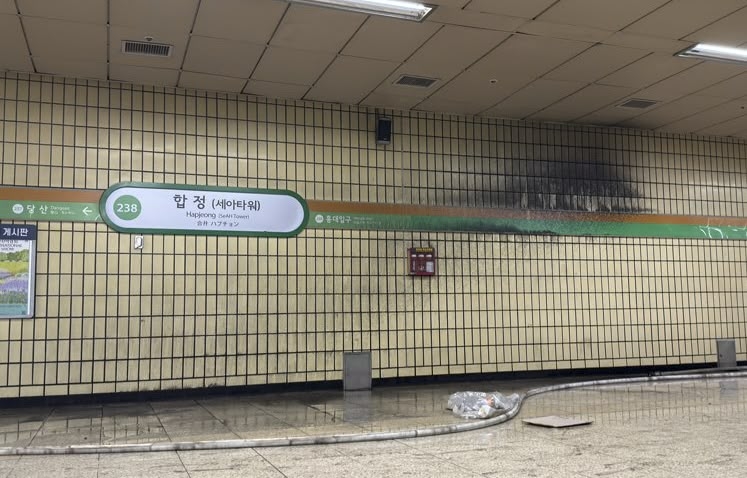
A recent string of battery fires in South Korea has forced evacuations from subways, airplanes and even apartment buildings, making the simple act of properly throwing out an old power bank or handheld fan a matter of public safety.
On Monday, trains on Seoul Subway Line Nos. 2 and 6 skipped Hapjeong Station for more than 30 minutes after smoke poured from a passenger’s motorcycle battery, according to Seoul Metro and the Mapo Fire Station. Just five days earlier, a power bank caught fire on a Line No. 4 train near Ichon Station. Nobody was injured, but both incidents left commuters shaken.
These incidents are far from isolated. South Korea has recorded over 670 lithium battery-related fires in the past five years, according to the National Fire Research Institute.
Why proper disposal matters
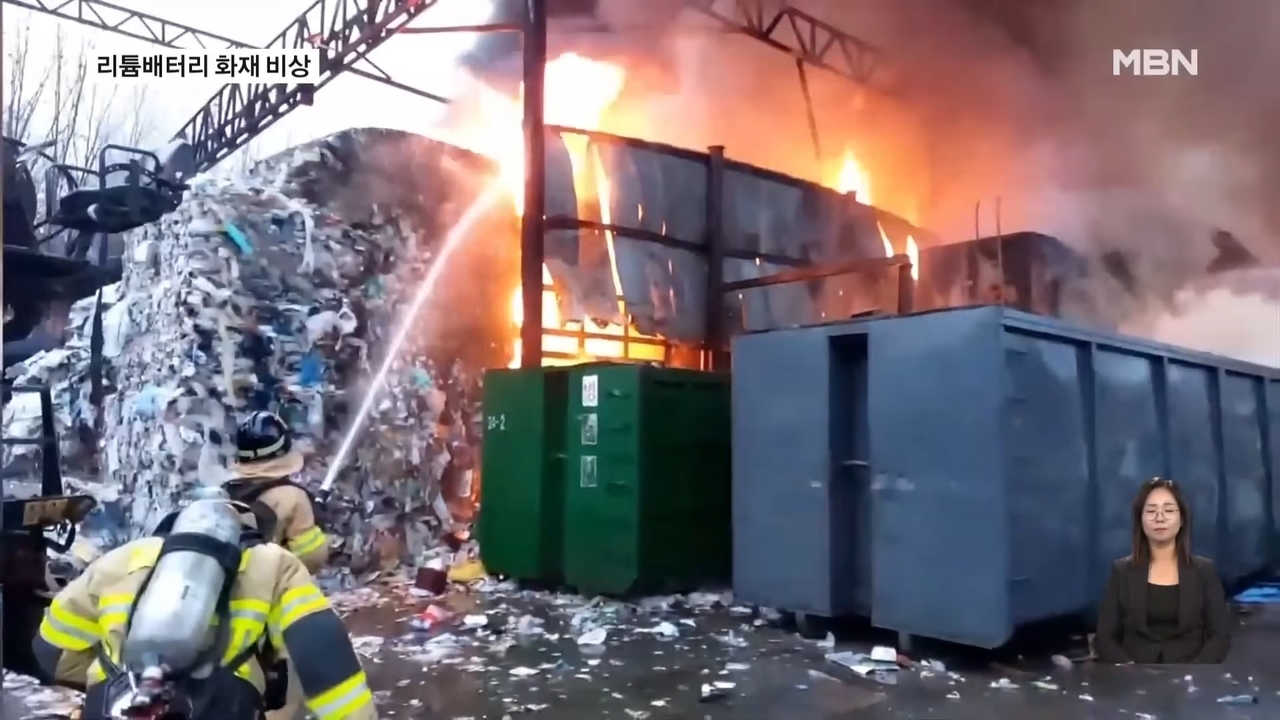
The same hazard has reached recycling sites. In July, a fire at a Seoul recycling facility caused 400 million won ($287,000) in damage. In Busan, a battery-fueled fire burned for 44 hours at a scrap yard. Officials at multiple sites confirmed that discarded batteries and battery-powered mini electronics were the cause.
According to the Korea Battery Recycling Association, many people still toss old devices into regular trash or plastic recycling, unaware that even inactive batteries can short-circuit and ignite, especially in hot or humid conditions.
How to safely dispose of lithium batteries in Korea
Disposing of batteries properly in South Korea depends on whether or not the battery can be removed from the device.
If the battery can be removed:
(Examples: AA, AAA, coin batteries, removable camera batteries)
- Remove the battery from the device.
- Place it in a designated waste battery bin.
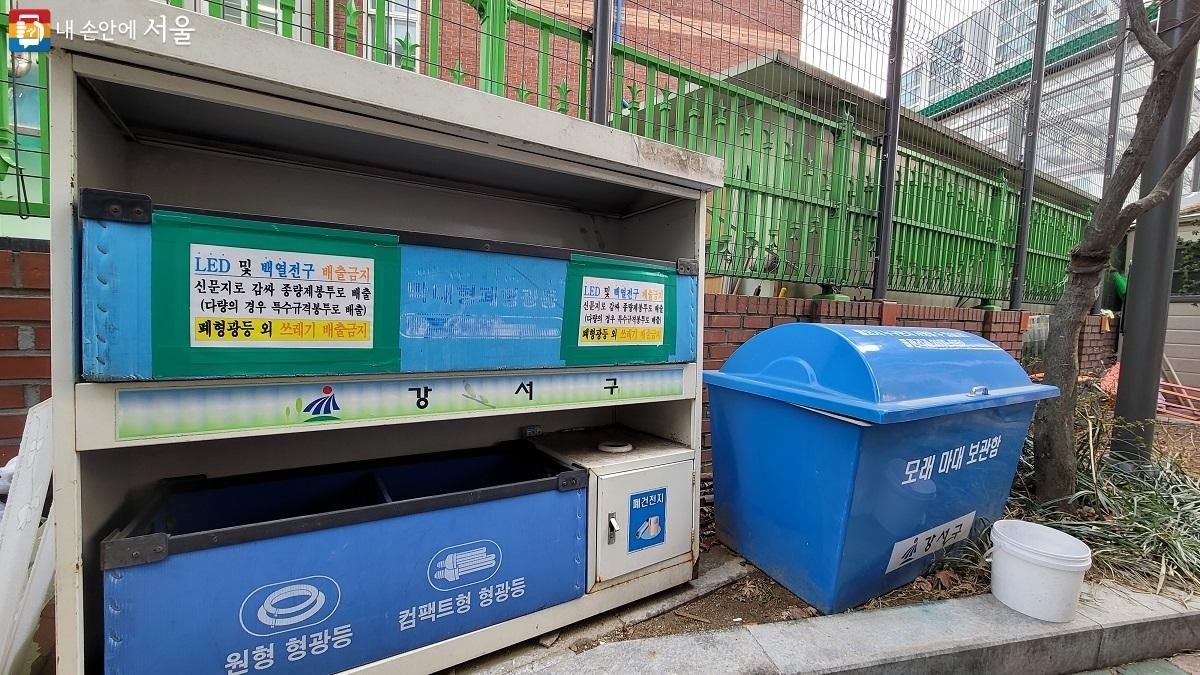
These bins are widely available at:
- Community service centers
- Apartment recycling stations
- Schools and large retail stores
If the battery is built-in and non-removable:
(Examples: power banks, handheld fans, wireless earphones, wireless keyboards and mice, children's electronic toys, etc.)
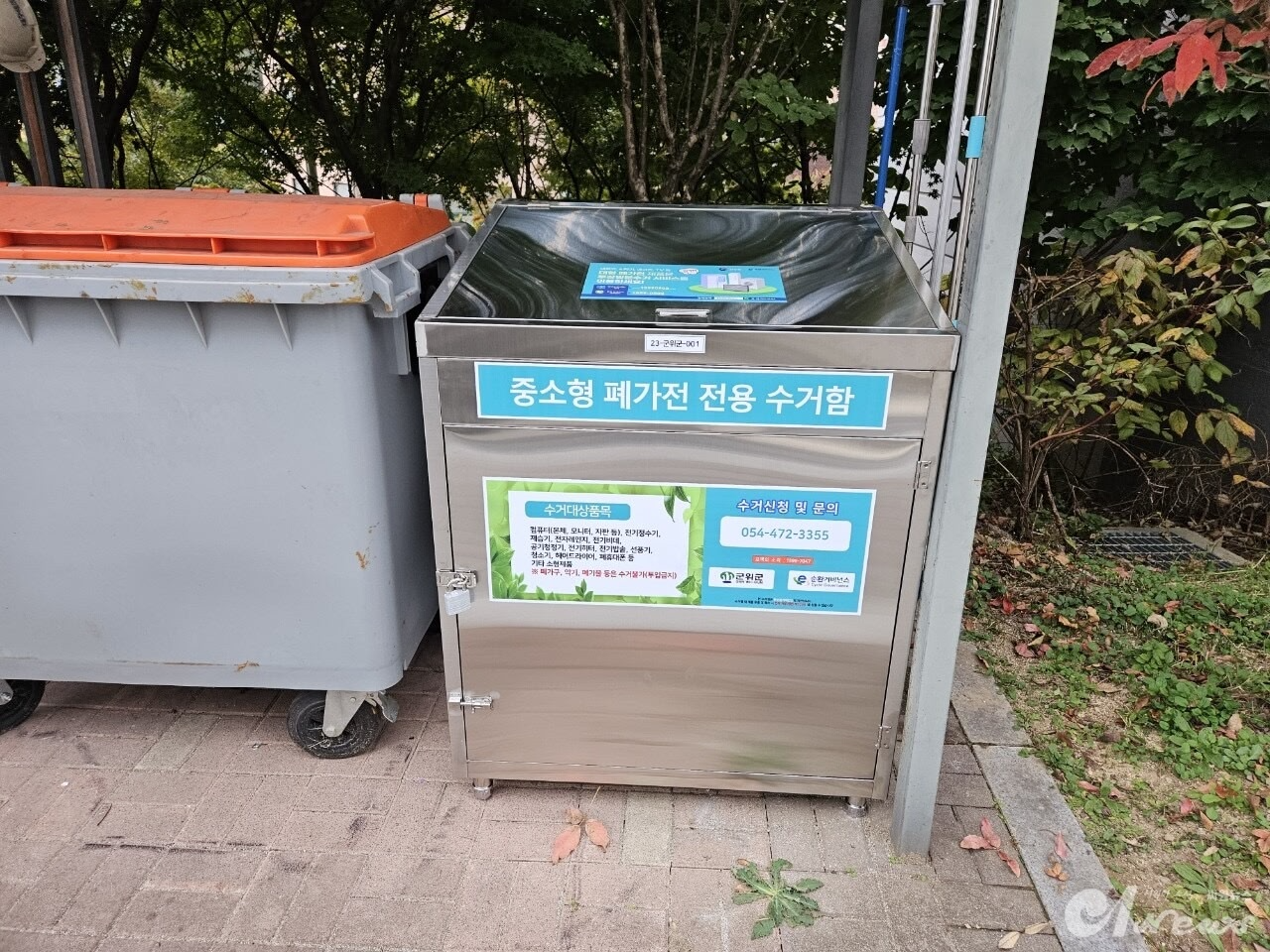
- Do not throw the item in regular trash or recycling.
- Dispose of the entire device in a dedicated collection station for small electronics or battery-integrated devices.
This is where confusion often arises.
In theory, these devices should go into dedicated small electronics bins. But in practice, most consumers don’t have access to one, especially if they’re not in an apartment complex.
What most people don’t know is the same waste battery bins at community service centers, originally meant for loose batteries, often also accept small battery-integrated devices, such as power banks, mini fans and electronic gadgets like wireless keyboards.
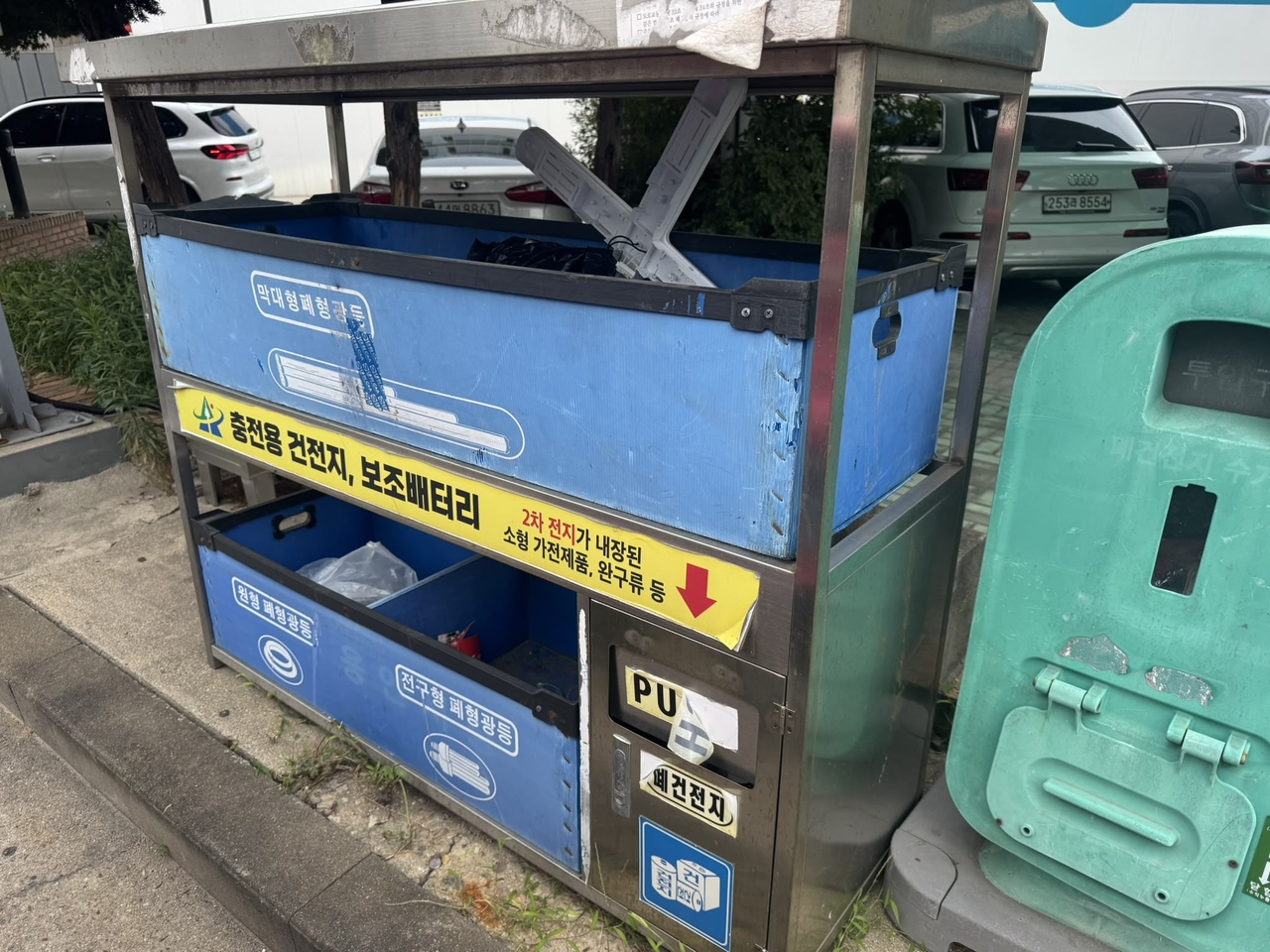
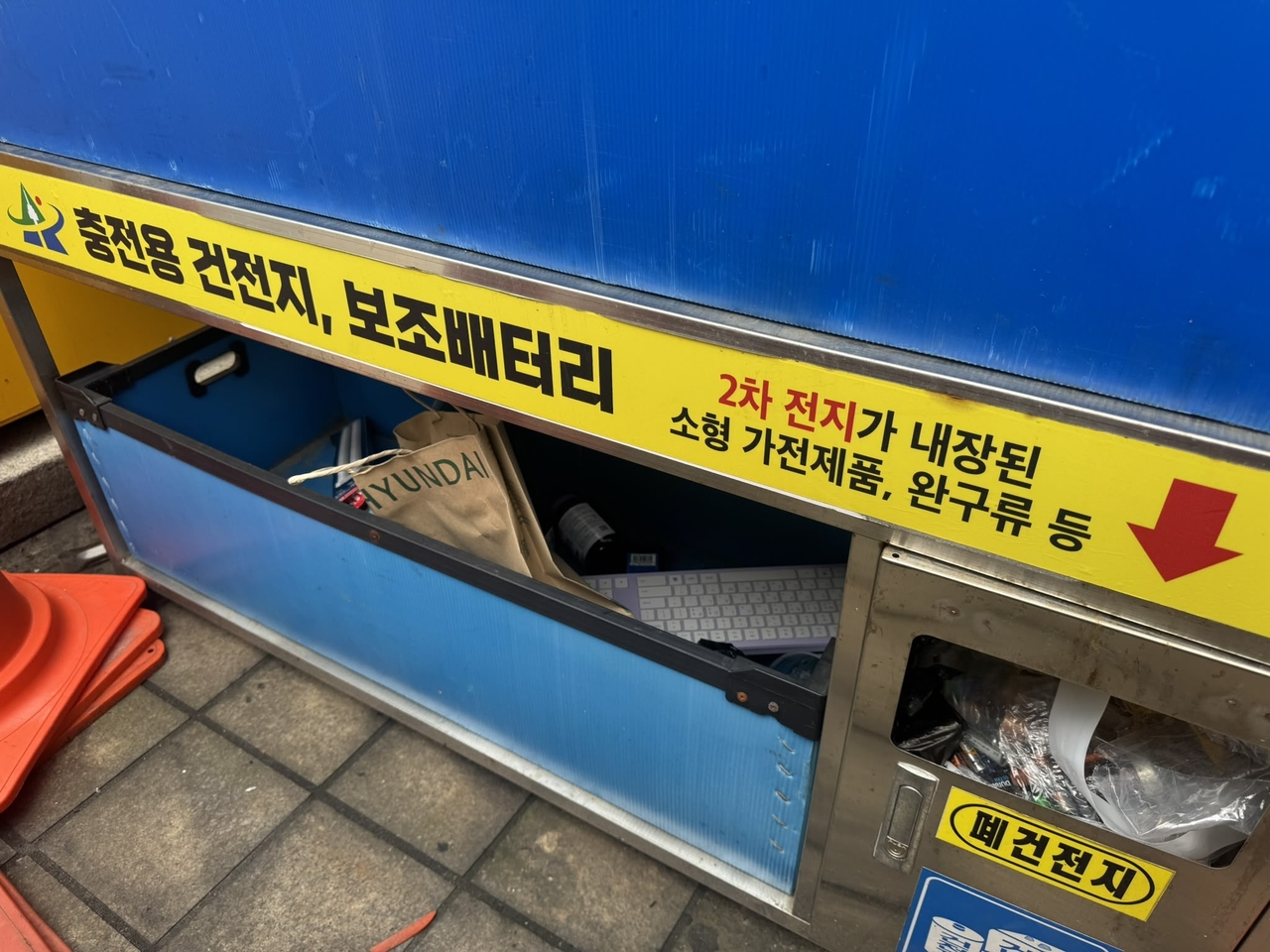
This is based on updated signage and policy observed at multiple disposal points. Some bins are now explicitly labeled for "Small appliances and toys with built-in secondary batteries."
However, not all bins display this label clearly.
According to Seoul city officials, placing small lithium-powered devices in these community battery bins is still safer and more appropriate than discarding them in household trash or plastic recycling.
Free pickup service, with conditions
South Korea also operates a free national e-waste pickup service through the nonprofit e-Circulation Governance. You can schedule a pickup for:
- Large electronics (no minimum)
- Five or more small battery-powered devices, such as power banks or mini fans.
Unfortunately, single small devices are not yet eligible for pickup unless part of a group of five or more. However, city officials say the system is being updated to allow individual small items to be collected in the future.
Pickup service website: 15990903.or.kr/portal (Korean only)
Finding drop-off locations near you
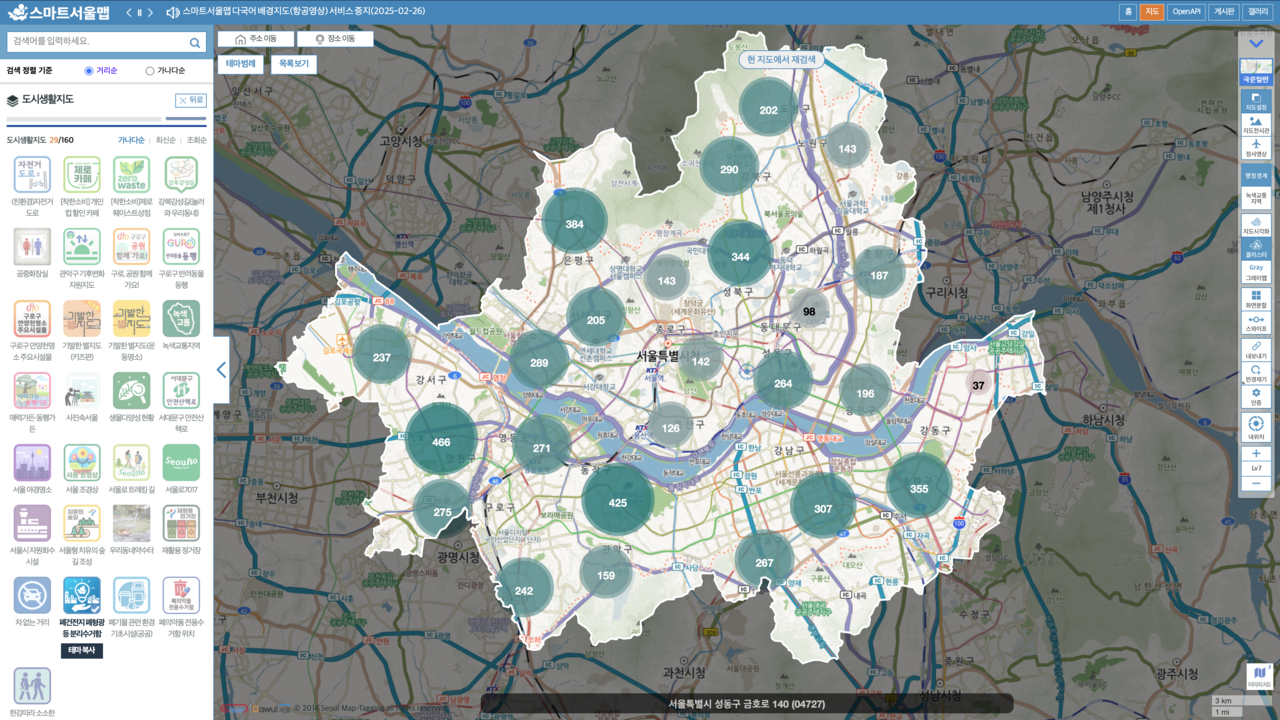
If you're based in Seoul, you can quickly locate official disposal points using the city’s digital map service at map.seoul.go.kr/smgis2/seoulMap (Korean-only).
Locations are updated regularly, and most residents will find a drop-off point within walking distance.
According to Kim Geum-ho, director of resource circulation at the Seoul Metropolitan Government, the city is working to improve collection systems for small battery-powered electronics.
mjh@heraldcorp.com